
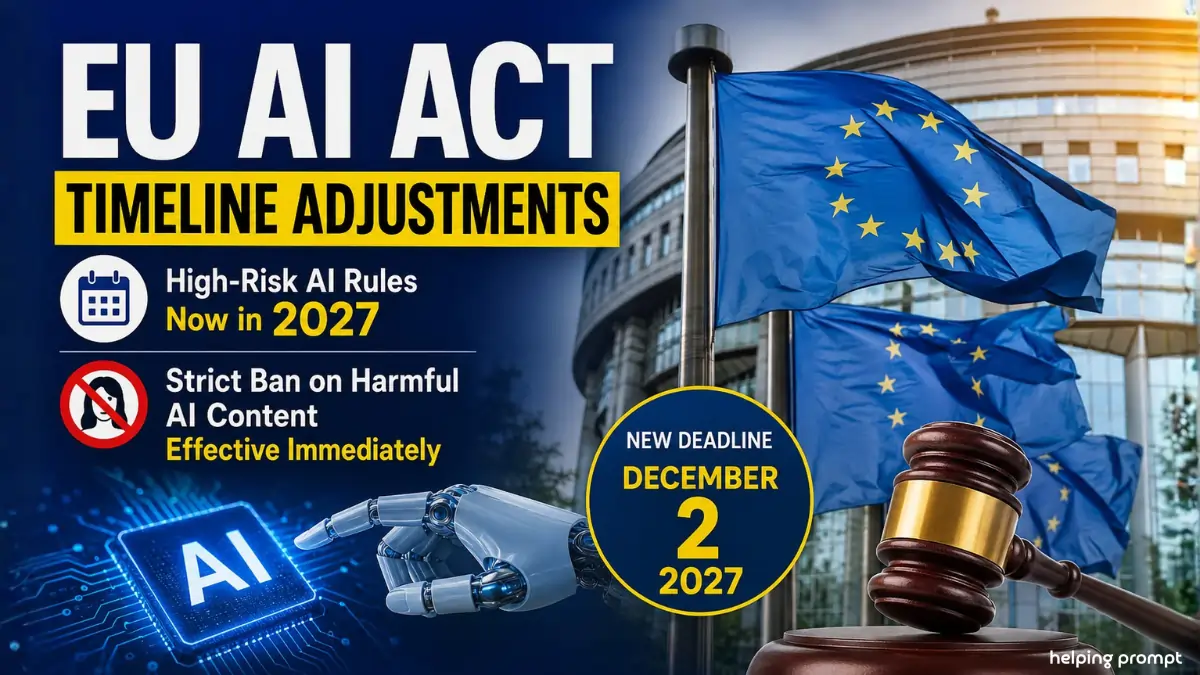
EU AI Act Timeline Adjustments: What the 2027 Delay Means
The European Union has approved major EU AI Act Timeline Adjustments, giving companies more time to comply with strict AI regulations. Under a new political agreement called the Digital Omnibus, key obligations for high-risk AI systems will now apply from December 2, 2027.
At the same time, regulators have introduced immediate bans on AI tools used for non-consensual explicit content. The latest move aims to balance innovation and safety, raising important questions for technology firms, AI developers, and digital platforms across Europe.
Quick Summary
• High-risk AI system obligations delayed until December 2, 2027.
• AI tools creating non-consensual explicit content face immediate bans.
• EU AI Office receives stronger oversight and enforcement powers.
What Are the EU AI Act Timeline Adjustments?
The latest Digital Omnibus agreement changes the implementation schedule of the EU’s landmark AI law. High-risk AI systems, including those used in healthcare, hiring, and critical infrastructure, now have additional time before stricter compliance requirements take effect. As a result, businesses gain more flexibility to prepare technical documentation, risk assessments, and governance frameworks.
The decision follows concerns from technology companies and industry groups. Many argued that compliance timelines were too aggressive for complex AI deployments. Therefore, policymakers agreed to extend the deadline while maintaining the broader goals of transparency, accountability, and user protection across the European AI ecosystem.
How To
- How to prepare for EU AI Act Timeline Adjustments?
Start risk assessments, documentation, and governance planning early.
- How to identify high-risk AI systems?
Review whether the AI impacts healthcare, hiring, infrastructure, or public services.
- How to stay updated on EU AI Act Timeline Adjustments?
Follow official EU regulatory announcements and AI compliance guidance regularly.
Why Has the Deadline Been Moved to 2027?
The new deadline shifts the application of strict obligations for high-risk AI systems to December 2, 2027. This extension gives organizations extra time to adapt internal processes and invest in compliance measures. Moreover, regulators believe the adjustment can reduce administrative burdens without weakening safety standards.
However, the EU continues to position itself as a global leader in AI governance. While implementation timelines have changed, core requirements remain intact. Consequently, companies operating in Europe must continue preparing for future obligations despite the temporary relief offered by the new schedule.
Immediate Ban on Harmful AI Applications
One of the most significant updates involves an outright ban on AI applications that generate non-consensual explicit content. These tools, often called “nudification” apps, have raised serious privacy and safety concerns across multiple countries. Therefore, regulators acted quickly to prevent misuse.
The ban reflects growing pressure to address harmful AI-generated content. In addition, policymakers want stronger safeguards against digital exploitation, deepfake abuse, and privacy violations. The move sends a clear signal that certain AI uses will not be tolerated regardless of future compliance deadlines.
Stronger Powers for the EU AI Office
The agreement also expands the authority of the EU AI Office. Regulators will have greater oversight capabilities to monitor compliance, investigate risks, and coordinate enforcement actions. As a result, the institution becomes a central pillar of the European AI regulatory framework.
Furthermore, enhanced oversight could improve consistency across member states. Businesses may benefit from clearer guidance, while regulators gain stronger tools to address emerging risks. This balanced approach aims to support innovation while ensuring responsible AI deployment.
Impact on AI Companies and Startups
Technology firms developing high-risk AI systems will likely welcome the extended timeline. The additional preparation period can help reduce compliance costs and operational pressure. Meanwhile, startups may gain valuable time to refine products before meeting strict regulatory requirements.
Nevertheless, companies should not interpret the delay as a pause in preparation. Regulatory expectations remain unchanged. Therefore, organizations that start compliance planning early may gain a competitive advantage when enforcement begins in 2027.
What This Means for Global AI Regulation
The EU often sets regulatory trends that influence other regions. Consequently, these changes could shape future AI policy discussions worldwide. Governments monitoring European regulations may study the balance between innovation incentives and user protections.
At the same time, the immediate ban on harmful AI content highlights a growing international focus on AI safety. Regulators globally are increasingly prioritizing privacy, security, and ethical technology development as generative AI adoption accelerates.
Pro Tips
• AI companies should continue compliance planning despite the delayed deadline.
• Monitor future guidance from EU regulators and the AI Office.
• Review AI content policies to avoid banned use cases.
Quick Recap
The latest EU AI Act Timeline Adjustments provide breathing room for businesses developing high-risk AI systems. By extending compliance obligations until December 2027, the EU aims to reduce implementation challenges while maintaining strong regulatory standards.
At the same time, immediate bans on harmful AI applications demonstrate that safety remains a top priority. As AI regulations continue evolving, businesses, developers, and digital platforms should stay informed and prepare for future compliance requirements to remain competitive and trustworthy.
FAQs
They delay strict obligations for high-risk AI systems until December 2, 2027.
AI tools that create non-consensual explicit content are now prohibited.
They affect compliance planning, AI development strategies, and regulatory readiness.