
Enterprise AI Integration Drives Business Software and AI Policy Shift
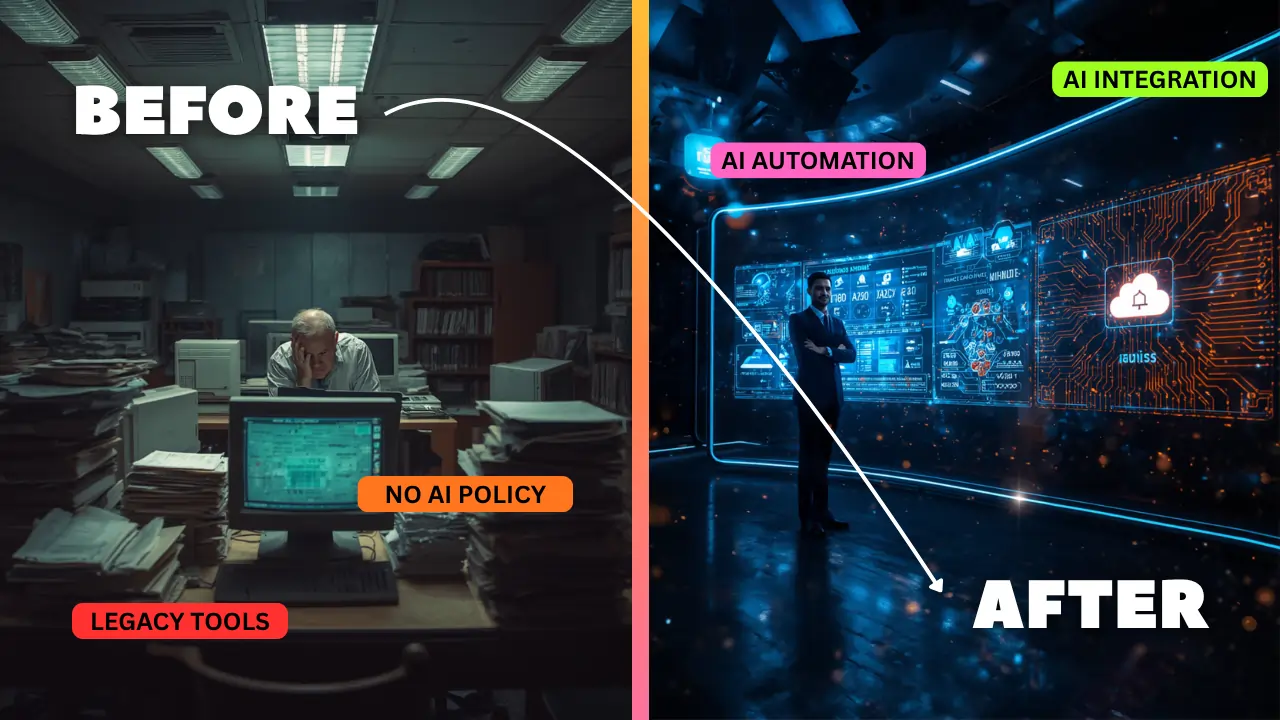
Enterprise AI Integration is no longer a future trend. It is becoming the standard across marketing, tax, compliance, and daily business operations. At the same time, global technology firms continue investing in AI infrastructure, while governments introduce stronger transparency and data-sovereignty rules. As a result, businesses must adapt to both smarter software and evolving regulations. These changes are redefining enterprise technology and creating new opportunities for organizations that prepare early.
Quick Summary
- Enterprise AI is becoming a built-in feature across business software instead of a separate product.
- AI infrastructure investments and sovereign AI policies are accelerating worldwide.
- Businesses must balance innovation, compliance, and secure AI adoption.
Enterprise AI Integration Is Becoming the New Standard
Enterprise software providers are embedding AI directly into marketing platforms, finance tools, tax systems, and compliance software. Instead of purchasing separate AI applications, organizations can now access intelligent features inside familiar business workflows. Consequently, productivity improves while employee adoption becomes much easier.
Major software vendors are focusing on automation, document analysis, predictive insights, and workflow optimization. Moreover, businesses benefit from fewer integrations and lower operational complexity. This approach allows companies to scale AI without disrupting existing systems or requiring extensive technical expertise.
Why AI Infrastructure and Compute Matter More Than Ever
Generative AI requires enormous computing power. Therefore, hyperscale cloud providers continue investing billions in advanced data centers, AI chips, and cloud infrastructure. These investments support faster model training, reliable enterprise services, and growing demand from businesses worldwide.
Meanwhile, enterprises are carefully selecting AI providers that can deliver consistent performance and strong security. Reliable infrastructure has become a competitive advantage, especially for industries managing sensitive financial, healthcare, or customer information.
AI Regulations Are Reshaping Enterprise Decisions
Governments across multiple regions are introducing AI transparency, accountability, and safety requirements. As regulations evolve, businesses must document how AI systems generate results and manage data responsibly. Compliance is becoming a strategic priority rather than a legal formality.
Organizations are also reviewing vendor policies before adopting AI tools. As a result, enterprises increasingly prefer platforms that explain AI outputs, maintain audit trails, and support regulatory reporting requirements.
Sovereign AI Is Driving Local Data Strategies
Sovereign AI focuses on keeping sensitive data within national borders while supporting local AI development. Consequently, many governments encourage domestic cloud infrastructure and regional AI investments. This approach strengthens digital independence and improves regulatory compliance.
Businesses operating across multiple countries must also review where customer information is stored. Therefore, cloud providers now offer region-specific AI services to meet local privacy and governance standards more effectively.
Business Software Is Becoming Smarter Every Month
AI-powered assistants can now generate reports, analyze financial records, recommend marketing strategies, and detect compliance risks automatically. These features reduce repetitive work and help employees make faster decisions. Additionally, organizations gain valuable insights without switching between multiple applications.
Companies adopting embedded AI also improve operational efficiency. However, success depends on employee training, responsible AI governance, and continuous monitoring of system performance.
What Business Leaders Should Watch Next
The next phase of Enterprise AI Integration will focus on trusted AI ecosystems instead of standalone models. Businesses will compare software providers based on security, transparency, infrastructure strength, and regulatory readiness. Consequently, AI adoption will become a core business strategy.
Organizations that invest in AI literacy, governance, and scalable infrastructure today are likely to remain competitive as enterprise software continues evolving. Staying informed about policy updates will become equally important as adopting new technology.
Pro Tips
- Prioritize business software with built-in AI governance and transparency features.
- Review AI vendor compliance before deploying enterprise-wide solutions.
- Train employees regularly to maximize Enterprise AI Integration benefits.
- How to start Enterprise AI Integration?
Begin with AI-enabled business software that matches your existing workflows and compliance needs.
- How to prepare for AI regulations?
Review vendor policies, maintain documentation, and implement responsible AI governance practices.
- How to choose Enterprise AI Integration platforms?
Compare security, infrastructure, transparency, scalability, and regulatory support before making a decision.
Conclusion
Enterprise AI Integration is changing how businesses operate by embedding intelligent capabilities directly into everyday software. At the same time, investments in computing infrastructure and stronger AI regulations are reshaping the global technology landscape. Companies must now consider performance, compliance, and security together.
Organizations that embrace responsible AI adoption while monitoring policy developments will be better prepared for future challenges. As enterprise software continues evolving, staying informed and investing strategically will help businesses unlock long-term growth and remain competitive in an increasingly AI-driven economy.
FAQs
Enterprise AI Integration means embedding AI capabilities directly into business software for everyday operations.
It improves productivity, automates repetitive tasks, and supports smarter business decisions with minimal disruption.
They require businesses to ensure transparency, responsible AI usage, and compliance with evolving governance rules.