
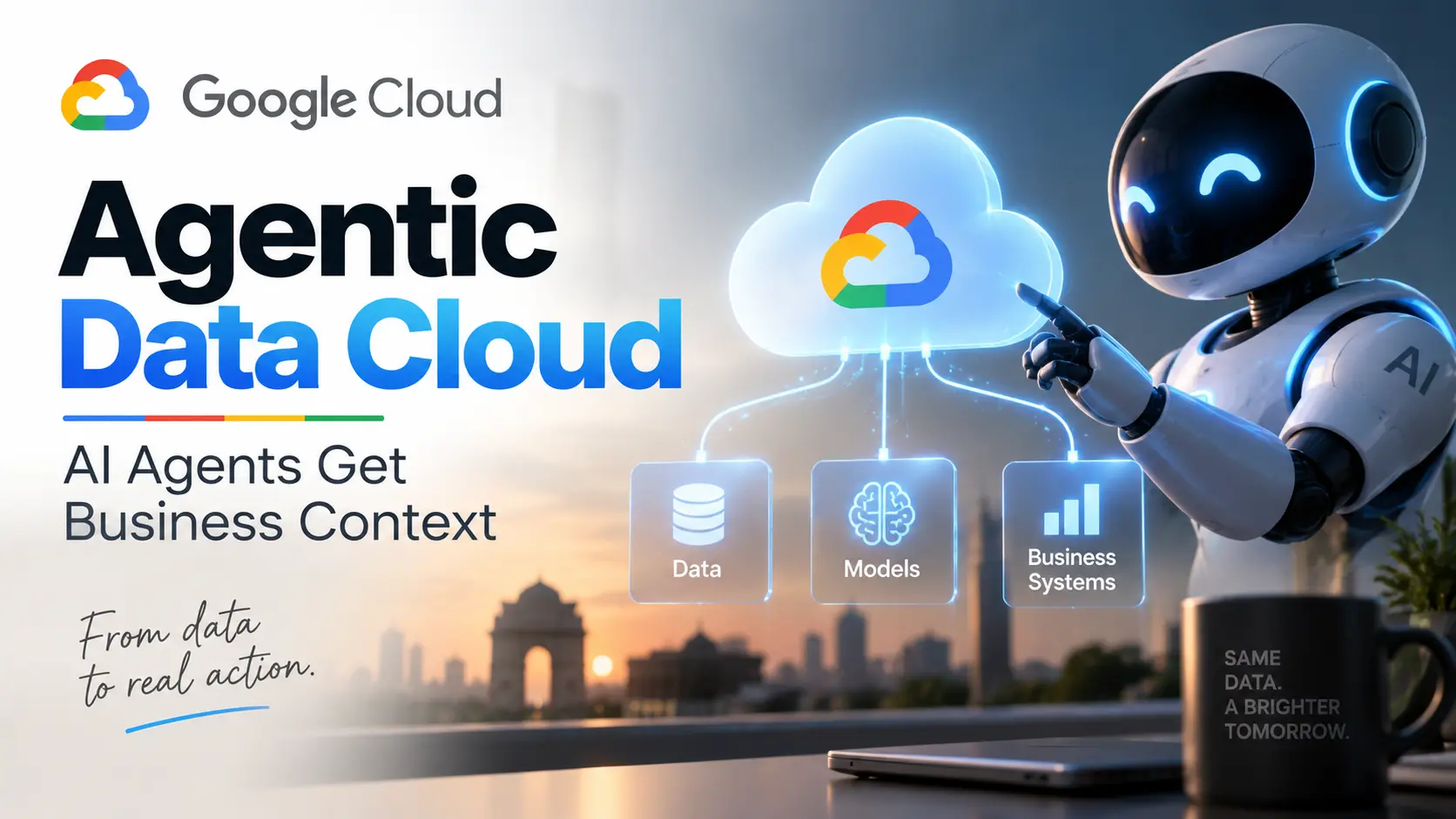
Google Cloud is pushing Agentic Data Cloud as enterprises move beyond basic AI assistants. Announced at Google Cloud Next ’26, the architecture connects business data, AI models and operational databases. The goal is simple: help AI agents understand context and take action. Unlike traditional cloud AI, agents need access to live business systems. Therefore, Google is rebuilding the data layer around autonomous workflows. The shift could change how companies deploy AI, manage data and automate decisions across cloud environments.
QUICK SUMMARY
- Agentic Data Cloud unifies data, models and operational databases.
- Google is targeting AI agents that can reason, query and act.
- Cross-cloud data access and governance remain key enterprise priorities.
What Is Google Cloud Agentic Data Cloud?
Google describes Agentic Data Cloud as an AI-native architecture built for the agentic era. It turns enterprise data from a passive repository into what Google calls a “System of Action.” In practice, agents can use business context while interacting with data and operational systems.
Why Agentic Data Cloud Matters
Traditional AI systems often generate answers from limited context. However, enterprise agents need much more. They may need customer records, transactions, analytics and internal knowledge before acting. Google’s approach brings these layers closer together.
The architecture combines BigQuery, AlloyDB, Spanner, Looker and Knowledge Catalog with Gemini-powered capabilities. As a result, companies can build agents closer to their operational data. This could reduce the gap between an AI recommendation and an actual business action.
From AI Answers to AI Actions
The bigger change is philosophical. AI is moving from answering questions to completing workflows. An agent could analyse data, identify an issue and trigger the next step.
For enterprises, that requires reliable context and strict permissions. Therefore, Google is emphasising governance alongside intelligence. Agent actions must remain controlled, explainable and aligned with business rules.
Cross-Cloud Data Is Part of the Strategy
Google is also addressing a major enterprise concern: data location. Its Agentic Data Cloud supports open formats such as Apache Iceberg and cross-cloud data access.
That matters for companies running workloads across Google Cloud, AWS, Azure and on-premises systems. They can potentially activate existing data without moving everything into one environment.
New Data Agents Push Automation Further
Google has also introduced AI-powered database agents. These can assist with database onboarding, monitoring, troubleshooting and maintenance.
More recently, Google has expanded agentic tooling around data pipelines. The direction is clear: routine data operations are increasingly becoming agent-assisted workflows.
What It Means for Indian Businesses
For Indian enterprises, the opportunity is significant. Banks, retailers, telecom companies and IT services firms manage huge data estates.
Agent-ready infrastructure could help them automate analytics, customer operations and internal processes. However, adoption will depend on security, compliance, costs and the quality of enterprise data.
Pro Tips
- Audit your data first: Agents perform poorly when business context is fragmented.
- Start with one workflow: Automate measurable tasks before expanding agent access.
- Keep humans in control: Use permissions, governance and monitoring for critical actions.
CONCLUSION
Google Cloud’s Agentic Data Cloud signals a broader shift in enterprise AI. The focus is no longer only on running powerful models. Instead, the challenge is connecting those models with trusted business data and systems.
For Indian companies, this could make agentic AI more practical across real operations. Still, infrastructure alone will not guarantee successful automation. Data quality, security and governance will remain essential. As AI agents become more capable, businesses will increasingly compete on how effectively they connect intelligence with action. Staying updated on this infrastructure shift will matter for technology leaders.
FAQs
It is an AI-native architecture connecting enterprise data, models and operational databases for AI agents.
It helps AI agents access business context and move from generating answers toward taking controlled actions.
Yes. Google says its architecture supports cross-cloud data through open formats including Apache Iceberg.
How To
- How can businesses start using Agentic Data Cloud?
Start with a focused workflow where trusted data and measurable automation can deliver clear business value.
- How does Agentic Data Cloud help AI agents?
It gives agents access to data, context, analytics and operational systems within an AI-native architecture.
- How should companies secure AI agents?
Use granular permissions, governance and monitoring before allowing agents to perform critical business actions.