Open-Source AI vs Closed AI: Which Model Will Shape the Future of Technology?
AI is evolving faster than ever.
A major shift is now visible in global tech.
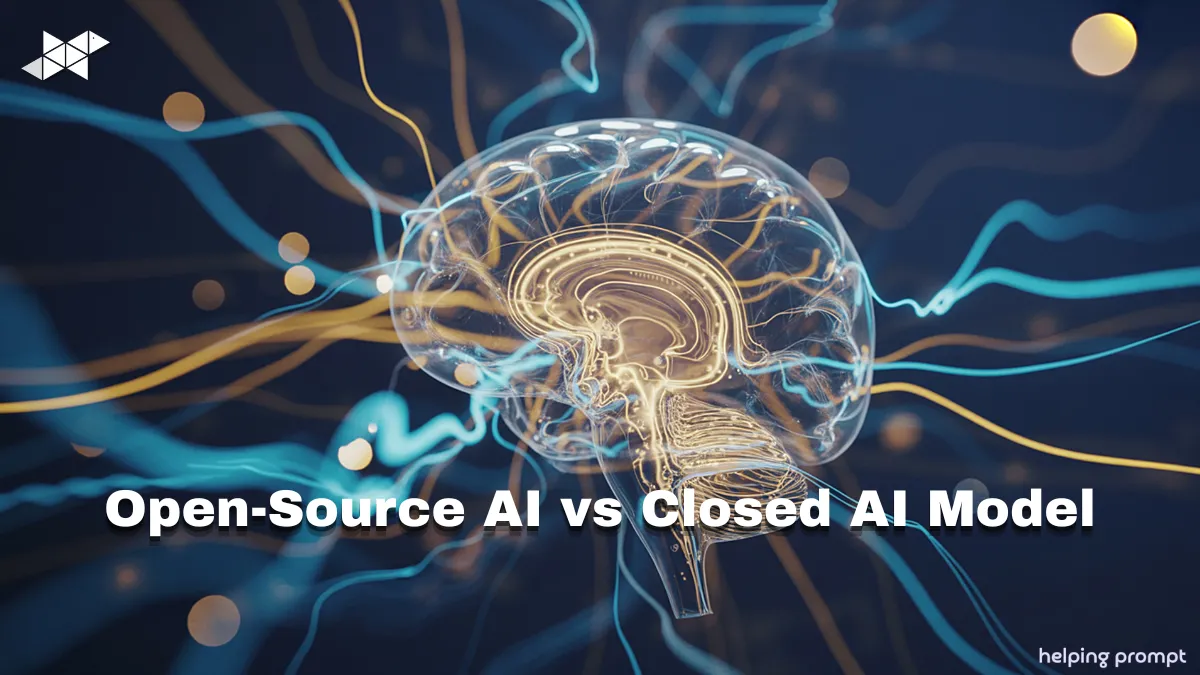
Open-source AI vs closed AI is becoming the key debate.
And it may decide the future of innovation.
QUICK SUMMARY
• Open-source AI is growing rapidly across startups
• Closed AI still dominates enterprise and big tech
• Cost, control, and safety drive the competition
• Governments are watching AI transparency closely
• Hybrid AI models may become the new trend
Open-Source AI vs Closed AI: What’s the Core Difference?
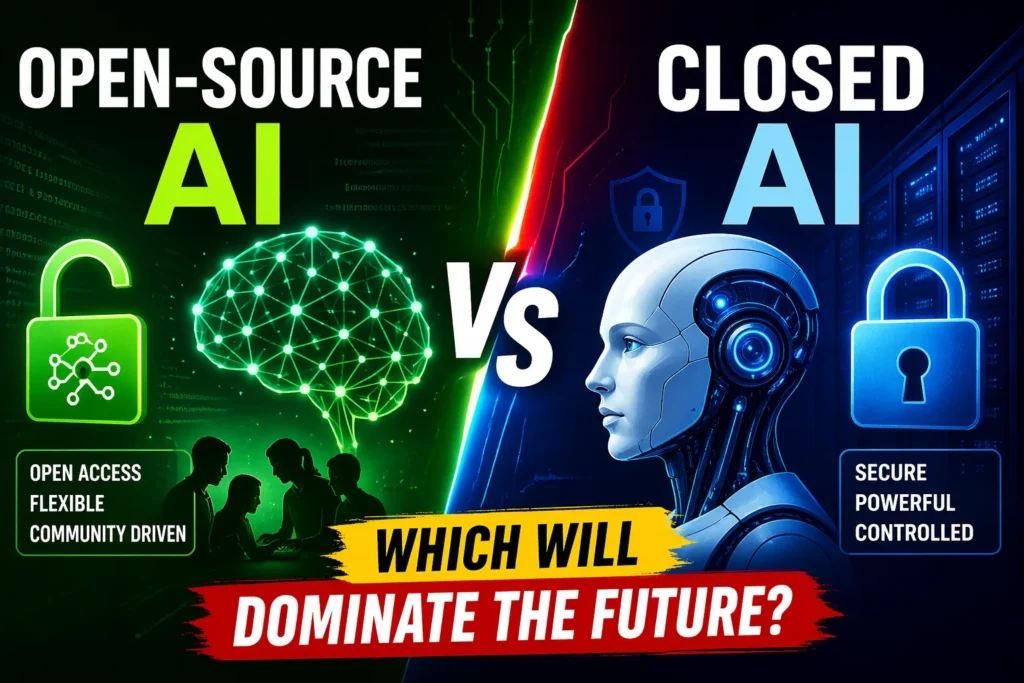
Open-source AI is publicly accessible and customizable.
Closed AI is controlled by private companies.
However, both serve different purposes:
• Open-source = flexibility + community innovation
• Closed AI = security + performance optimization
For example, startups prefer open models to reduce costs.
Meanwhile, enterprises rely on closed AI for data safety.
Why Open-Source AI Is Gaining Momentum
Open ecosystems are expanding quickly.
Developers can modify and improve models freely.
Key advantages:
• Lower development cost
• Faster innovation cycles
• Community-driven improvements
Moreover, countries like India are pushing open AI adoption.
This supports digital growth and local innovation.
How To
- How to choose between Open-Source AI vs Closed AI Model?
Assess your budget, data sensitivity, and customization needs.
- How to use open-source AI effectively?
Leverage community tools and customize models for your use case.
- How to integrate closed AI in business?
Use enterprise platforms with strong security and support systems.
Why Closed AI Still Leads in Power and Control
Closed AI remains strong due to resources.
Big tech companies invest billions in development.
Key strengths:
• High accuracy and performance
• Better data protection
• Strong enterprise integration
However, access is limited and often expensive.
The Future: Competition or Collaboration?
The future may not be one-sided.
Instead, a hybrid model is emerging.
Companies are mixing both approaches:
• Open models for flexibility
• Closed layers for security
As a result, balance could define the next AI phase.
Pro Tips / Insights
• Open-source AI suits startups and developers best
• Closed AI fits industries handling sensitive data
• Hybrid AI strategies will likely dominate by 2027
Conclusion
The Open-Source AI vs Closed AI Model debate is not about winners.
It’s about use cases and balance.
The future will favor those who adapt quickly.
FAQs
Open AI is public and editable. Closed AI is private and controlled.
It depends on needs-flexibility vs security.
Unlikely. Both will coexist in different sectors.