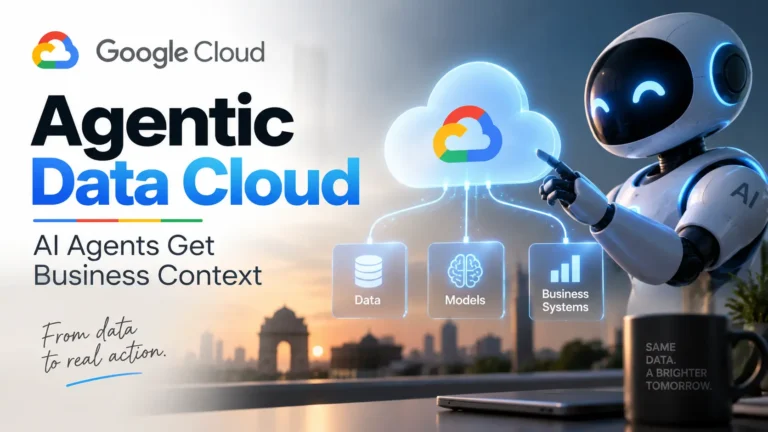

Agentic AI Systems Are Becoming Autonomous Teammates at Work
The AI industry is entering a new phase. Instead of simple chatbots, companies are now investing in Agentic AI systems that can plan, execute, and improve tasks with minimal human input. This month’s biggest trend is the rise of multi-agent workflows, where several AI agents work together like digital teammates. As businesses look for faster operations and smarter automation, this shift could reshape customer support, software development, marketing, and enterprise decision-making across India and the global market.
Quick Summary
- Agentic AI systems are replacing single-chatbot workflows with collaborative AI teams.
- Enterprises are adopting multi-agent platforms for faster automation and better decision-making.
- Businesses that prepare early may gain productivity and competitive advantages.
What Are Agentic AI Systems?
Traditional AI chatbots mainly answer questions or generate content after receiving instructions. However, Agentic AI systems go much further by creating plans, assigning tasks, checking results, and adapting when conditions change. Multiple AI agents can work together, each handling a different responsibility. This approach reduces manual effort while improving speed, consistency, and business efficiency across industries.
Why Enterprises Are Moving to Multi-Agent AI
Many organisations now see limits in single-model assistants. Therefore, enterprises are deploying multiple specialised AI agents that collaborate on research, coding, customer support, reporting, and workflow management. Each agent focuses on a specific task while sharing information with others. As a result, businesses receive faster outcomes without depending on one AI model for every decision.
How Autonomous AI Teammates Work
An autonomous AI teammate can analyse goals, break projects into smaller steps, assign work to other AI agents, review outputs, and improve results before presenting them. Moreover, these systems continuously learn from feedback and changing conditions. Human oversight remains important, but employees spend more time making strategic decisions instead of repeating routine work.
Industries Seeing the Fastest Change
Technology companies are leading adoption, yet finance, healthcare, education, manufacturing, and retail are quickly following. Marketing teams use AI agents to create campaigns, while software teams automate testing and documentation. Meanwhile, customer service departments deploy specialised agents that manage different support stages, improving response quality and reducing waiting times.
Benefits Businesses Can Expect
Companies adopting Agentic AI systems often report improved productivity, better workflow management, and lower operational costs. Furthermore, AI agents can work around the clock without losing consistency. Businesses also gain quicker access to insights because multiple agents process information simultaneously instead of waiting for sequential instructions.
Challenges That Still Need Attention
Despite rapid progress, enterprises must address governance, security, transparency, and data privacy. AI agents require clear permissions and continuous monitoring. Additionally, organisations need policies that define human responsibility for important decisions. Strong cybersecurity and responsible AI practices will remain essential as autonomous systems become more capable.
How To
- How to start using Agentic AI systems?
Begin with one workflow, such as customer support or document processing, before expanding to multiple AI agents.
- How to prepare a business for Agentic AI systems?
Create governance policies, ensure data security, and train employees to work alongside autonomous AI.
- How to choose the right Agentic AI systems?
Select solutions that support multi-agent collaboration, strong security, transparent monitoring, and easy integration with existing business tools.
Why This Trend Matters in India
Indian startups and enterprises are increasing AI investments as digital transformation accelerates. Businesses that understand multi-agent systems today may adapt more quickly to future workplace demands. Consequently, professionals should focus on AI literacy, workflow automation, and responsible implementation rather than viewing AI only as a chatbot or content generator.
Pro Tips
- Start with small multi-agent workflows before expanding enterprise-wide.
- Keep human review for sensitive business decisions and customer interactions.
- Train employees to collaborate effectively with AI teammates.
Conclusion
The rise of Agentic AI systems marks a major shift from AI assistants to AI teammates. Instead of responding to prompts alone, autonomous agents can organise work, coordinate actions, and improve results across complex business operations. This evolution is changing how organisations approach productivity and innovation.
For businesses and professionals in India, the opportunity lies in understanding these systems early. Staying informed about AI trends, responsible governance, and practical implementation will help organisations remain competitive as autonomous AI becomes a standard part of the modern workplace.
FAQs
More Posts Like This
Agentic AI systems are AI solutions that can plan, execute, monitor, and adapt tasks with limited human intervention.
Businesses use them to improve productivity, automate workflows, reduce repetitive work, and support better decision-making.
No. Most organisations use Agentic AI systems to assist employees, allowing people to focus on strategic and creative work.