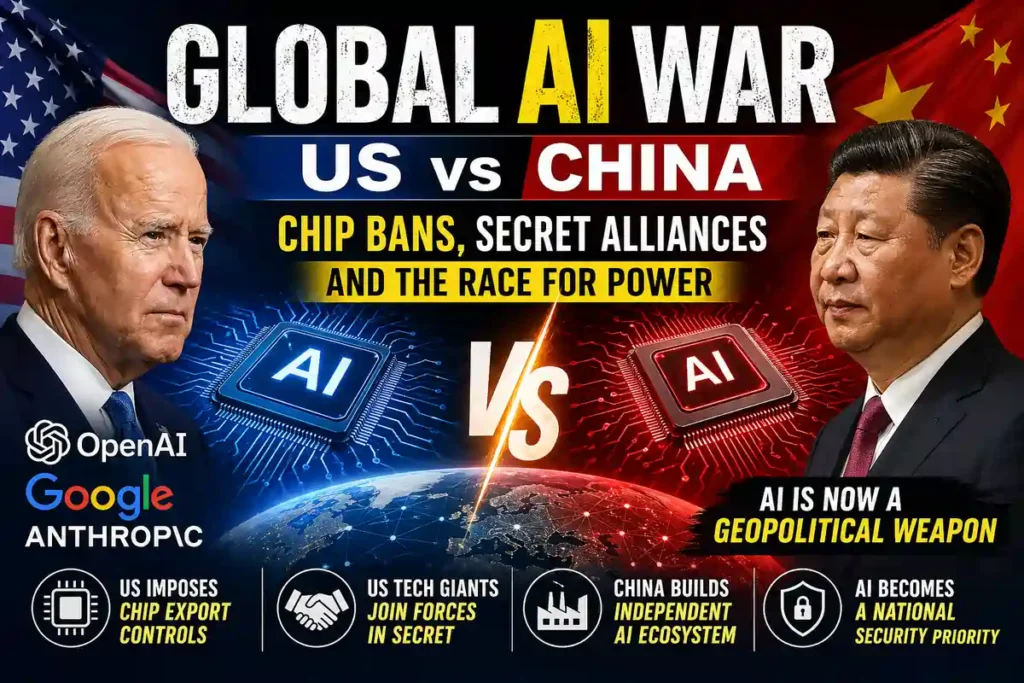
Global AI War US vs China: Chip Controls and Secret Alliances Reshape Power
A silent tech war is accelerating.
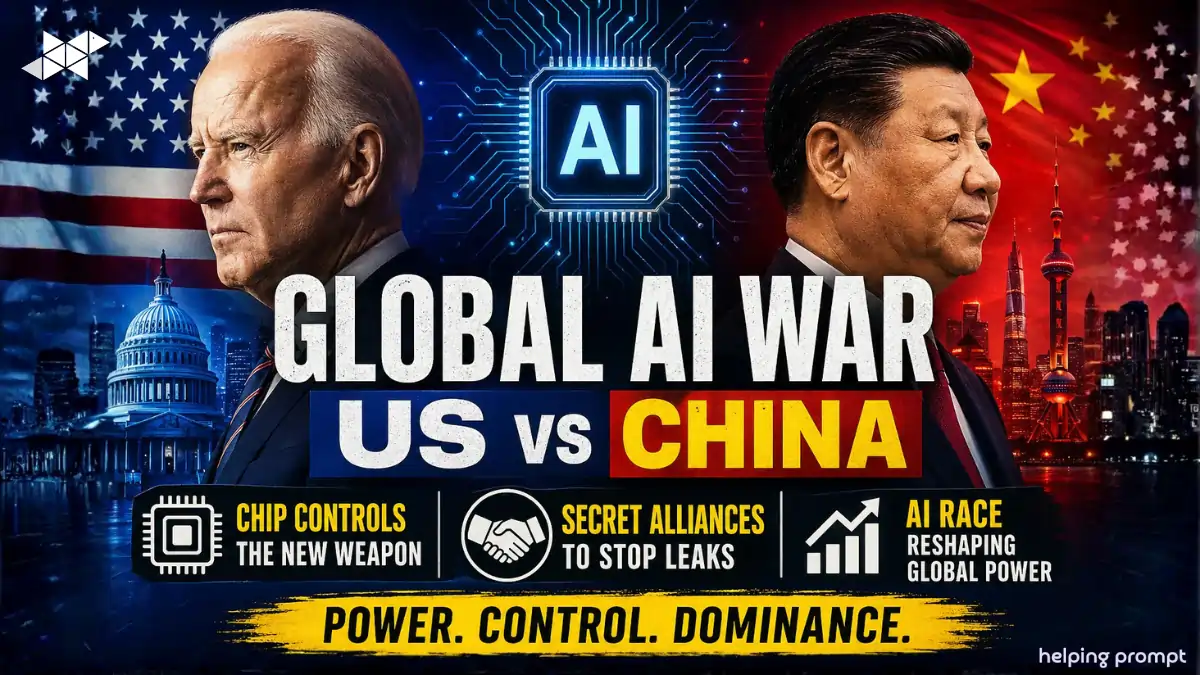
The Global AI War US vs China is no longer just innovation.
It is about power, control, and global dominance.
New chip bans and alliances are changing everything.
Quick Summary
- US firms are tightening AI tech sharing policies
- China is building its own chips and AI models
- Export controls on GPUs are increasing rapidly
- AI is now part of national security strategy
- Global tech supply chains are shifting fast
Global AI War US vs China: What’s Really Happening
The competition has moved beyond labs.
It now involves governments, policies, and economic strategy.
US companies are quietly aligning to limit AI tech flow.
Meanwhile, China is accelerating self-reliance.
Why AI Chips Are the New Oil
Advanced chips power modern AI systems.
Without them, large models cannot scale.
The US has restricted exports of high-end GPUs.
This directly impacts China’s AI growth speed.
- NVIDIA chips are under strict export rules
- AI training costs are rising globally
- Smaller countries face supply shortages
China’s Push for AI Independence
China is not slowing down.
Instead, it is building its own ecosystem.
This includes chips, cloud systems, and AI models.
- Domestic chip production is increasing
- Local AI startups are scaling rapidly
- Government funding is at record levels
However, performance gaps still exist.
Secret Alliances in the West
US tech giants are becoming more coordinated.
This is not public, but patterns are clear.
Companies are tightening access and partnerships.
- Limited model access in sensitive regions
- Stronger compliance and licensing rules
- Focus on enterprise and trusted partners
This reshapes global AI access.
How To
- How to stay updated on Global AI War vs China?
Follow trusted tech news and government policy updates regularly.
- How to prepare for AI restrictions?
Use diverse AI tools and avoid relying on a single provider.
Impact on India and Global Markets
India sits in a unique position.
It depends on global AI infrastructure.
However, it also has talent and growth potential.
- Startups may face higher AI costs
- Local innovation could increase
- Government policies may evolve faster
This shift could create new opportunities.
Pro Tips / Insights
- Countries investing in chips will lead future AI power
- Open-source AI may grow as restrictions increase
- Businesses should diversify AI dependencies early
Conclusion
The Global AI War vs China is reshaping the tech world.
It is no longer just innovation, but strategy and control.
Staying updated is critical as this race will define the future.
FAQs
It refers to the competition between the US and China for AI dominance and control.
AI chips power models, and restrictions limit technological progress.
It impacts costs, access to tools, and future tech opportunities.