
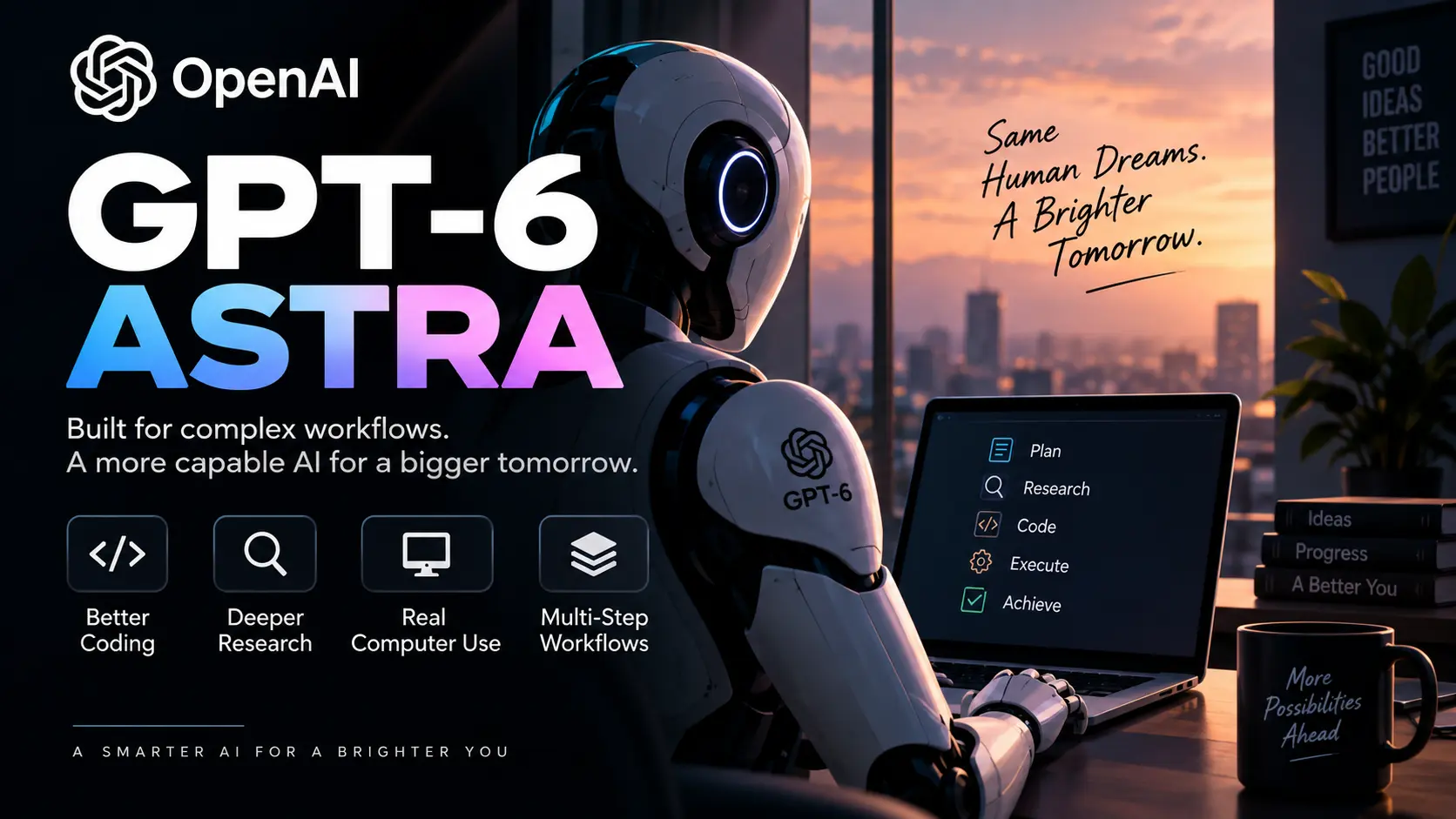
OpenAI has introduced GPT-6 Astra, its most capable broadly deployed model so far. The latest update targets coding, research, computer use and complex multi-step tasks. More importantly, Astra signals a shift toward AI systems that can complete longer workflows with less guidance. OpenAI has also placed the model at its “Critical” cybersecurity capability threshold. For Indian developers, researchers and businesses, the launch could reshape how AI tools handle demanding everyday work.
QUICK SUMMARY
- GPT-6 Astra improves coding, research and computer-use capabilities.
- The model targets longer and more complex multi-step workflows.
- OpenAI says Astra has reached its “Critical” cybersecurity capability threshold.
Main Content
GPT-6 Astra focuses on autonomous AI workflows
GPT-6 Astra is designed to handle tasks that require several connected steps. Instead of answering one prompt, it can support longer workflows. This makes the model relevant for developers, researchers and professional users. Meanwhile, stronger reasoning can reduce the need for repeated instructions. The broader goal is to make AI more useful for real-world work.
Coding gets a major capability boost
Coding is one of Astra’s key focus areas. The model is built to work through more complicated programming tasks. It can potentially help developers understand code, solve problems and manage multi-step development work. Therefore, Astra could become useful beyond simple code generation. Developers may increasingly use AI as an active coding partner.
Research tasks could become more efficient
Astra also targets research-heavy workflows. Complex research often involves collecting information, comparing findings and producing structured conclusions. Stronger reasoning can help connect these stages. As a result, users may spend less time switching between separate AI prompts. However, important research should still be verified against reliable sources.
Computer use becomes increasingly important
Computer-use capability is another major part of the update. This points toward AI systems that can interact with software instead of only generating text. For example, future workflows could involve navigating applications and completing several connected actions. Consequently, AI assistants may become more practical for repetitive digital tasks.
Why GPT-6 Astra matters for businesses
Businesses increasingly want AI that can complete processes, not just provide answers. Astra’s multi-step capabilities fit that direction. Teams could use such systems for research, coding and other structured workflows. However, organisations will still need human oversight. Accuracy, permissions and data security remain important when AI performs actions.
OpenAI highlights cybersecurity capabilities
OpenAI says GPT-6 Astra has reached its “Critical” cybersecurity capability threshold. This is an important development because stronger AI capabilities can have both defensive and harmful applications. Therefore, cybersecurity safeguards become increasingly important. Users should treat advanced AI as a powerful system that requires responsible deployment and appropriate controls.
What Indian users should expect
For Indian startups, developers and technology teams, the biggest opportunity is productivity. Longer AI workflows could reduce repetitive manual work. Moreover, better coding and research capabilities may help smaller teams accomplish more. Yet actual benefits will depend on availability, pricing, performance and integration with existing tools.
The bigger AI shift
GPT-6 Astra represents a broader change in how AI products are being developed. The focus is moving from quick answers toward completing connected tasks. In turn, users may increasingly delegate parts of their workflows to AI. The next competitive phase could therefore depend on reliability, autonomy and useful real-world execution.
Pro Tips
- Developers: Test Astra on real coding workflows, not only benchmarks.
- Businesses: Start with low-risk tasks before adding autonomous actions.
- Researchers: Verify important AI-generated findings with primary sources.
Conclusion
GPT-6 Astra highlights where advanced AI is heading next. Its stronger coding, research and computer-use abilities focus on completing complex work. Rather than simply responding to prompts, AI models are becoming workflow-oriented assistants.
For Indian users, the impact could be significant across software, research and business operations. Still, capability alone is not enough. Reliability, security and human oversight will remain essential. As OpenAI expands this direction, users should watch practical performance closely. The most valuable AI systems will likely be those that save time while remaining predictable and trustworthy.
FAQs
What is GPT-6 Astra?
GPT-6 Astra is OpenAI’s broadly deployed model focused on coding, research, computer use and complex workflows.
What makes GPT-6 Astra different?
GPT-6 Astra focuses more strongly on longer, multi-step tasks rather than isolated prompt responses.
Is GPT-6 Astra useful for developers?
Yes. Its coding improvements could help developers handle more complex programming workflows.
How to:
How can developers use GPT-6 Astra?
Use GPT-6 Astra for coding, debugging, research and other structured development workflows.
How can businesses use GPT-6 Astra?
Businesses can test GPT-6 Astra on repetitive, low-risk workflows before expanding AI automation.
How should users verify GPT-6 Astra results?
Check important outputs against reliable sources and maintain human review for high-impact decisions.