
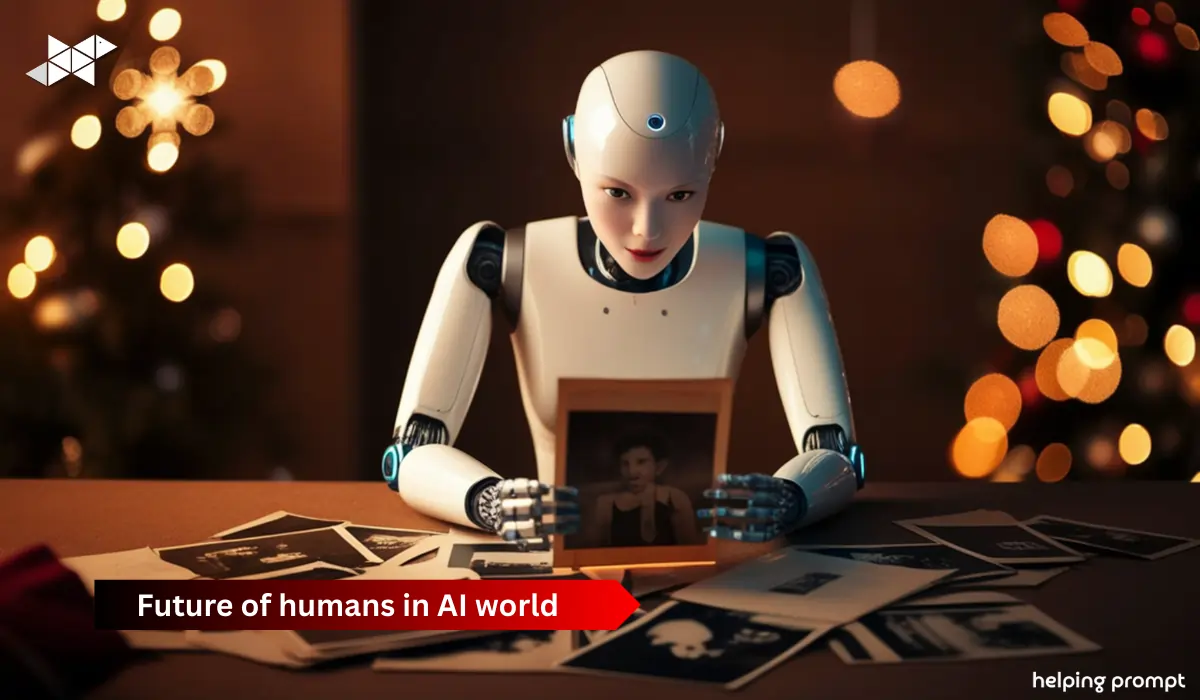
An OpenAI engineer recently raised a powerful question:
If AI becomes extremely capable, what will be left for humans to do?
This is not fear. It is curiosity about the future of work, creativity, and purpose. And honestly, India needs to think about it early.
Because AI is no longer coming. It is already here.
Quick Notes
AI is getting better at writing, coding, designing, and decision-making.
However, human skills like judgment, empathy, and values still matter.
The future may not remove humans – it may redefine human roles.
Why This Question Matters in 2026
AI systems today can:
- Write full articles
- Generate code
- Design graphics
- Analyze medical scans
- Predict business trends
Moreover, they are improving every month.
If machines become “overly good,” meaning faster, cheaper, and more accurate than humans in many tasks, then naturally a serious question arises:
What will humans contribute that AI cannot?
For India – with its young population and fast-growing tech ecosystem – this question is critical.
What AI Is Already Doing Better
Let’s be practical.
AI tools today can:
- Write SEO blog posts in seconds
- Generate social media captions
- Translate content instantly
- Detect fraud in banking
- Automate customer support
For example:
- Startups are using AI to build apps without large coding teams.
- Newsrooms are experimenting with AI-assisted reporting.
- Designers use AI for logo drafts in minutes.
Therefore, routine digital work is slowly becoming AI-assisted.
But here’s the deeper layer.
AI does tasks. Humans define direction.

What AI Still Cannot Fully Replace
Despite rapid progress, AI still struggles with:
1. Meaning & Moral Judgment
AI can calculate outcomes.
However, it does not understand values the way humans do.
For example:
- Should a company automate jobs if it harms thousands of families?
- Should AI be allowed to make battlefield decisions?
These are human-level ethical questions.
2. Real Emotional Connection
AI can simulate empathy.
But real human connection – especially in therapy, leadership, parenting – is deeper.
In India, trust matters.
People still prefer:
- A real doctor’s reassurance
- A teacher’s mentorship
- A leader’s conviction
AI may assist them, but replacing them entirely? That’s harder.
3. Cultural & Contextual Intelligence
India is complex.
Languages, regions, traditions – all layered.
AI can translate Hindi to Tamil.
However, understanding social nuance is different.
Human insight remains powerful here.
So What Will Humans Do Next?
Here’s where it gets interesting.
If AI handles repetitive execution, humans may shift toward:
Strategy & Oversight
Deciding what AI should do.
Creativity at Higher Level
Not just designing – but defining brand vision.
Problem Framing
AI solves problems. Humans define which problems matter.
Ethical Governance
AI regulation, audits, safety alignment.
In fact, new roles are emerging:
- AI prompt engineers
- AI safety researchers
- AI workflow designers
- Human-AI collaboration managers
The job market may transform – not disappear.

A Reality Check for Indian Professionals
Let’s talk directly.
If you are:
- A content creator
- A coder
- A designer
- A marketer
You should not panic.
Instead:
Do This Now
- Learn how AI tools work
- Focus on decision-making skills
- Build domain expertise
- Strengthen communication
Because the future may reward people who can use AI wisely, not compete with it blindly.
Is This the End of Human Work?
History shows something important.
When computers arrived, people feared job loss.
When the internet came, many industries changed.
However, new industries were born.
Similarly, AI may eliminate some tasks.
Yet it may create entirely new sectors we cannot fully predict today.
That uncertainty is both uncomfortable and exciting.
The Deeper Question: Purpose
Perhaps the OpenAI techie’s question is not about jobs.
It may be about meaning.
If machines become extremely capable, humans may need to redefine:
- What gives us identity?
- What makes work meaningful?
- What is uniquely human?
These are not technical questions.
They are philosophical.
And India, with its long tradition of spiritual thinking, may have a unique voice in this global conversation.
Conclusion
AI becoming “too good” is not the end of humanity.
However, it is a turning point.
The real future may belong to humans who learn how to think better – not just work harder.







Leave a Reply