
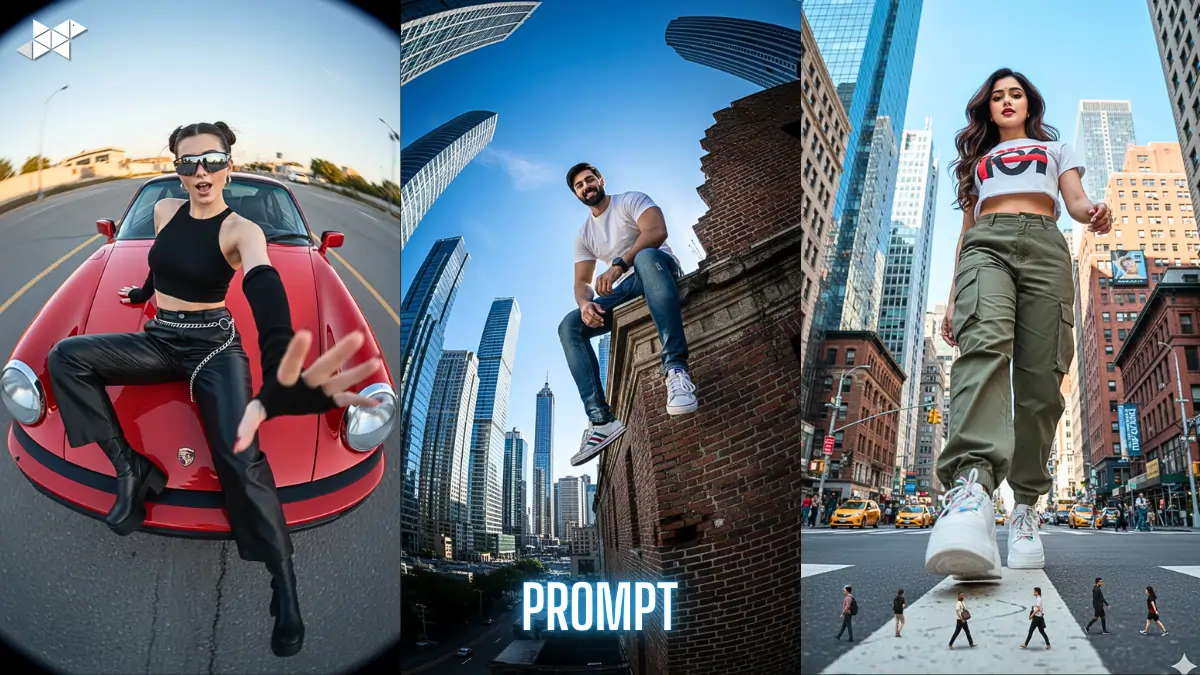
Y2K fashion visuals are trending again, but not in the old studio style. Today’s most eye-catching AI photos mix early-2000s fashion with cinematic camera tricks like drone-spin angles, wide-lens distortion, and motion blur. The result feels like a frozen viral moment – bold, glossy, and instantly scroll-stopping.
I recently reviewed a high-detail Y2K hyper-realistic photo prompt built for modern AI image tools. It combines fashion styling, camera physics, lighting science, and texture control in one tight setup. Below is a breakdown of how this style works and how you can recreate it with clean, reusable prompts.
What Makes This Y2K Shot Style Stand Out
This prompt style is not just about clothes. It is about camera behavior + texture realism + motion illusion.
- Wide-angle lens exaggeration for legs, boots, and foreground hands
- Slight fisheye warp on car and road edges
- Orbit or spin-style background motion blur
- Late afternoon side lighting for contour highlights
- Micro-detail skin texture (pores, no plastic smoothing)
- Y2K accessories like shield sunglasses, chain belts, arm warmers
- Early camcorder effects – grain, light leaks, timestamp overlay
Lighting Setup for Y2K Car Fashion Shots
Lighting in this style is simple but directional.
- Late afternoon side sun
- Strong edge highlights on arms and hair
- Soft fill bounce from car hood
- Warm color reflection from red paint surface
This gives depth without needing complex studio rigs.
Camera Physics That Create the Viral Look
Most weak prompts say “wide angle” and stop there. Strong prompts describe how the camera moves.
- Hovering camera above and slightly in front
- Wide lens distortion toward the viewer
- One knee or boot pushed close to lens
- Foreground fingers slightly motion-blurred
- Orbit-style radial blur in background only
That separation between subject sharpness and background motion is critical for Discover-style thumbnails and social previews.
Texture and Material Detail Rules
To avoid the common AI “plastic skin” problem, the prompt must explicitly request:
- Visible pores and micro skin texture
- Ultra-detailed leather material
- Reflective metal chain highlights
- Glossy lip specular shine
- Car paint reflections bouncing onto skin and fabric
These micro-details help the image survive compression on feeds and still look premium.
Ready-to-Use Universal AI Prompts
1) Prompt:
“Hyper-realistic Y2K fashion photo, stylish model with slim-curvy build and tiny waist, lounging on a vintage red sports car hood, dynamic wide-angle drone-spin camera angle from above and slightly front, one knee close to lens, other leg stretched, hand reaching toward camera foreground blur, black crop top, ultra-low-rise wide-leg black leather pants, silver chain belt, long arm warmers, Y2K shield sunglasses, glossy lips, realistic skin pores, no plastic look, late afternoon side sunlight, strong contour highlights, car paint reflections, fisheye distortion on car and road, orbit motion blur background, chromatic aberration edges, soft film grain, light leaks, early 2000s camcorder timestamp, 8K ultra texture detail”
2) Prompt:
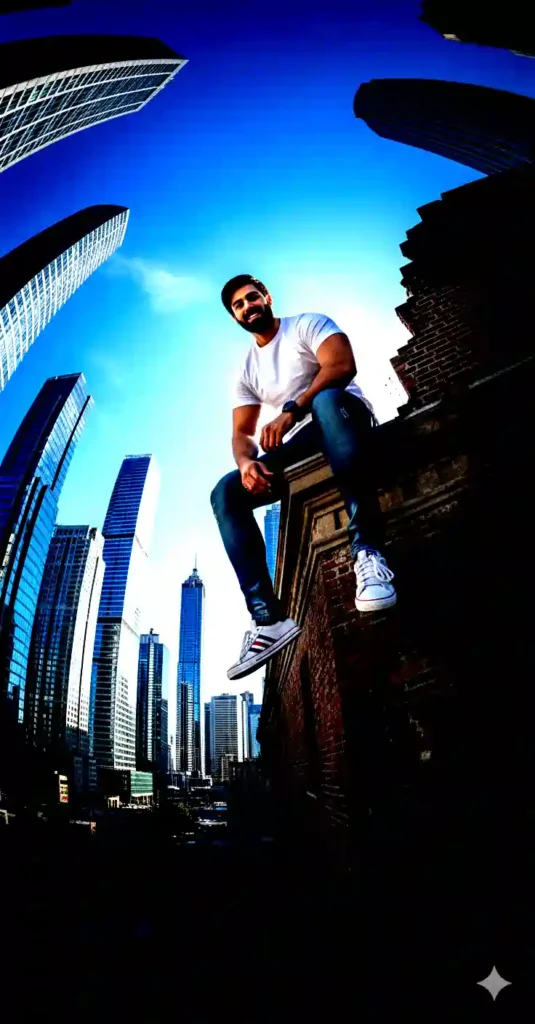
Hyper-realistic wide-angle shot from an extreme low-angle perspective looking up at (Using Upload image reference)sitting on the edge of a brick building. She is wearing a red athletic jacket with white stripes, black leggings, and chunky white sneakers with bright red platform soles. The camera uses a fisheye lens effect, making the girl appear massive against a backdrop of towering, curving modern skyscrapers and a clear blue sky. High-contrast urban photography, cinematic lighting, sharp details on the shoe textures, 8k resolution.
Key Elements for Success:
Camera Angle: Terms like “extreme low-angle” or “worm’s-eye view” are essential to get that towering look.
Lens Choice: “Fisheye lens” or “wide-angle” helps create the barrel distortion seen in the buildings.
Subject Scale: Specifying “giant girl” or “colossal scale” ensures the AI understands the surreal proportions relative to the architecture.
3) Prompt:
Create a hyper-realistic, high-resolution fashion photo using a dramatic low-angle perspective. A young man/woman (using the 100% real face and hair from the provided reference image) is walking confidently across a city intersection, viewed from ground level so her sneakered foot appears oversized in the foreground. She is wearing olive green cargo pants, white sneakers, and a cropped graphic T-shirt. The setting is a modern city street with tall glass skyscrapers, classic buildings, traffic lights, street signs, yellow taxis, and pedestrians below, creating a miniature city effect. The sky is bright blue with natural daylight, giving the scene a clean, vibrant look. Use wide-angle lens distortion, sharp focus, realistic proportions, cinematic lighting, and a bold urban fashion editorial style. The overall mood should feel powerful, playful, and modern, like a high-end streetwear campaign. Render in ultra 8k clarity with an aspect ratio of 4.5 (1080×1440).”
Common Mistakes That Break This Style
- No lens description – flat perspective
- No texture instructions – waxy skin
- No motion separation – whole image blurry
- No lighting direction – dull surfaces
- No material detail – fake leather and metal
Conclusion
A strong Y2K fashion drone-spin image is built from camera behavior, material realism, and controlled motion effects – not just outfit keywords. When these elements are clearly described, AI tools produce sharper, more clickable visuals that perform better across Discover and social feeds.
1. What is a Y2K drone-spin fashion photo prompt?
A Y2K drone-spin fashion photo prompt describes a wide-angle, orbit-style camera effect where the subject stays sharp while the background appears to rotate with motion blur, creating a dynamic early-2000s aesthetic.
2. How do I avoid plastic skin in hyper-realistic AI fashion images?
Add terms like “visible skin pores,” “micro skin texture,” and “no smoothing or plastic look” in your prompt. Also specify realistic lighting and material reflections for better detail.
3. Why is wide-angle distortion important in Y2K fashion shots?
Wide-angle distortion exaggerates legs, boots, and foreground elements toward the viewer. This creates depth, drama, and a scroll-stopping effect ideal for social media and Google Discover.


Leave a Reply