
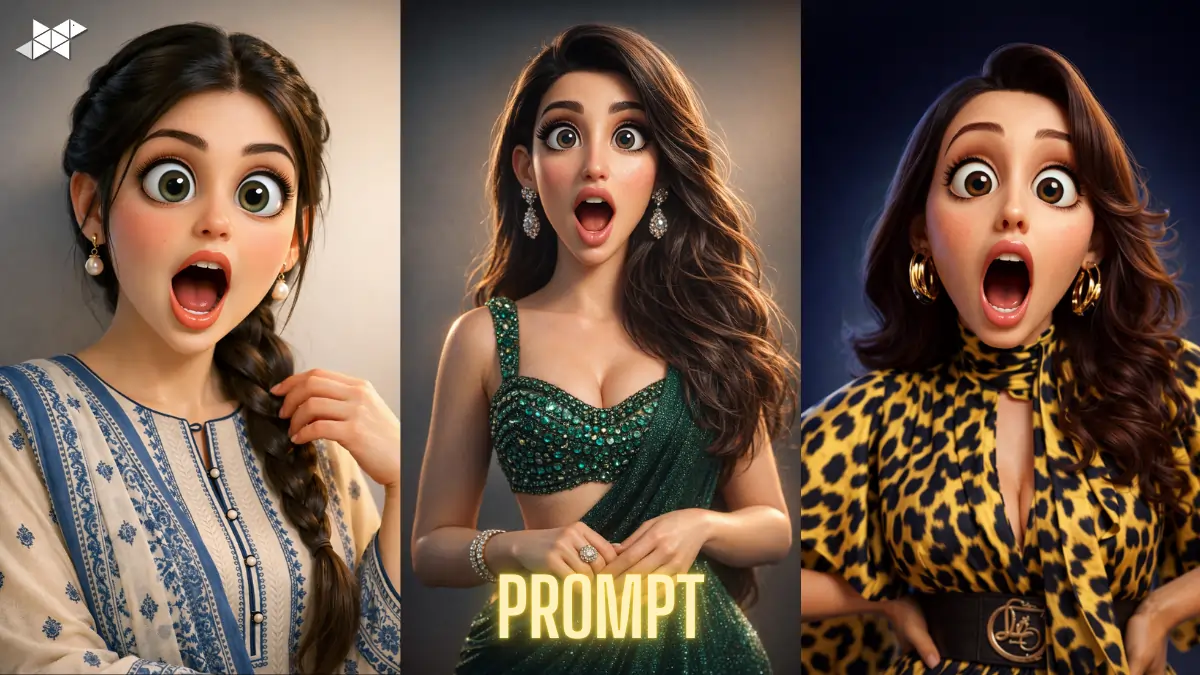
Inside the hearing room, one thing was clear: the internet’s latest obsession isn’t a new app or a celebrity controversy. It’s a face. A hyper-expressive 3D cartoon portrait-big eyes, dramatic open mouth, glossy lips, and cinematic lighting-turning everyday selfies into something that looks straight out of a Pixar-Illumination hybrid world.
The discussion wasn’t just about “fun edits.” It was about how fast this trend is spreading, why creators love it, and how a single prompt is quietly shaping what millions see on their feeds.
Viral 3D Cartoon Portrait Trend Prompt
At the center of this trend is one very specific instruction set-detailed, strict, and oddly precise. It doesn’t just say “make it cartoon.” It demands real facial accuracy, visible skin texture, facial hair, and lighting that feels like a film scene.
The hyper-expressive 3D cartoon portrait trend is growing because it combines two things people love: real identity and animated emotion. With one detailed prompt, creators are turning normal photos into cinematic, shock-faced characters that feel premium, personal, and instantly shareable.
The hyper-expressive 3D cartoon portrait trend is growing because it combines two things people love: real identity and animated emotion. With one detailed prompt, creators are turning normal photos into cinematic, shock-faced characters that feel premium, personal, and instantly shareable.
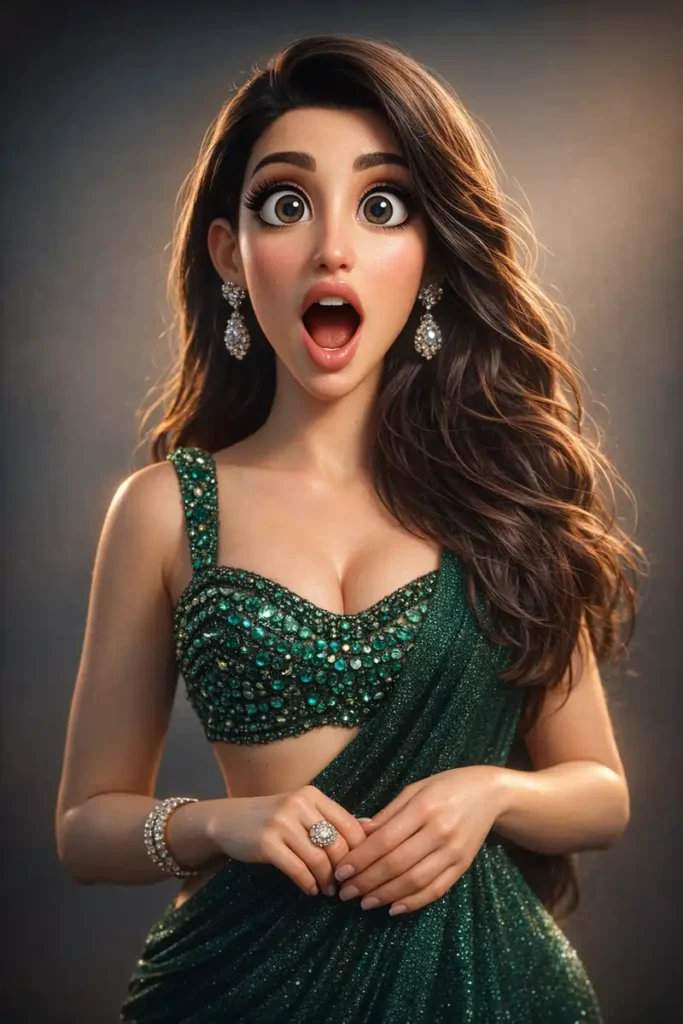
Here is the exact prompt creators are using:
Convert the input photo into a hyper-expressive 3D cartoon portrait in the exact style of the provided reference image, faithfully preserving the real facial features of the original person, including skin tone, eyebrows, lips, nose shape, beard, and overall bone structure, while subtly exaggerating proportions for a stylized cartoon look; eyes should be large and expressive, slightly bulging for comedic impact, and the face must show surprise or shock with a dramatically open mouth, thick glossy lips, and strong emotional intensity; skin must be realistically textured with visible pores and facial hair; include detailed accessories matching the input photo such as earrings, bandanas, or chains; lighting should be sharp and cinematic, featuring a dramatic key light from the left, soft fill from the right, and subtle rim lighting; use a clean or gradient background to keep focus on the character; maintain strict anatomical accuracy within a Pixar-Illumination hybrid visual language; render in high resolution with a clay-style material finish; final image must be in vertical 4:5 portrait aspect ratio. Já salva esse conteúdo pra não
But this trend isn’t just about adding big eyes or smooth 3D lighting. What makes it explode on Instagram Reels, YouTube Shorts, and Pinterest is the emotion factor. The exaggerated shock expression – wide-open eyes, raised brows, slightly open mouth – instantly grabs attention in the first second. And in today’s fast-scrolling world, that first second decides everything.
Another reason this edit style feels different is the “identity lock” approach. Unlike generic cartoon filters, advanced prompts now focus on maintaining 100% facial structure accuracy – jawline, nose shape, skin tone, cheek volume, and even natural imperfections. This keeps the portrait personal instead of artificial. People don’t want to look like random animated characters. They want to look like themselves, just upgraded into a cinematic animated universe.
Pixar-inspired 3D look
The Pixar-inspired 3D look also adds depth. Soft global illumination, dramatic rim lighting, shallow depth of field, ultra-detailed skin textures, and high dynamic range effects give the portrait a movie-poster feel. It transforms a simple selfie into something that looks like it belongs in a high-budget animated film.
Creators are also using this trend for branding. Influencers turn themselves into animated mascots. Content writers use shock-style portraits for eye-catching thumbnails. Digital marketers are leveraging the style for higher CTR because expressive faces increase click probability.
What makes this trend powerful is its versatility. It works for profile photos, birthday edits, reaction thumbnails, couple portraits, and even professional branding images. The stronger the prompt detail – lighting, texture realism, cinematic framing, and strict identity preservation – the more premium the output looks.
In short, this is not just a filter trend. It’s a fusion of AI precision, emotional storytelling, and social media psychology. And right now, it’s dominating feeds for one simple reason: it makes people stop scrolling.


Leave a Reply