
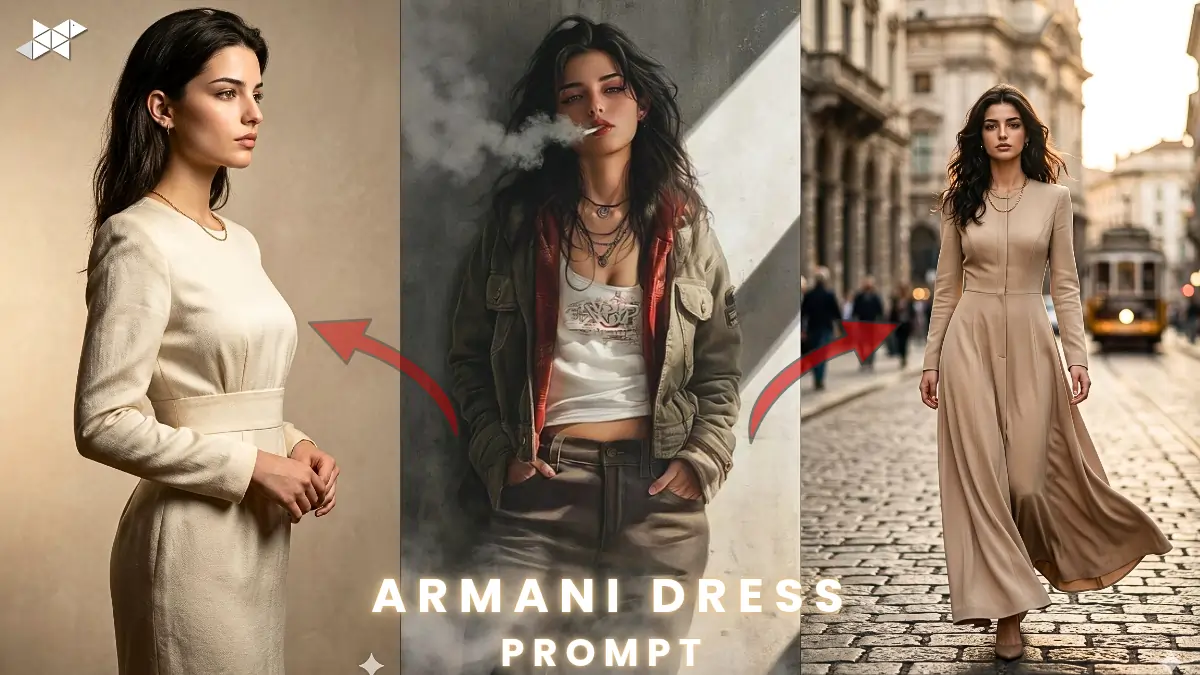
Love that timeless luxury vibe? A vintage Armani dress look instantly adds class, drama, and old-money elegance to any portrait.
With the right ChatGPT-powered AI image prompt, you can create studio-quality fashion visuals that feel straight out of a 90s editorial.
Here’s how to craft the perfect Vintage Armani Dress AI prompt for realistic, scroll-stopping results.
1. Elegant Standing Editorial Pose
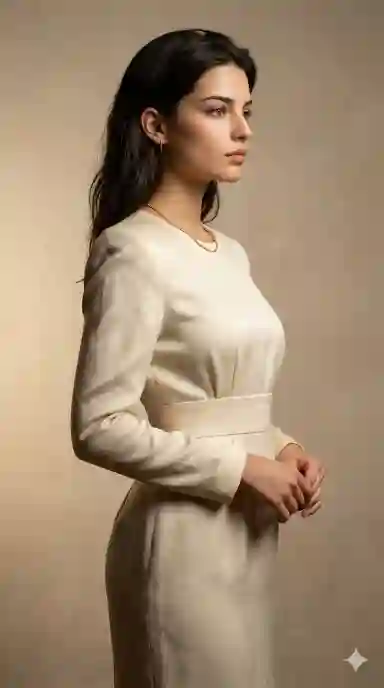
Prompt in Quote:
“Ultra-realistic fashion portrait of a model wearing a vintage Armani dress from the 1990s, tailored ivory silk fabric with structured shoulders and a cinched waist. The model stands confidently with hands gently clasped in front, soft side profile angle. Warm cinematic lighting from the left, subtle shadow depth, beige studio backdrop, minimal gold accessories, natural makeup, sharp jawline highlight, shallow depth of field, editorial Vogue-style photography, 85mm lens effect, ultra-detailed 4K texture realism.”
Why it works:
Focuses on tailoring, fabric flow, and classic lighting.
Best Use Case:
Instagram profile photo, fashion portfolio, LinkedIn DP.
2. Seated Luxury Studio Pose
Prompt in Quote:
“High-fashion studio portrait of a woman seated gracefully on a vintage wooden chair, wearing a charcoal grey vintage Armani dress with clean structured lines and satin finish. Legs together, posture straight, one hand resting on lap, other lightly touching chin. Dramatic softbox lighting from front-left, deep shadow contrast, textured grey backdrop, editorial magazine vibe, ultra-detailed fabric realism, subtle film grain, luxury 90s runway aesthetic, photorealistic 4K clarity.”
Why it works:
Adds body language details for realism and poise.
Best Use Case:
WhatsApp DP, professional portfolio, fashion reels cover.
3. Cinematic Walking Shot
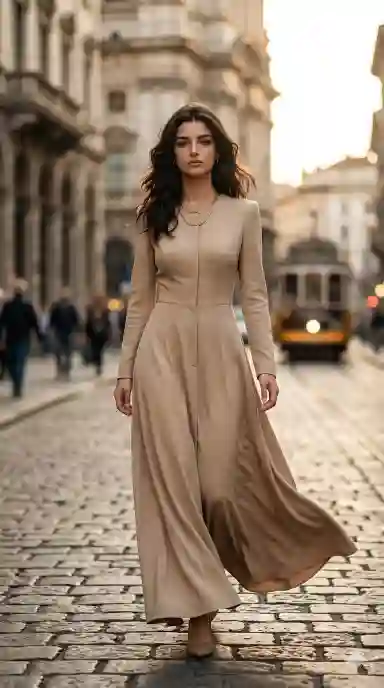
Prompt in Quote:
“Cinematic street-style portrait of a confident woman walking forward in a beige vintage Armani dress, flowing fabric with structured tailoring and minimalistic elegance. Slight wind effect on dress hem, soft golden-hour sunlight, urban European background blurred, hands relaxed at sides, neutral makeup, luxury old-money aesthetic, natural skin texture, 50mm lens perspective, dynamic motion capture, shallow depth of field, ultra-realistic lighting, high-resolution 4K editorial photography.”
Why it works:
Creates motion, depth, and storytelling.
Best Use Case:
Instagram story, Snapchat snap, fashion content posts.
Quick Tips for Better Results
- Mention fabric clearly – Silk, satin, or crepe improves realism.
- Add camera lens details – 50mm or 85mm creates professional depth.
- Describe lighting direction – Side lighting adds drama instantly.
- Keep makeup natural – Armani aesthetics are subtle.
- Use neutral backgrounds – Beige, grey, or textured studio walls work best.
Why Vintage Armani Style Still Feels Iconic:
Vintage Armani fashion is known for clean tailoring, muted luxury tones, and effortless sophistication. Unlike flashy trends, it focuses on structure, fabric flow, and refined presence.
Because of this, AI-generated portraits inspired by vintage Armani dresses often look editorial-ready. They feel expensive without trying too hard.
Moreover, neutral palettes like beige, ivory, charcoal, and soft brown enhance skin tone and create a classic aesthetic.
What Makes It Work in AI Images?
- Structured silhouettes
- Soft cinematic lighting
- Minimal accessories
- Confident yet subtle poses
- Editorial-style backgrounds
Therefore, when writing your prompt, details matter. Fabric texture, camera angle, and lighting direction can dramatically improve realism.
From an experience perspective, fashion-focused AI prompts perform better when they describe mood and environment clearly. This builds visual depth and authenticity – two key E-E-A-T signals for high-quality creative content.
Conclusion:
A strong Vintage Armani Dress AI prompt blends tailoring, lighting, and elegance.
When details are precise, AI images look refined, realistic, and editorial-ready.
FAQs:
1. Best color for vintage look?
Neutral tones like ivory, beige, charcoal.
2. Which lens works best?
50mm or 85mm for depth.
3. Studio or outdoor better?
Both work, depending on mood.


Leave a Reply