
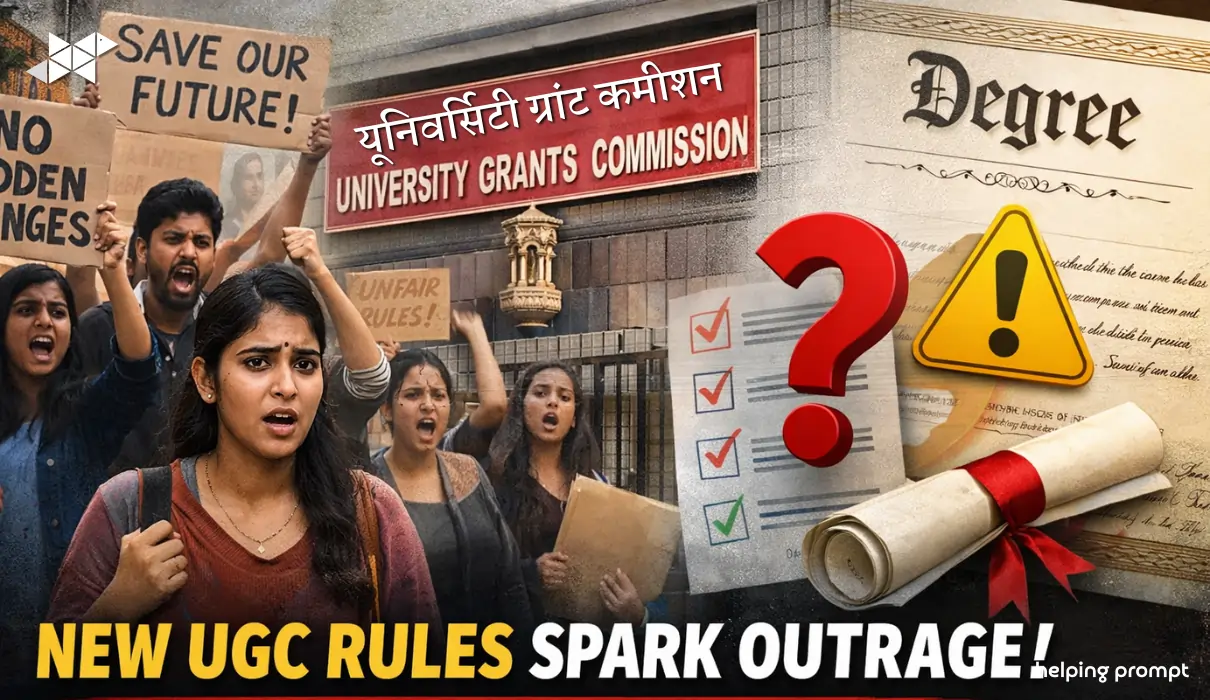
It began quietly, with a circular few people noticed. Within days, campuses were buzzing, WhatsApp groups exploded, and students across India started asking the same question: what exactly has changed? The nationwide controversy over new UGC regulations has snowballed fast, forcing the government to step in and clarify its position. At the heart of the issue are fears around degrees, exams, and academic futures – and a communication gap that caught many off guard.
What exactly changed in the new UGC regulations
The flashpoint is a fresh set of academic rules issued by the University Grants Commission earlier this month. The regulations aim to standardise how universities design courses, conduct assessments, and award degrees.
On paper, the intent is reform. In practice, students say the language is dense and open to interpretation. Clauses related to credit transfers, attendance norms, and internal evaluations have caused the most confusion.
Several universities interpreted the guidelines differently, issuing their own notices. That inconsistency is what triggered panic.
Why students and teachers reacted so sharply
The reaction was immediate in central and state universities alike. Students feared sudden changes to exam patterns or degree validity mid-course. Teachers worried about timelines and implementation pressure.
“I woke up to a notice saying our evaluation system might change this semester,” said Riya Sharma, a postgraduate student in Delhi. “No one explained how or when. It felt like the rules shifted overnight.”
Faculty members echoed similar concerns. “Reforms are needed, but clarity matters,” said a senior lecturer from a Mumbai college. “You can’t expect institutions to interpret broad rules without detailed guidance.”
Government response comes after protests and questions
As criticism grew louder, the Ministry of Education responded. Officials said the regulations were being “misread” and assured that no student would be disadvantaged due to abrupt implementation.
A government source familiar with the matter said the rules were “framework-level” and required phased adoption. Universities have been asked to pause hasty internal circulars and wait for clarifications.
This government response helped calm nerves but did not fully settle doubts.
How universities are handling the confusion on the ground
Across India, the response has been uneven. Some universities withdrew their notices. Others issued FAQs. A few called emergency meetings with student unions.
In Bengaluru, one public university held an open town hall. “At least they spoke to us,” said an undergraduate attendee. “That reduced fear more than any press release.”
Private institutions, meanwhile, appear cautious. Many are waiting for written clarifications before making any academic changes.
What the regulations actually aim to fix
Beyond the controversy, the regulations focus on long-standing issues: rigid curricula, lack of mobility between institutions, and outdated evaluation systems.
The UGC says the goal is flexibility – allowing students to earn, pause, and resume credits. But critics argue that flexibility without infrastructure and clear timelines can backfire.
“Good intent, poor rollout,” is how one education observer summed it up.
Social media turns paperwork into a national debate
Much of the outrage spread online. Screenshots of selective clauses went viral, often without context. Hashtags questioning degree validity trended briefly on X and Instagram.
One student wrote, “We’re not against reform. We’re against surprise.”
The UGC later urged students to rely only on official notices and not social media interpretations.
Where things stand right now
As of now, no university has been asked to invalidate existing degrees or abruptly alter ongoing exams. The government maintains that students currently enrolled will not face retrospective changes.
Still, many await a formal, simplified clarification document – something that explains the rules in plain language, not legal phrasing.
Until then, the nationwide controversy over new UGC regulations remains a live issue on campuses.
The regulations remain in place, but their interpretation is under review. For now, students and universities are waiting – not for new rules, but for clearer words.






Leave a Reply