
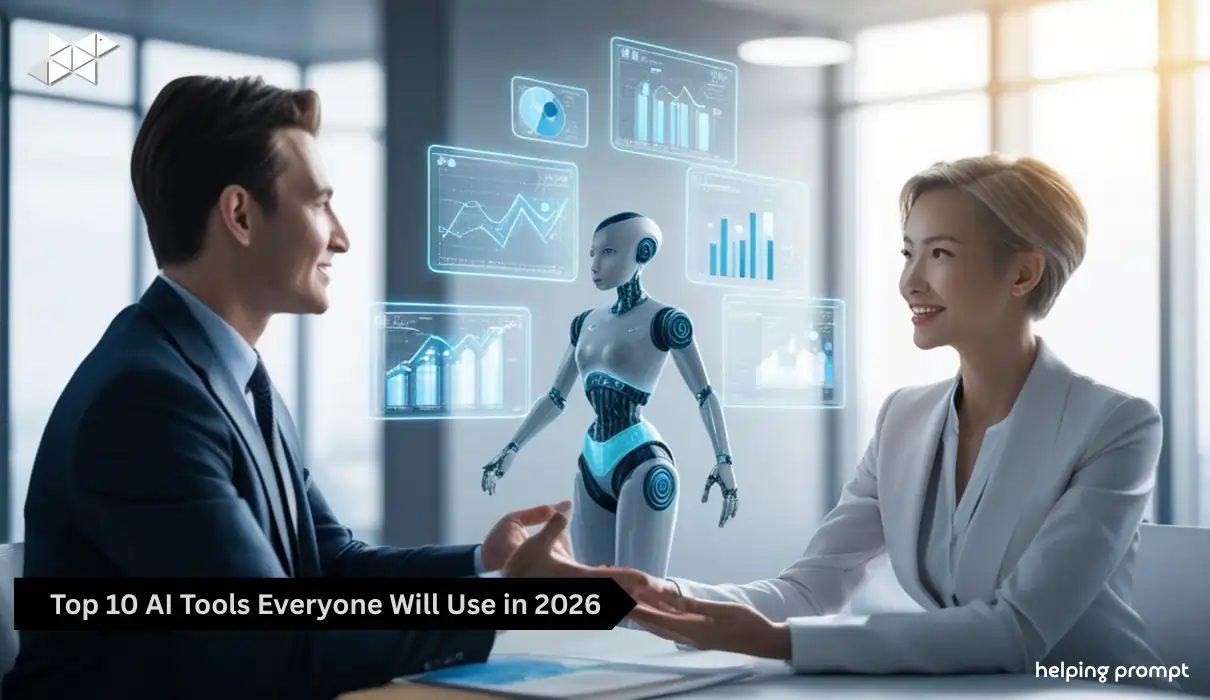
Early this year, something shifted quietly but clearly. AI tools stopped feeling optional and started becoming routine. From offices to classrooms to small shops, people began using AI the way they once adopted smartphones-without announcements, just habit. What’s pushing this change right now is a visible government response: clearer rules, public pilots, and official acceptance. As 2026 approaches, these are the AI tools everyone is already lining up to use.
Why AI tools in 2026 feel different from past tech waves
Unlike earlier tech trends, AI isn’t arriving with hype alone. It’s entering through everyday problems-writing emails faster, fixing code, designing posts, analysing data, even planning lessons.
The government response over the past year has played a quiet role. With clearer guidelines on AI use in education, media, and public services, fear has reduced. Adoption has increased.
“I didn’t trust AI earlier,” said Pune-based content creator Rohan Malhotra. “Once official guidelines came out, clients actually started asking for AI-assisted work.”
ChatGPT-style assistants are becoming everyday co-workers
By 2026, conversational AI assistants won’t feel like tools. They’ll feel like colleagues.
People are using them to draft reports, rewrite legal language into plain English, and even prepare interview answers. The big shift is reliability. Fewer wrong answers. Better memory. More context.
A Delhi-based startup founder put it simply:
“It’s like having a junior staff member who never sleeps and doesn’t complain.”
AI design tools are replacing blank screens with instant ideas
Graphic designers no longer start from scratch. AI design tools now generate layouts, thumbnails, posters, and brand kits in minutes.
What’s changed is control. Designers guide the style instead of accepting random outputs.
“It doesn’t kill creativity,” said freelance designer Neha Kapoor. “It removes fear. The first idea is already there.”
Video AI tools are quietly changing how content is produced
In 2026, video won’t always mean cameras, lighting, or retakes.
AI video tools now create explainers, subtitles, voiceovers, and even short clips from text. Small creators are benefiting the most.
A YouTube educator from Jaipur shared, “I used to avoid video. Now AI handles the editing. I just focus on teaching.”

Coding AI is helping non-developers build real products
AI coding tools are turning basic ideas into working apps, websites, and automations.
You don’t need to be a programmer anymore. You need clarity.
Office teams are using AI to build internal tools. Freelancers are shipping faster. Students are learning logic instead of syntax.
This shift is making software creation less intimidating and more practical.
AI search tools are replacing traditional Googling habits
Search in 2026 looks less like links and more like answers.
Instead of opening ten tabs, users ask one detailed question and get a structured response. This is especially popular among students, researchers, and professionals.
“I don’t scroll anymore,” said a law student in Lucknow. “I ask once and refine.”
AI productivity tools are managing time, not just tasks
Calendars, reminders, emails, and notes are now connected through AI.
These tools prioritise work, summarise meetings, and flag what actually matters. It’s less about doing more and more about doing what’s important.
Government offices testing AI scheduling tools have reported smoother coordination, according to internal user feedback.
AI voice tools are becoming natural and human-like
By 2026, AI voices don’t sound robotic. They pause. They breathe. They express emotion.
These tools are widely used in audiobooks, customer support, education, and accessibility.
A visually impaired user from Chennai said, “This is the first time technology feels like it understands me.”
AI learning tools are reshaping how people upskill
AI tutors now adapt to individual learning speeds.
Whether it’s learning English, coding, or exam preparation, users receive personalised explanations instead of generic lessons.
With government-backed digital education programmes adopting AI, usage is rising sharply in tier-2 and tier-3 cities.
AI data tools are helping small businesses think like big companies
Earlier, data analysis was expensive and complex.
In 2026, AI tools explain sales trends, customer behaviour, and marketing results in simple language.
A shop owner in Indore said, “I don’t need charts. AI tells me what to fix.”
Where the government response fits into all this
The biggest enabler is clarity.
Clear rules on data use, transparency, and accountability have reduced hesitation. Public-sector trials have normalised AI. This government response hasn’t forced adoption-it has removed fear.
That’s why these AI tools are spreading quietly but steadily.

AI tools in 2026 are not futuristic experiments. They are practical, accepted, and already part of daily routines. The shift isn’t loud, but it’s everywhere.






Leave a Reply