
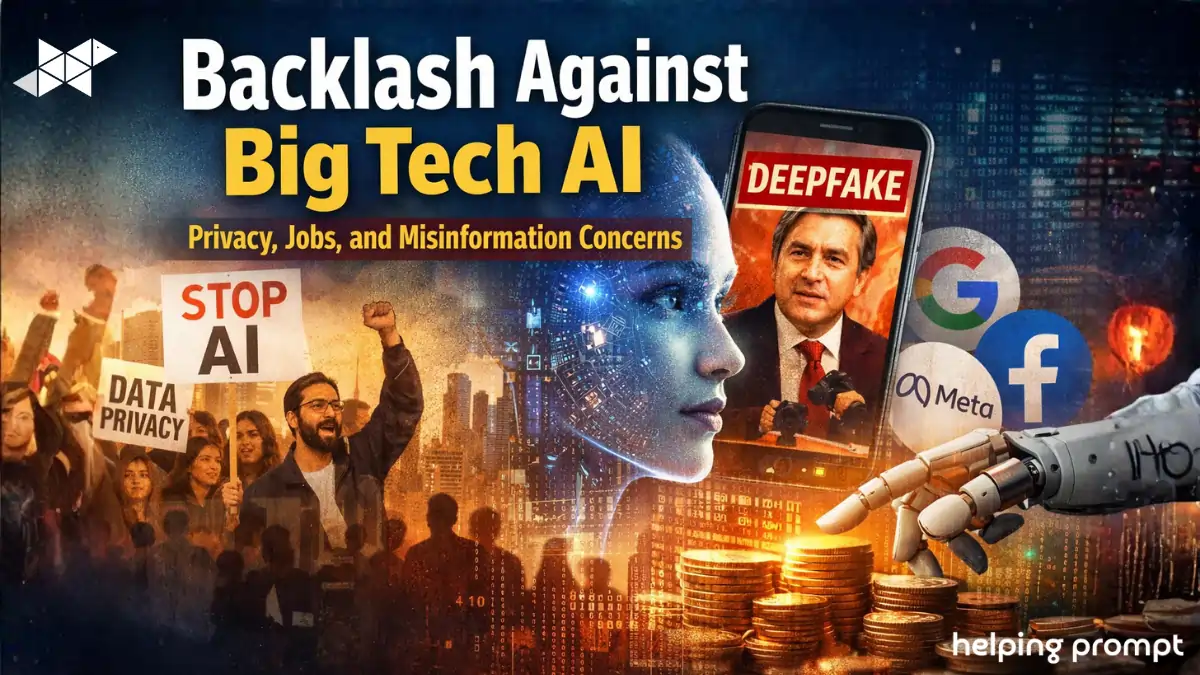
India is witnessing a growing social and regulatory pushback against Big Tech artificial intelligence platforms, following a series of controversies around AI-generated content, bias, and accountability. The issue has moved beyond social media criticism to formal government advisories and policy discussions, bringing AI governance into sharp public focus.
What happened
Over the past year, several AI products launched or updated by global technology companies have faced public criticism in India for generating inaccurate, biased, or culturally insensitive content. The backlash, initially visible on social media, prompted the Union government to issue formal advisories reminding platforms of their legal responsibilities under existing IT laws.
The debate has since expanded into questions of transparency, user safety, and whether global AI systems adequately reflect Indian legal and social norms.

Background and context
India regulates digital platforms primarily through the Information Technology Act, 2000 and the IT Rules, 2021. These rules already require intermediaries to exercise due diligence and prevent the spread of unlawful or harmful content.
The rapid rise of generative AI tools by companies such as Google, Meta, and OpenAI has introduced new challenges. Unlike traditional platforms, AI systems can independently generate text and images, raising concerns about misinformation, defamation, and cultural misrepresentation.
Earlier, India had taken a relatively light-touch approach, focusing on innovation. However, high-profile AI missteps shifted the tone of official engagement.
Key facts and official statements
The Ministry of Electronics and Information Technology issued advisories clarifying that AI platforms are not exempt from Indian law. According to the ministry, all digital services must ensure that their tools do not produce content that violates existing legal provisions.
Officials have stated that:
- AI-generated output is the responsibility of the platform deploying the model.
- Users must be informed about limitations and potential inaccuracies.
- Platforms should implement safeguards before public deployment.
The government has consistently maintained that no new AI-specific law has been enacted yet, and enforcement is being carried out under existing statutes.
Why This Matters Now
India is one of the world’s largest digital markets, with millions of users interacting daily with AI-powered tools. Public trust in technology platforms is critical, especially when AI outputs can influence opinions, elections, or social harmony.
The current pushback signals a shift from reactive criticism to proactive governance. It also aligns with global trends, as multiple jurisdictions reassess how much freedom AI companies should have without local oversight.
For Big Tech firms, India’s stance matters commercially and reputationally.
Impact on People / Industry / State
For users, the immediate impact is increased visibility of disclaimers, content warnings, and usage restrictions on AI platforms. Some services have delayed feature rollouts or limited certain capabilities for Indian users.
For the tech industry, the message is clear: global AI models must be adapted to local laws and sensitivities. Startups and smaller developers are also watching closely, as compliance costs and legal clarity will affect innovation.
For the state, enforcing accountability without stifling growth remains a balancing act. India has positioned itself as an emerging AI hub, and regulatory overreach could slow investments.

What happened Next
The government is expected to continue stakeholder consultations on a broader AI governance framework. Officials have indicated that any future regulation will likely be principle-based rather than overly prescriptive.
Meanwhile, platforms are engaging more actively with Indian authorities to demonstrate compliance. Legal experts say court scrutiny cannot be ruled out if AI-generated content leads to concrete harm, potentially bringing the issue before constitutional courts, including the Supreme Court of India.
For now, the social backlash has ensured that AI accountability remains firmly on the policy agenda, with both users and regulators demanding clearer answers from Big Tech.







Leave a Reply