Understanding the Jaipur Block Print Aesthetic in AI Visual Design
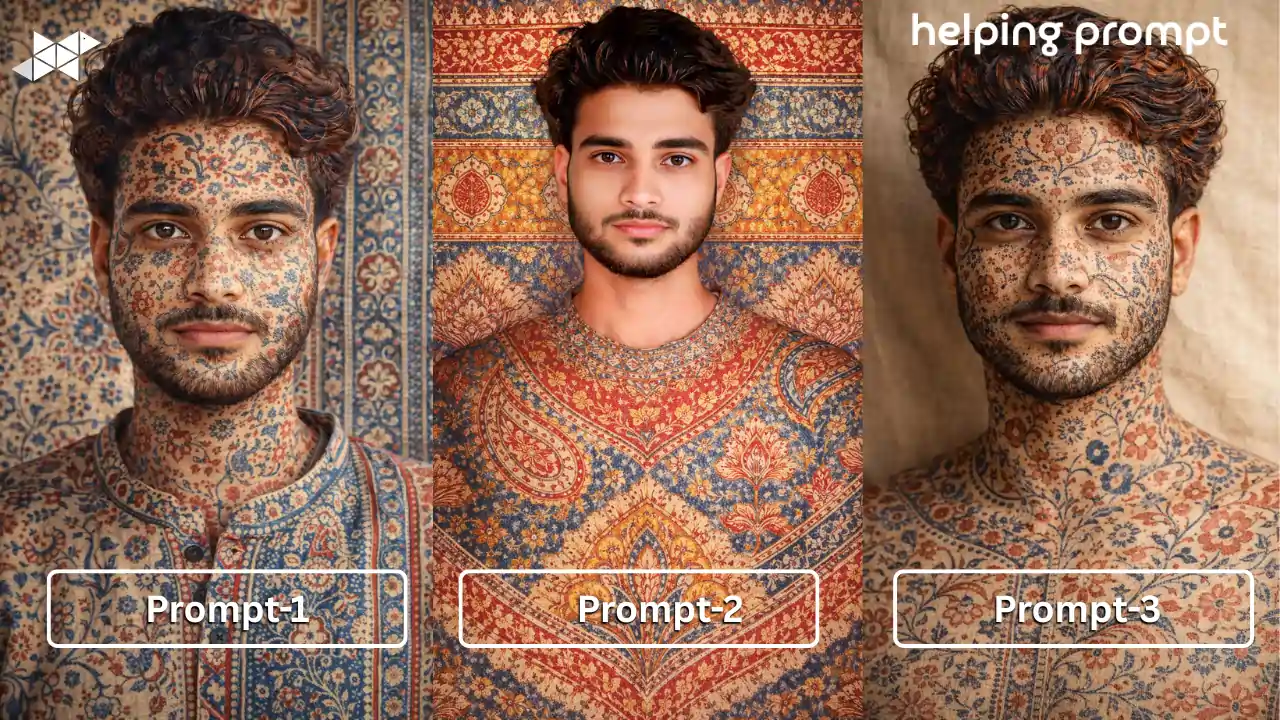
Jaipur block printing is known for precision, repetition, and soulful imperfections. Inspired by Jaipur, this style uses floral geometry, earthy pigments, and rhythmic symmetry. When applied to AI-generated visuals, the subject doesn’t sit on the fabric-it becomes part of it. Skin tones, contours, and expressions subtly merge with textile patterns, creating a seamless fusion. This approach works especially well for fashion visuals, editorial art, and culturally rooted storytelling where authenticity matters more than surface-level decoration.
Why This Concept Resonates With Modern Creators
Creators today want visuals that feel intentional, not generic. This textile-woven subject concept solves that problem. It respects tradition while still feeling experimental. For AI artists, designers, and prompt engineers, it offers a way to stand out on Google Discover, Pinterest, and Instagram. The aesthetic feels premium, slow-crafted, and culturally intelligent-qualities audiences now recognize instantly. Most importantly, it avoids the “AI look” by grounding visuals in real-world craft logic.
This Prompt Purely Work On chatgpt image Feature Section
The key is descriptive balance. You guide the AI to treat fabric as structure, not overlay. Mention tactile details-cotton fibers, hand-carved wooden blocks, vegetable dyes-while keeping the subject human and expressive. Avoid technical overload. Instead, write prompts as if you’re briefing an artisan, not a machine. Below are three refined, high-performing prompts designed for consistent, realistic results.
Best Prompt 1 (Textile-Integrated Portrait)
Create a realistic human subject whose face, posture, and expression are seamlessly woven into an intricate block printed textile inspired by Jaipur craftsmanship. The skin texture subtly transforms into hand-printed cotton patterns using indigo, madder red, and soft beige tones. The subject should feel alive, not flat, with natural shadows and depth formed by fabric folds. Traditional floral and geometric motifs flow organically across facial contours, maintaining realism while blending art and textile. Soft daylight, artisanal mood, ultra-detailed, culturally authentic, no modern patterns, no artificial shine.
Best Prompt 2 (Cinematic Cultural Fusion)
Reimagine the subject seamlessly woven into an intricate block printed textile inspired by Jaipur craftsmanship. If a person is present, preserve their real face and natural expression while allowing their silhouette to emerge gently from repeating patterns of paisleys, florals, and geometric forms. Otherwise, let the scene dissolve fully into repeating paisleys, florals, and geometric forms with visible woodblock texture. Use deep madder red, turmeric yellow, and indigo blue arranged in rhythmic layers that feel hand composed rather than perfectly uniform. Let the fabric appear both worn and lived in, with visible woodblock textures, slight misalignments, and subtle ink variations that reveal the human process behind the print. The subject or scene should feel as though it is becoming part of it, dissolving into pattern while remaining recognizable. The overall image should feel tactile, warm, and timeless, celebrating craft, repetition, and quiet beauty rather than a literal scene or setting
Best Prompt 3 (Editorial-Style Artistic Visual)
Design an editorial-style portrait where the subject appears sculpted from Jaipur-inspired block printed textiles. The fabric patterns adapt intelligently to facial anatomy, maintaining correct proportions and human emotion. Emphasize handcrafted details such as slight misalignment, dye saturation variation, and cotton weave texture. The subject should feel elegant and calm, blending tradition with modern visual storytelling. Lighting is soft and directional, enhancing depth without harsh shadows. Authentic Indian craftsmanship aesthetic, ultra-realistic, refined, no digital artifacts.


Leave a Reply