
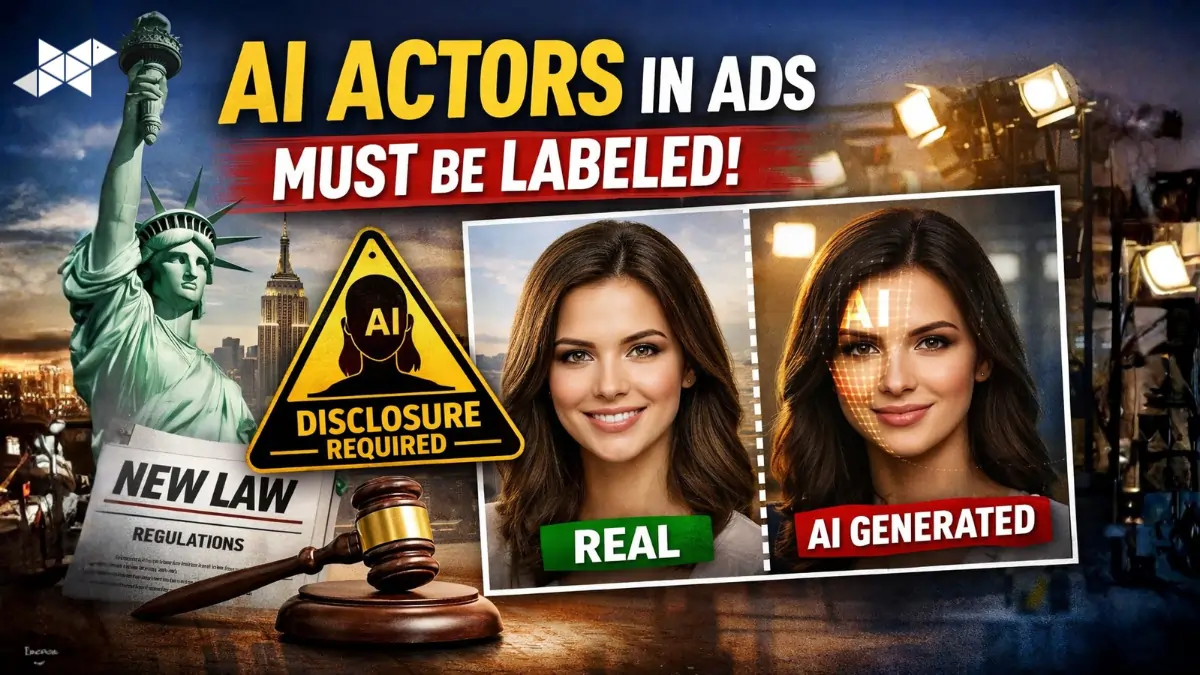
The room was quiet as lawmakers spelled it out clearly: if an advertisement uses an AI-generated face, voice, or body, viewers have a right to know. New York has now updated its business laws to require advertisers to disclose the use of AI-created “synthetic performers” in commercial ads. The move reflects growing concern about transparency in an era where digital humans can look and sound convincingly real.
What the New Law Says
Under the updated rules in New York, advertisers must clearly identify when an ad features a synthetic performer created using artificial intelligence. This includes AI-generated actors, models, influencers, or voices that appear human but are not real people.
Lawmakers stressed that the disclosure must be clear and noticeable. Hidden fine print or vague wording will not be enough. As one official put it during the discussion, “Consumers should never be left guessing whether what they are seeing is real or digitally created.”

Why Lawmakers Acted Now
The rise of AI in advertising has been fast and quiet. Brands can now generate realistic spokespeople without hiring actors, booking studios, or managing contracts. While this reduces costs, it also raises ethical questions.
During the hearing, a consumer advocate remarked, “Synthetic performers can influence trust, emotions, and buying decisions just like real people. Transparency is no longer optional.” The law aims to prevent misleading impressions and protect audiences from deception.
Impact on Advertisers and Brands
For advertisers, the change means rethinking creative workflows. Any campaign using AI-generated humans must now include proper disclosures. Agencies will also need to audit existing content to ensure compliance.
Marketing executives acknowledged the shift. One industry representative said, “AI is a powerful tool, but clear labeling helps maintain credibility with audiences.” Failure to comply could invite penalties under state business regulations.
What This Means for Consumers
For viewers, the law offers clarity. Audiences will be able to distinguish between real performers and AI-created ones, especially in political, financial, and lifestyle advertising where trust matters most.
Regulators emphasized that the goal is not to ban AI, but to ensure honesty. As one lawmaker summed it up, “Innovation should not come at the cost of transparency.”
New York’s updated advertising law sends a clear signal: AI can be used in ads, but it must be disclosed openly. The focus is simple-protect consumer trust while allowing technology to evolve within clear boundaries.







Leave a Reply