
Artificial Intelligence is growing fast. However, most AI tools are trained mainly on English or US-based data.
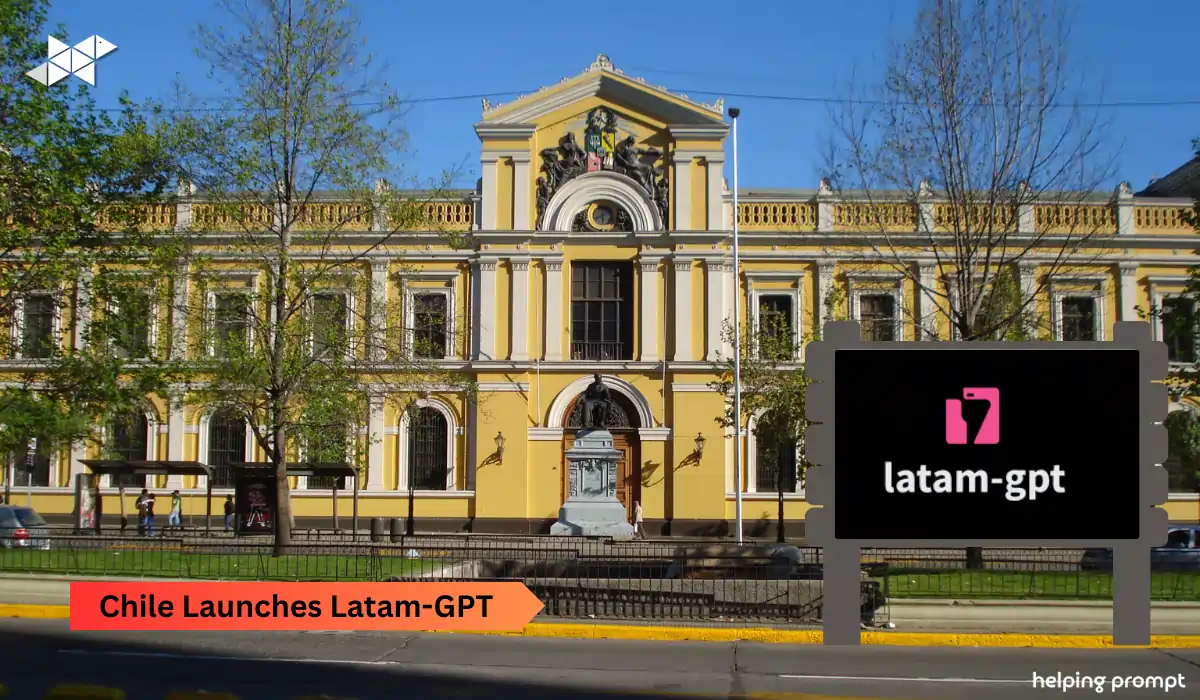
Now, Chile has taken a major step. It has launched Latam-GPT, the first open-source AI model trained specifically on Latin American languages and culture.
This move could reshape how AI works for millions of Spanish and Portuguese speakers.
Quick Summary
Chile introduces Latam-GPT, focused on Latin American data.
Built to understand regional languages, slang, and cultural context.
Open-source model to boost local innovation and research.
What is Latam-GPT?
Latam-GPT is a new open-source AI model developed under the leadership of Chile’s government and research institutions.
Unlike global AI systems trained mostly on US and European data, Latam-GPT is trained using Latin American datasets.
That means it understands:
- Regional Spanish variations
- Indigenous language influences
- Local history and political context
- Cultural expressions and idioms
As a result, responses become more accurate for local users.

Why This Launch Matters for Latin America
Most AI tools today struggle with regional nuance. For example, Spanish spoken in Mexico is different from Spanish in Chile or Argentina.
However, global AI models often treat them as the same.
Latam-GPT aims to fix that gap.
Key Impact Areas:
- Education platforms using local curriculum references
- Government services with culturally accurate AI support
- Media and journalism with regional context
- Startups building AI tools without paying heavy API costs
Therefore, this launch is not just technical – it’s strategic.
Who Is Behind Latam-GPT?
The project is supported by Chilean research institutions and government initiatives, including institutions like the University of Chile and national AI programs in Chile.
Moreover, it is part of a broader Latin American collaboration to reduce dependency on US-based AI giants.
This strengthens digital sovereignty in the region.
How Latam-GPT Is Different from ChatGPT
Many users may compare it with OpenAI’s ChatGPT. However, there are clear differences:
| Feature | Latam-GPT | Global AI Models |
|---|---|---|
| Training Data | Latin American datasets | Mostly US/Europe data |
| Language Focus | Spanish, Portuguese & regional variations | Primarily English |
| Open Source | Yes | Limited access |
| Cultural Context | Deep regional alignment | Generalized |
So, while ChatGPT is global, Latam-GPT is region-first.

What This Means for India and Other Regions
Interestingly, this development offers a lesson for India.
India also has multiple languages, dialects, and cultural variations.
If Latin America can build a localized AI model, India may consider similar region-focused AI trained on Hindi, Tamil, Bengali, and other languages with deep cultural context.
Therefore, localized AI could become the next big digital trend.
Challenges Ahead
Although the idea is powerful, success depends on:
- Data quality and scale
- Community contributions
- Responsible AI governance
- Regular updates and fine-tuning
Additionally, open-source models require active developer ecosystems to survive long term.
Why Open-Source AI Is Growing
Open-source AI gives:
- Transparency
- Local control
- Customization flexibility
- Lower cost for startups
Consequently, more countries are investing in sovereign AI infrastructure instead of relying entirely on global tech firms.

Final Conclusion
Chile’s Latam-GPT is more than a new AI model. It represents a shift toward regional AI independence. If executed well, it could inspire many developing nations to build AI tools that truly understand their people.






Leave a Reply