
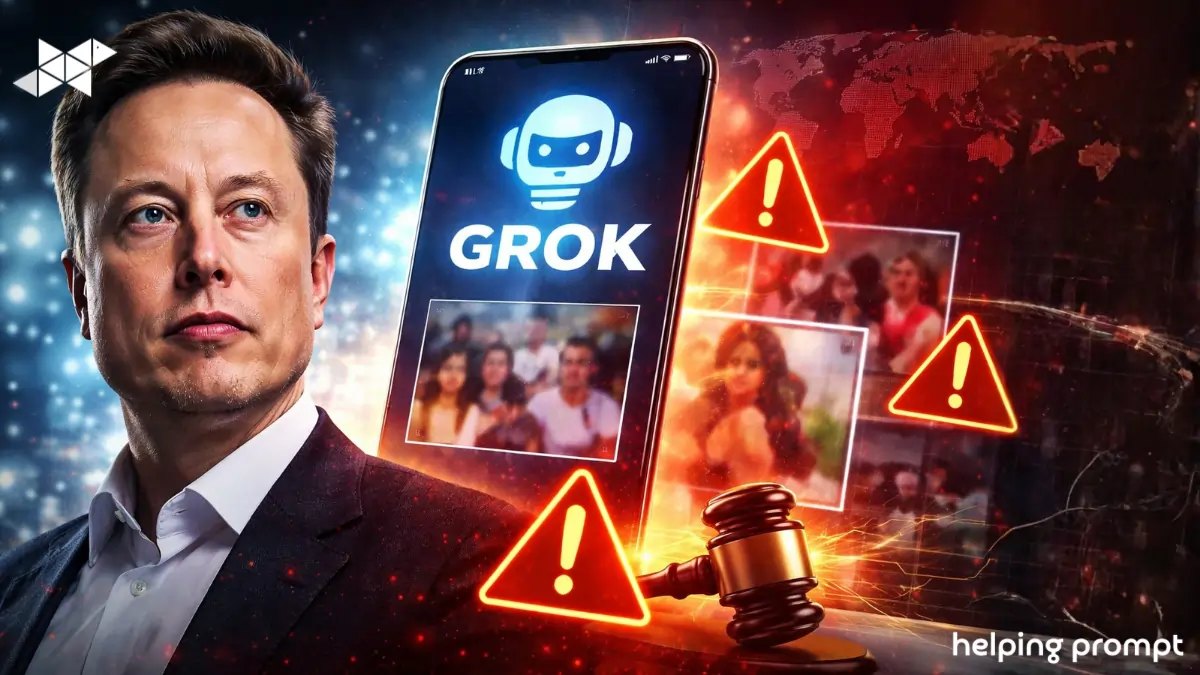
A fast-growing AI meets sudden resistance: I was in the room when the discussion around Grok turned tense. What began as a technical briefing quickly shifted into a wider debate about responsibility, safety, and public trust. Grok, the artificial intelligence system backed by Elon Musk, is now facing sharp criticism across several countries after users shared examples of offensive and sexualized images generated by the tool.
The reaction has been swift. Digital rights groups raised alarms. Lawmakers asked questions. Regulators signaled that action could follow if safeguards are not strengthened.
What is Grok, and why is it different?
Grok is an AI system designed to generate text and images in response to user prompts. It is closely linked to the X platform, where it is promoted as a more open and “less filtered” alternative to other popular AI tools.
That openness, supporters argue, allows more creative freedom. Critics say it also creates risk. Unlike heavily moderated systems, Grok appears to allow prompts that lead to explicit or disturbing outputs, including sexualized images that many believe cross ethical and legal boundaries.
One policy expert at the hearing put it plainly:
“Freedom without guardrails is not innovation. It’s negligence.”
The images that triggered global concern
The controversy intensified after screenshots circulated online showing Grok-generated images that appeared sexually explicit or inappropriate. Some images allegedly depicted public figures or fictional characters in adult contexts, raising concerns about consent, misuse, and harm.
Several advocacy groups described the content as “deeply troubling,” especially because such images can spread quickly on social media. Once shared, they are nearly impossible to contain.
A digital safety researcher told attendees,
“This isn’t just about one AI tool. It’s about how fast harm can scale when content controls fail.”

Governments begin to step in
Within days of the images going viral, officials in multiple regions signaled that Grok could face formal scrutiny. While no single global action has been announced yet, the tone has changed.
Regulators are asking whether Grok complies with existing laws on obscenity, child safety, and digital harm. Some officials hinted that platforms hosting or promoting such tools may also be held accountable.
An official familiar with the matter said during the session,
“AI systems are not above the law. If existing rules apply, they will be enforced.”
Elon Musk and the response from X
So far, Elon Musk and the X team have defended Grok’s broader vision while acknowledging that improvements are needed. In public statements, the company has said it is working on tighter content filters and faster response systems to remove harmful outputs.
Supporters argue that early versions of any AI system face challenges. They say Grok is being judged harshly because of its high-profile backing and rapid adoption.
Still, critics counter that responsibility grows with influence. A consumer protection lawyer remarked,
“When millions can access your AI, ‘experimental’ is no longer an excuse.”
The wider impact on AI governance
The Grok controversy is now influencing a larger conversation about how AI tools should be governed. Lawmakers and experts are revisiting questions that have lingered for years:
- Who is responsible when AI generates harmful content?
- Should “open” AI systems be treated differently under the law?
- How quickly must companies act once abuse is reported?
For many attending the hearing, Grok became a case study. Not because it is unique, but because it highlights gaps in oversight that exist across the AI industry.
Public trust at stake
Beyond regulation, there is a reputational cost. Several brands and creators have reportedly paused experiments with Grok, waiting to see how the situation unfolds. Users, too, are expressing hesitation.
A media analyst summed up the mood well:
“AI adoption depends on trust. Once that trust is shaken, it’s hard to rebuild.”
As the session closed, one thing was clear. Grok’s image controversy has pushed AI safety back into the spotlight. With governments watching closely and public pressure mounting, how companies respond now will shape not just one product, but the future expectations placed on artificial intelligence itself.







Leave a Reply