Global Recipe Zine Trend Is Turning Food Into Art
Food content is changing fast online. What started as simple recipe posts has now turned into something far more creative. The latest trend taking over social media is the “Global Recipe Zine Prompt” – a mix of food storytelling, AI-generated visuals, travel inspiration, and artistic magazine-style layouts.
Creators are using AI tools to turn everyday recipes into colorful digital zines packed with illustrations, cooking diagrams, cultural facts, and aesthetic page designs. These mini food magazines are now appearing everywhere from Instagram to Pinterest and TikTok.
What makes the trend so viral is how personal and visual it feels. Instead of sharing only ingredients and cooking steps, people are creating entire food experiences around one dish.
For readers, it feels entertaining. For creators, it feels artistic. And for food bloggers, it opens a huge opportunity for traffic and engagement.
What Is a Global Recipe Zine Prompt?
A Global Recipe Zine Prompt is a creative AI instruction used to generate a visually styled food magazine around a recipe from a specific country or culture.
The prompt usually asks AI tools to create:
- Multi-page recipe layouts
- Illustrated cooking steps
- Ingredient diagrams
- Cultural background information
- Food history snippets
- Mixed-media visual styles
- Artistic typography and page design
Instead of a plain recipe card, the result looks like a modern indie food magazine.
This style became especially popular because AI image tools can now create editorial-quality visuals in seconds.
Why This Trend Is Going Viral
Visual Content Performs Better
Modern social platforms reward visually engaging content. Recipe zines combine food photography, digital art, storytelling, and educational content into one shareable format.
That makes people stop scrolling.
Platforms like Instagram and Pinterest especially favor visually rich posts that increase saves and shares.
AI Makes It Easy
Before AI tools became popular, designing a food magazine required graphic design skills.
Now users can generate:
- Page layouts
- Artistic illustrations
- Recipe infographics
- Vintage food poster styles
- Retro cookbook aesthetics
with only one detailed prompt.
This lowered the barrier for creators and accelerated the trend.
It Combines Food and Travel
People love discovering international dishes online.
A recipe zine feels like traveling through food culture without leaving home. One swipe might take viewers from Korean street food to Mexican desserts or Italian pasta traditions.
That cultural storytelling creates emotional engagement.
How Creators Are Using Recipe Zine Prompts
AI Food Artists
Digital creators are using recipe zines as portfolio pieces and social content.
Popular styles include:
- Retro newspaper layouts
- Hand-drawn food illustrations
- Minimal Scandinavian magazine themes
- Anime-inspired recipe pages
- Vintage cookbook aesthetics
Food Bloggers
Food bloggers are embedding zine-style graphics into articles to increase time on page and Pinterest traffic.
Many bloggers report higher engagement because readers spend longer exploring illustrated recipe sections compared to plain text recipes.
Social Media Creators
Short-form video creators are turning recipe zines into animated slideshow videos.
The format works well because every page acts like a mini scene transition.
What Makes a Recipe Zine Look Good?
Strong Visual Theme
The best recipe zines keep a consistent design style.
Examples include:
- Retro café look
- Minimal luxury magazine
- Colorful collage art
- Handwritten recipe journal
- Street-food poster design
Consistency makes the final piece feel professional.
Cultural Storytelling
The trend works best when creators include cultural context.
Readers enjoy learning:
- Where the dish originated
- Traditional cooking methods
- Ingredient history
- Regional variations
- Fun food facts
This turns the zine into both entertainment and education.
Step-by-Step Visuals
One reason the trend performs so well is readability.
Instead of long recipe paragraphs, users see:
- Visual ingredient maps
- Simple illustrated instructions
- Cooking timelines
- Texture references
- Plating examples
This makes recipes easier to follow on mobile devices.
Popular Global Dishes Used in Viral Zines
Some dishes appear more often because they are visually appealing and recognizable online.
Japanese Ramen
Ramen zines often feature:
- Broth diagrams
- Topping layouts
- Anime-style illustrations
- Neon Japanese street aesthetics
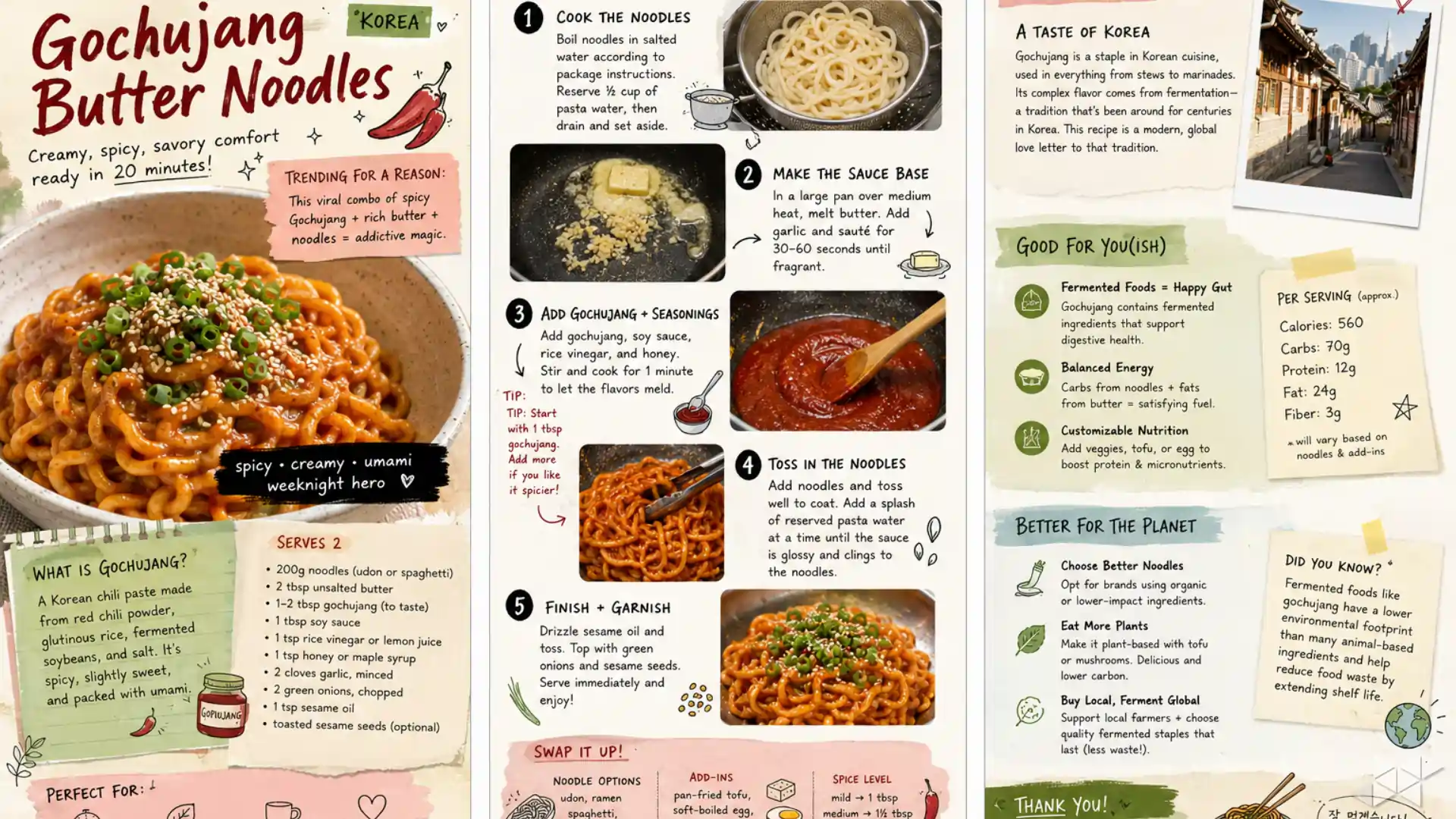
Korean Gochujang Noodles
This recipe trend exploded because the sauce color looks vibrant in AI-generated visuals.
Creators often combine:
- Butter noodle photography
- Korean convenience-store aesthetics
- Minimal recipe card layouts
Mexican Horchata
Horchata became popular in recipe zines because creators can combine:
- Cinnamon textures
- Café illustrations
- Vintage Latin-inspired layouts
- Creamy drink visuals
Italian Tiramisu
Dessert zines work extremely well because layered textures look cinematic in magazine-style presentations.
Why Google Discover Loves This Content
Google Discover prioritizes engaging visual content with strong click-through potential.
Recipe zine articles naturally fit that format because they include:
- Trend-based topics
- Strong visuals
- Cultural storytelling
- Mobile-friendly layouts
- Easy readability
- High engagement potential
For bloggers, this trend is valuable because it combines:
- Food niche traffic
- AI trend traffic
- Social media traffic
- Pinterest discovery traffic
all within one article.
Prompt:
“Create a 3-page color mixed media food zine for an international recipe. First, look online for recent trendy recipes, then choose one based on what you know about me. Include necessary step-by-step visuals, diagrams, and explainers. Include any health or environmental context of the dish.”
How to Create Your Own Recipe Zine
Step 1: Choose a Visually Interesting Dish
Select recipes with:
- Strong colors
- Unique textures
- Recognizable ingredients
- Cultural identity
Street food and desserts usually perform best.
Step 2: Write a Detailed Prompt
Good prompts mention:
- Art style
- Page count
- Layout style
- Ingredient visuals
- Cultural notes
- Typography mood
- Color palette
Specific prompts create stronger results.
Step 3: Keep Layouts Mobile Friendly
Most users discover this content on phones.
That means:
- Large readable text
- Clean spacing
- Simple page flow
- Minimal clutter
works best.
Step 4: Add Human Personality
AI visuals alone are not enough anymore.
Creators who add:
- personal notes
- cooking experiences
- cultural insights
- family stories
usually perform better online.
Common Mistakes to Avoid
Overloading the Design
Too many effects can make the zine difficult to read.
Simple layouts often look more premium.
Ignoring Food Accuracy
Even artistic recipe pages should still make sense.
Incorrect ingredients or impossible cooking steps can reduce trust quickly.
Using Generic Prompts
The more specific the prompt, the more unique the output becomes.
Generic prompts usually produce repetitive designs.
- How do you make a recipe zine with AI?
Use a detailed AI prompt that includes recipe type, art style, page layout, and visual storytelling elements.
- Why are food zines trending online?
Food zines combine visual art, culture, and recipes into highly shareable social media content.
- Which recipes work best for AI food zines?
Colorful international dishes like ramen, noodles, desserts, and café drinks perform especially well.
Pro Tips
- Use portrait layouts for better mobile viewing.
- Add cultural trivia to increase reader engagement.
- Keep ingredient lists visually separated.
- Choose warm color palettes for food-focused designs.
- Mix photography with illustrated elements for a modern look.
- Use clean typography to improve readability.
- Focus on one signature dish instead of multiple recipes.
- Create Pinterest-friendly vertical graphics from zine pages.
A recipe zine is a small magazine-style food guide that combines recipes, visuals, and storytelling.
Yes. Modern AI tools can generate illustrated recipe pages, cooking diagrams, and editorial-style food designs.
Yes. They improve engagement, visual appeal, and social sharing potential for modern food blogs.
Conclusion
The Global Recipe Zine Prompt trend shows how quickly food content is evolving online. Recipes are no longer just instructions. They are becoming interactive visual experiences that combine design, culture, storytelling, and creativity.
For creators, this trend offers a new way to stand out in crowded social feeds. For bloggers, it creates opportunities for Discover traffic and reader engagement. And for audiences, it makes cooking feel more inspiring and artistic.
As AI tools continue improving, recipe zines may become one of the biggest visual food content trends on the internet.