
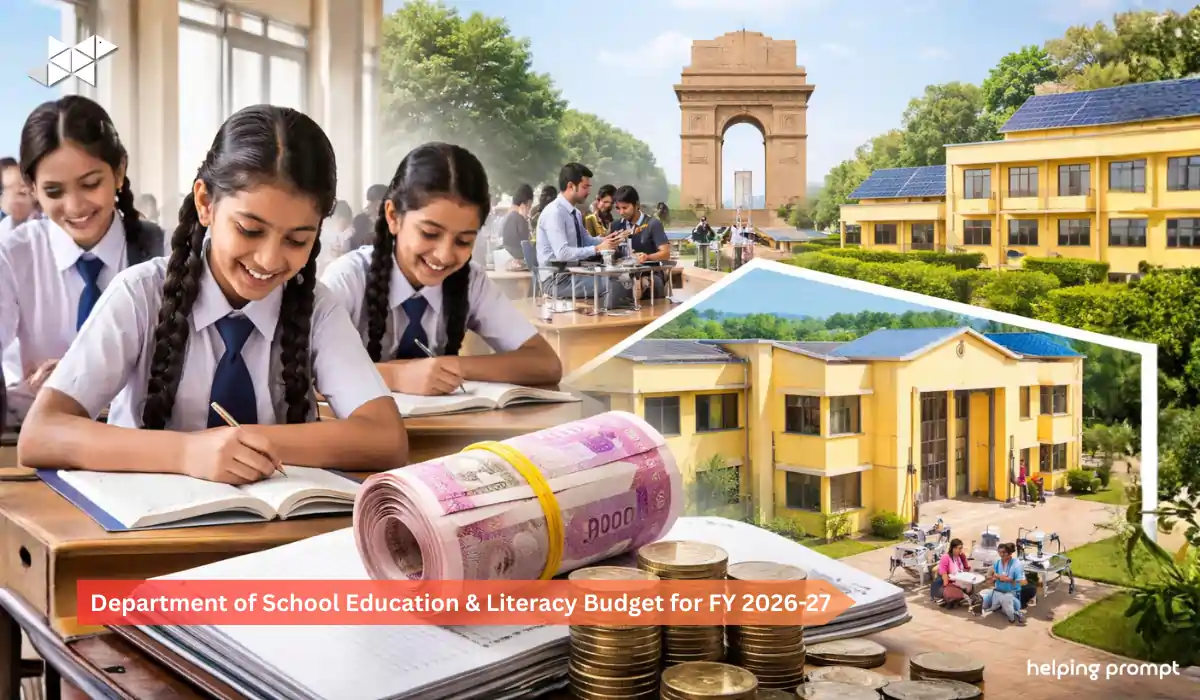
The Ministry of Education’s budget for FY 2026-27 has been announced in India’s Union Budget 2026-27, showing a clear focus on school education, skills and youth growth. Importantly, the Department of School Education & Literacy (DoSEL) gets one of its largest allocations ever, signalling continued emphasis on improving learning quality, infrastructure, and access for millions of students nationwide.
Quick Summary
Total Education Ministry budget: ₹1.39 lakh crore (up ~8.27% from last year).
School Education & Literacy allocation: ₹83,562 crore (up ~6.35%).
Investments target skill labs, girls’ hostels, and employment-linked education reforms.
Department of Higher Education Budget for FY 2026-27
Why This Matters (What’s Behind These Numbers)
What Is the Department of School Education & Literacy (DoSEL)?
The Department of School Education & Literacy is the wing of the Ministry of Education that handles:
- Primary-sr. secondary school funding & policies
- Literacy and adult education initiatives
- National school programmes and schemes
These funds directly impact programs like Samagra Shiksha, Mid-Day Meal, teacher training and school infrastructure.
What Has Changed in FY 2026-27?
Bigger Budget, Bigger Goals
- The Ministry of Education will spend ₹1,39,289 crore total- the highest ever for the education sector.
- Of this, ₹83,562 crore is dedicated to school education and literacy. This is higher than last year’s ₹78,572 crore, marking a 6.35 % increase.
- This growth is part of a larger 8.27 % jump in the entire ministry’s allocation from 2025-26 levels.
Perfect Holi Colors Without Skin Damage: AI Holi Prompts for Couple
How the School Budget Is Being Used
The DoSEL budget isn’t just a number – it fuels real programmes:
- Atal Tinkering Labs: Massive expansion to spark innovation in schools.
- Skilling & AVGC labs: Labs for animation, gaming, visual effects in 15,000 schools & higher institutions.
- Infrastructure upgrades: Funds for modern classrooms, toilets, clean water, and digital tools.
- Girls’ Hostels: Promise of at least one girls hostel in every district to improve access for girls.
When Do These Funds Take Effect?
The budget takes effect from April 2026 through March 2027 – the official FY 2026-27 financial year. After Parliament’s approval, departments roll out allocations to states and implementing agencies.
Where This Budget Impacts Schools Most
Across India – rural, urban and remote areas alike. Key focus areas include:
- Underserved regions with poor infrastructure
- Tribal and rural schools needing technology upgrades
- Girls’ education & safety measures
- Skill labs that build future-ready talent
These funds link directly to states, local bodies, and implementing partners.
Holi Couple AI Image Prompt: Create Cinematic Photos With Exact Face Match
What This Means for Students & Parents
- Better facilities: cleaner, safer, and tech-ready schools.
- More opportunities: labs and practical learning for STEM and creative careers.
- Equity in education: special focus on girls and disadvantaged learners.
What Next?
- State education departments will release detailed plans by March-April 2026.
- Schools and programmes will begin rolling out allocations from Q1 FY 2026-27.
Conclusion
The FY 2026-27 budget marks a consistent increase in support for school education and literacy in India. With focused investments in technology, infrastructure and skills, the Department of School Education & Literacy is better resourced to implement reforms – aiming for a stronger, more inclusive education system.







Leave a Reply