
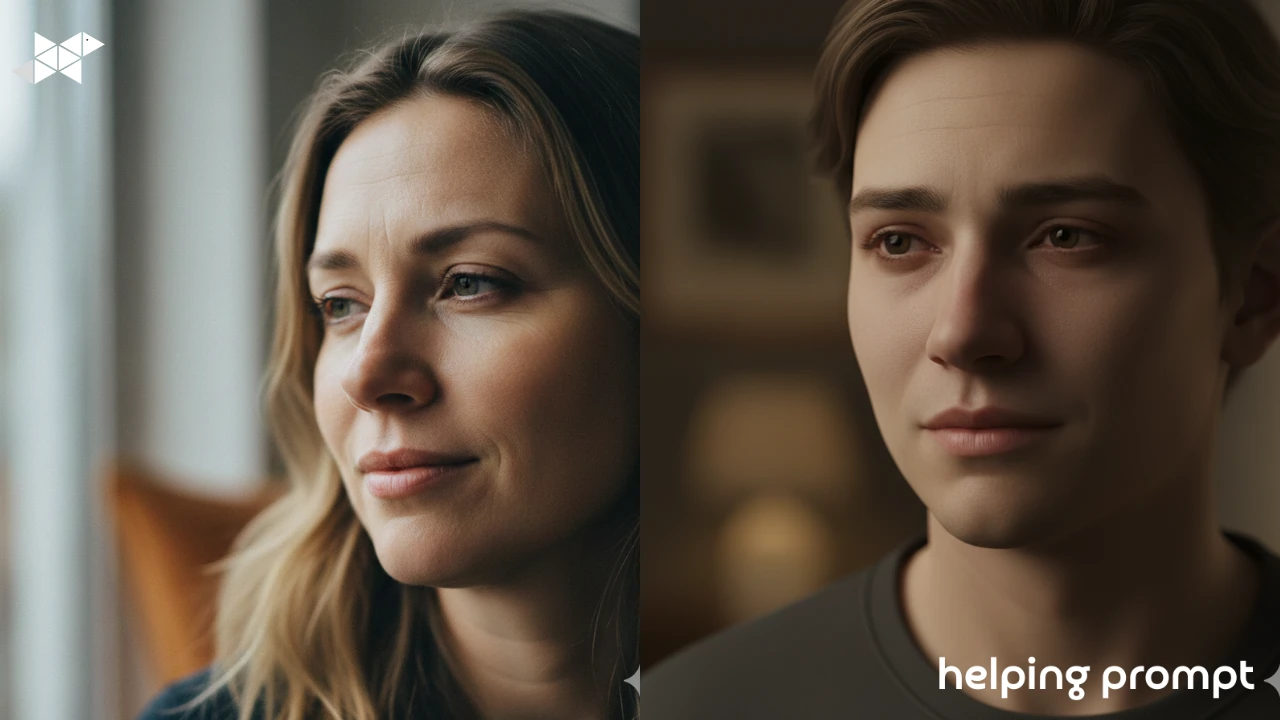
Emotional portraits aren’t about perfect skin or flashy effects. They’re about feeling. A quiet gaze. A hint of sadness. That almost-smile that says more than words ever could.
AI tools are surprisingly good at this-if you guide them the right way. Most beginners focus on camera specs and forget the human part. That’s where good prompts make all the difference.
In this guide, we’ll break things down simply and share 7 prompt ideas, with 3 best prompt examples you can use right away to unlock emotional depth in human portrait edits.
No heavy jargon. No overthinking. Just practical creativity.
How to Use It
Think of an AI prompt like giving direction to a photographer and an actor at the same time.
When writing emotional portrait prompts:
- Focus on mood first, not effects
- Describe expressions and subtle emotions
- Use lighting to support the emotion, not overpower it
- Keep language natural-AI understands feelings better than technical specs
You don’t need to mention every camera detail. A clear emotional intention often works better.
Below are three carefully crafted prompt examples that beginners can easily understand and customize.
1. Quiet Reflection & Inner Thoughts
A close-up human portrait with soft natural window light, showing a calm yet emotional expression. The subject looks slightly away from the camera, eyes thoughtful, as if lost in deep reflection. Subtle skin texture, realistic facial details, muted color tones, cinematic mood, shallow depth of field.
2. Subtle Sadness Without Tears
A realistic portrait of a young person with slightly tired eyes and a faint, restrained smile. Warm low-contrast lighting, natural shadows on the face, emotional depth without exaggeration. The mood feels personal, intimate, and quietly sad.
3. Hope After Struggle
A cinematic human portrait showing emotional strength and quiet hope. The subject faces the camera with a soft, confident expression. Gentle rim light around the face, natural skin texture, balanced highlights and shadows, realistic colors, storytelling mood.
Takeaway
If you remember just one thing, make it this: emotion comes from intention, not complexity.
Start your prompts by describing how the person feels, then gently support that feeling with lighting and mood. Keep it human. Keep it simple. And don’t be afraid to tweak one word at a time-small changes often unlock big emotional results.



Leave a Reply