
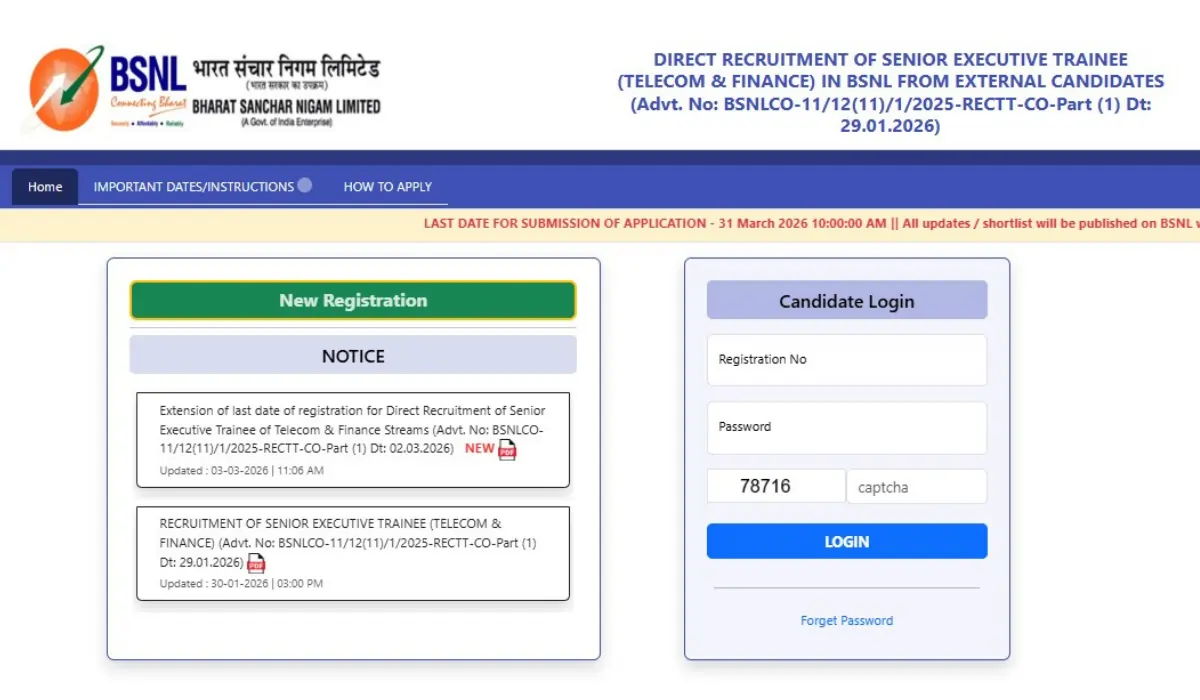
BSNL SET Exam Emerging Technologies Q&A: Preparing for the BSNL Senior Executive Trainee (SET) Exam 2026–27 requires a strong understanding of modern telecom technologies.
The syllabus now includes several emerging technologies that are shaping the future of telecom networks. Therefore, candidates must understand both the basic concepts and real-world applications.
This quick guide explains the latest important questions and answers from the official syllabus in a clear and exam-friendly format.
Quick Points
BSNL SET exam includes Emerging Technologies in the telecom syllabus.
Major topics include IoT, M2M communication, Blockchain, SDN, Cloud Computing, Data Centers, and AI in Telecom.
These technologies help telecom networks become smarter, automated, and scalable.
Understanding definitions, working principles, advantages, and telecom applications is important for the exam.
Short conceptual questions are commonly asked in technical recruitment exams.
Emerging Technologies – Important Q&A for BSNL SET Exam
1. Fundamentals of Internet of Things (IoT)
Q1: What is the Internet of Things (IoT)?
Answer:
The Internet of Things (IoT) refers to a network of physical devices connected to the internet that can collect, share, and exchange data automatically.
These devices include sensors, smart appliances, vehicles, and industrial machines. As a result, they communicate with each other without human intervention.
Example:
- Smart electricity meters
- Smart home devices
- Connected vehicles
AI Takes Center Stage at MWC 2026: Smart Calls, AI Routers, and Future 6G Networks
Q2: What are the main components of IoT?
The basic architecture of IoT includes:
- Sensors/Devices – collect data from the environment
- Connectivity – WiFi, LTE, 5G or LPWAN networks
- Data Processing – cloud platforms process the collected data
- User Interface – mobile apps or dashboards display results
Therefore, IoT works by connecting physical objects to digital networks.
Q3: What are the advantages of IoT in telecom?
IoT helps telecom operators in several ways:
- Network monitoring and automation
- Smart city connectivity
- Remote device management
- Improved operational efficiency
Consequently, telecom companies like BSNL can provide smart services such as smart metering and smart agriculture connectivity.
2. Machine to Machine (M2M) Communication
Q4: What is M2M Communication?
Machine-to-Machine (M2M) communication refers to direct communication between devices without human involvement.
Devices send data automatically through wired or wireless networks.
Q5: Difference between IoT and M2M
| Feature | IoT | M2M |
|---|---|---|
| Connectivity | Internet-based | Direct device communication |
| Scalability | Highly scalable | Limited |
| Data Processing | Cloud platforms | Local systems |
| Application | Smart homes, cities | Industrial automation |
Therefore, IoT is considered an advanced evolution of M2M communication.
3. Blockchain Technology
Q6: What is Blockchain?
Blockchain is a decentralized digital ledger used to record transactions securely across multiple computers.
Each record is stored in a block, and blocks are linked together using cryptography.
Q7: Key features of Blockchain
- Decentralization
- Transparency
- Security through cryptography
- Immutability (records cannot be easily changed)
Because of these features, blockchain is widely used in digital payments, telecom security, and identity management.
Stunning Rural Holi Festival Cinematic Prompt
Q8: How can blockchain help telecom networks?
Blockchain can improve telecom operations in several ways:
- Secure roaming agreements between operators
- Fraud prevention in telecom billing
- Identity verification systems
- Secure IoT device authentication
Therefore, telecom companies are actively exploring blockchain solutions.
4. Software Defined Networks (SDN)
Q9: What is Software Defined Networking (SDN)?
Software Defined Networking (SDN) is a networking architecture where the control plane is separated from the data plane.
In simple terms, network management is handled by software controllers instead of hardware devices.
Q10: Advantages of SDN in telecom networks
- Centralized network control
- Faster network configuration
- Reduced hardware dependency
- Better traffic management
As telecom networks grow larger, SDN allows operators to manage networks more efficiently and dynamically.
5. Cloud Computing and Data Centers
Q11: What is Cloud Computing?
Cloud computing refers to delivering computing services such as storage, servers, networking, and software over the internet.
Instead of maintaining physical infrastructure, companies use cloud platforms to store and process data.
Q12: Types of Cloud Services
The main cloud service models are:
- IaaS (Infrastructure as a Service)
- PaaS (Platform as a Service)
- SaaS (Software as a Service)
For example, telecom operators use cloud infrastructure to run network management systems and store subscriber data.
Q13: What is a Data Center?
A Data Center is a physical facility that houses:
- Servers
- Networking equipment
- Storage systems
- Power and cooling infrastructure
Therefore, data centers act as the backbone of cloud services and telecom networks.
Celebrating Justice Through Selfies: AI Prompts Inspired by the International Day of Women Judges
6. Artificial Intelligence in Telecom Networks
Q14: What is Artificial Intelligence (AI)?
Artificial Intelligence (AI) refers to machines or systems that can perform tasks that normally require human intelligence, such as learning, decision making, and pattern recognition.
Q15: Applications of AI in telecom networks
AI is transforming telecom operations in many ways:
- Network optimization
- Predictive maintenance
- Customer service chatbots
- Fraud detection systems
For instance, AI can detect network congestion early and automatically adjust traffic routing.
Q16: Why AI is important for telecom operators like BSNL?
AI helps telecom companies:
- Reduce network downtime
- Improve service quality
- Automate operations
- Enhance customer experience
Consequently, AI is becoming a key technology for future telecom infrastructure.

Final Conclusion
Emerging technologies such as IoT, Blockchain, SDN, Cloud Computing, and Artificial Intelligence are rapidly transforming the telecom industry.
Therefore, candidates preparing for the BSNL Senior Executive Trainee Exam 2026-27 should clearly understand these concepts along with their telecom applications. Mastering these topics will not only help in the exam but also build a strong foundation for future telecom careers.







Leave a Reply