
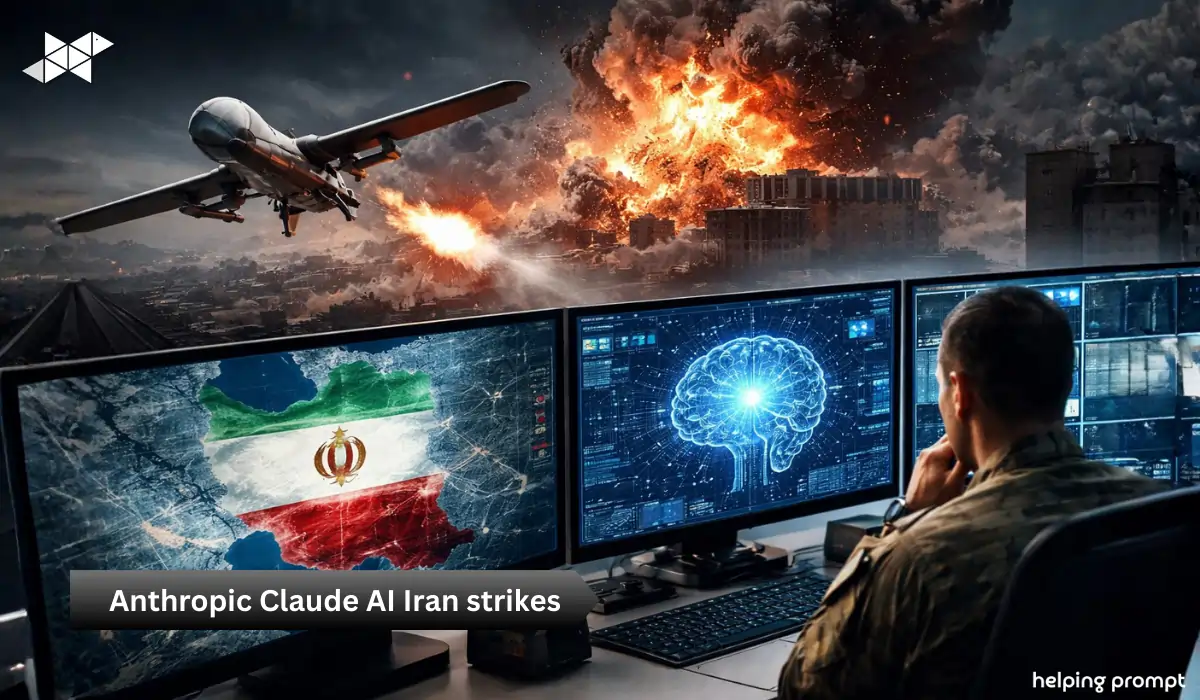
Anthropic Claude AI Iran strikes: The use of artificial intelligence in warfare has entered a new phase.
During the recent Iran strikes under Operation Epic Fury, US and Israeli forces reportedly used Anthropic’s Claude AI – even after President Donald Trump announced a federal AI restriction.
What really happened? And what does this mean for AI governance and military technology?
Let’s break it down clearly.
Quick Tips
US and Israeli forces launched Operation Epic Fury targeting Iranian sites.
Reports suggest Anthropic’s Claude AI was used during the mission.
President Donald Trump reportedly announced a federal AI ban hours earlier.
Secretary of War Pete Hegseth called it “the most precise operation in history.”
Unconfirmed reports claim Iran’s Supreme Leader was killed.
What Is Operation Epic Fury?
The United States and Israel launched Operation Epic Fury as a coordinated military strike against Iranian targets.
According to official briefings, the operation focused on:
- Strategic military facilities
- Missile storage sites
- Intelligence command hubs
The Pentagon described the strikes as “precision-based and data-driven.”
Interestingly, insiders suggest advanced AI systems were used for:
- Real-time surveillance analysis
- Target verification
- Damage prediction modeling
This is where the controversy begins.

Anthropic’s Claude AI: Why Is It Significant?
Anthropic, a US-based AI company, builds safety-focused large language models, and enterprises widely use its main product, Claude.
Claude is designed for:
- Natural language understanding
- Data summarization
- Risk analysis
- Decision-support systems
However, military deployment raises serious policy questions.
If the federal government announced restrictions just hours before the strike, how was Claude reportedly used?
That’s the core issue.
The Trump AI Ban: What Was Announced?
Donald Trump reportedly introduced a temporary federal ban limiting AI tools in classified military operations.
The objective was said to be:
- Prevent over-reliance on AI
- Reduce autonomous decision risks
- Ensure human command oversight
Yet, Operation Epic Fury allegedly integrated AI-driven analysis systems.
This creates a governance gap.
Was the ban symbolic?
Was the AI used indirectly?
Or was the policy not yet implemented operationally?
Officials have not clarified these points.

Precision Warfare: How AI Is Changing Modern Combat
Secretary of War Pete Hegseth described the mission as “the most precise in history.”
AI systems can improve precision by:
- Processing satellite imagery faster than humans
- Cross-verifying intelligence sources
- Simulating strike outcomes
- Reducing civilian casualty risk
For example, AI can analyze thousands of drone images in seconds and flag potential threats. That shortens response time dramatically.
However, AI does not “decide” alone. Human commanders still authorize final actions.
At least, that is the official stance.
Reports About Iran’s Supreme Leader
Some international reports suggest that Iran’s Supreme Leader may have been killed during the strikes. However, officials have not independently confirmed these claims.
At the same time, geopolitical tensions remain high. As a result, misinformation tends to spread quickly during conflict situations.
Therefore, readers should rely on verified updates from official sources. In addition, it is important to cross-check information before sharing it online.
Why This Story Matters Globally
This situation highlights three critical issues:
1. AI Governance in Warfare
If AI restrictions can be bypassed or unclear, regulatory frameworks need stronger enforcement.
2. US-Israel Strategic Cooperation
Joint operations signal deeper intelligence and defense collaboration.
3. The Future of Military AI
AI is no longer experimental in defense. It is operational.
Countries like the US, China, and Israel are investing heavily in AI-powered defense systems. Therefore, policy clarity becomes urgent.

Bigger Question: Who Controls AI in Conflict?
The debate is shifting from “Can AI be used in war?” to:
- Who authorizes it?
- Who audits it?
- Who is accountable if something goes wrong?
Transparency will define public trust.
And without clear oversight, political backlash is inevitable.
Conclusion
Operation Epic Fury marks a turning point in AI-powered warfare.
If reports are accurate, the use of Anthropic’s Claude during the Iran strikes – despite a federal AI ban – raises serious governance questions.
The world is now watching how AI regulation and military strategy evolve together.







Leave a Reply