
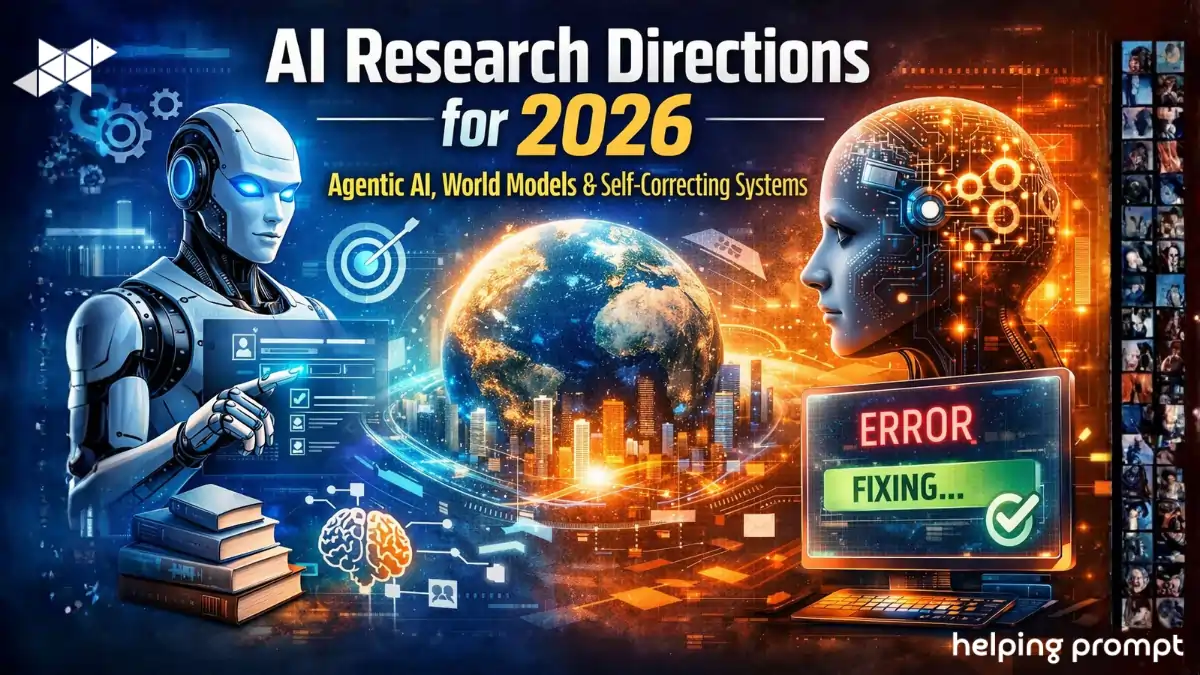
Inside the 2026 AI Research Conversation: The room felt different this time. Researchers were not talking about bigger models or faster chips. The discussion had moved to something deeper – how AI thinks, adapts, and corrects itself.
At the 2026 AI research briefings, four themes kept coming up again and again: agentic AI, world models, continual learning, and automated self-correction. These are not buzzwords. They are shaping the next phase of artificial intelligence, moving it closer to systems that can act with purpose, learn over time, and fix their own mistakes.
One senior researcher put it simply:
“We are no longer asking what AI can answer. We are asking what AI can do – and how safely it can do it.”

Agentic AI: From Responding to Acting
Agentic AI refers to systems that do more than reply to commands. They can plan tasks, make decisions, and take action toward a goal with limited human input.
During the hearing, examples ranged from AI systems that manage supply chains to tools that schedule complex workflows across teams. The key shift is autonomy – but controlled autonomy.
Researchers were clear that agentic AI does not mean unchecked AI. Guardrails are a major part of the research.
“An agent should know when to act and when to stop,” one panelist said.
In 2026, research is focused on building agents that understand context, respect boundaries, and explain their decisions in plain language.
World Models: Teaching AI How Reality Works
World models are internal representations that help AI understand how the world behaves. Instead of reacting to data point by point, AI builds a mental map of cause and effect.
Think of it like this: rather than memorizing traffic rules, the system understands why braking works, how roads connect, and what usually happens next.
At the hearing, scientists explained that world models allow AI to:
- Predict outcomes before acting
- Simulate scenarios safely
- Reduce harmful or illogical decisions

One researcher noted:
“When AI understands the world, it stops guessing and starts reasoning.”
This research is especially important for robotics, healthcare systems, and decision-support tools where mistakes are costly.
Continual Learning: AI That Grows Without Forgetting
Traditional AI systems learn once and then freeze. Continual learning changes that. It allows AI to keep learning from new data without forgetting what it already knows.
This matters because the real world changes constantly. Laws change. Languages evolve. Human behavior shifts.
In 2026, research is focused on solving a long-standing problem called “catastrophic forgetting,” where learning something new erases older knowledge. New approaches aim to help AI adapt gradually, just like humans do.
A university researcher summed it up during the session:
“If AI is going to live in the real world, it has to grow with it.”

Automated Self-Correction: Letting AI Fix Its Own Mistakes
One of the most discussed topics was automated self-correction. These systems monitor their own outputs, detect errors, and adjust behavior without waiting for human feedback.
This does not mean AI becomes its own judge. Instead, it follows clearly defined rules and feedback loops designed by humans.
Researchers highlighted several benefits:
- Fewer repeated errors
- More reliable long-term performance
- Better alignment with human values
One speaker described it as “AI with an internal mirror.”
This area is seen as critical for trust. An AI that can admit and correct mistakes is far more acceptable in sensitive fields like education, law, and public services.
Why These Four Directions Are Connected
What stood out during the hearing was how closely these ideas are linked. Agentic AI needs world models to act wisely. Continual learning helps agents stay relevant. Self-correction keeps everything in check.
Together, they point to a future where AI systems are:
- More independent, but also more responsible
- Better at understanding real-world complexity
- Designed for long-term use, not one-time tasks
As one closing remark put it:
“The next generation of AI won’t just answer questions. It will learn, adapt, and improve – quietly, continuously, and carefully.”
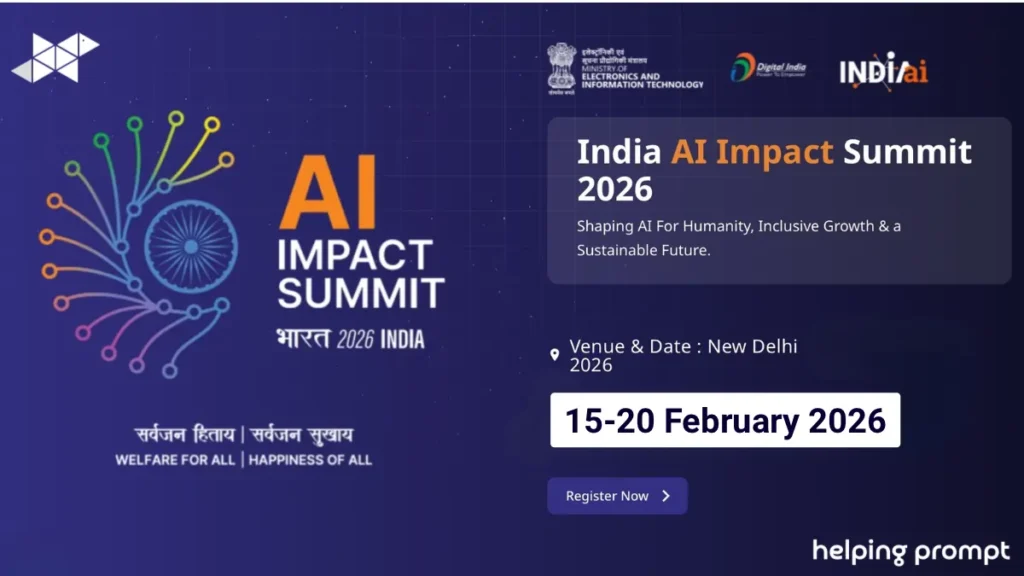
AI research in 2026 is less about size and more about sense. The focus has shifted to building systems that act with purpose, understand their environment, learn over time, and correct themselves. These directions signal a more mature and thoughtful phase of artificial intelligence development.







Leave a Reply