
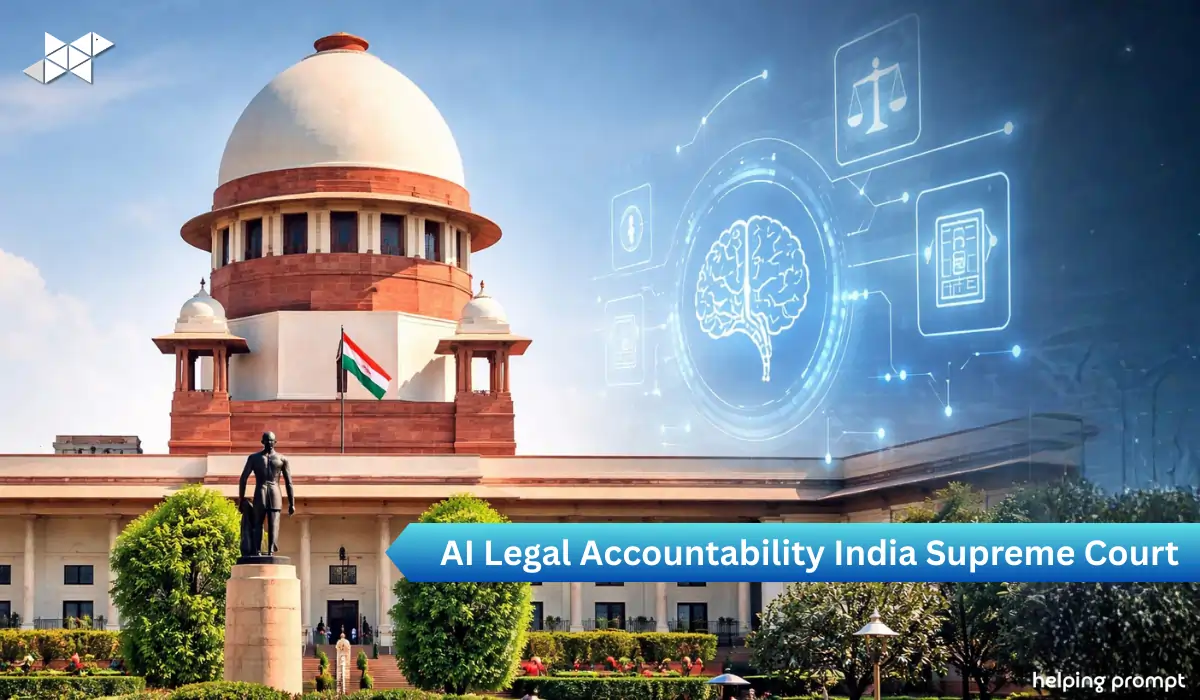
AI Legal Accountability India Supreme Court: Artificial Intelligence is changing how we work.
However, when it enters the courtroom, the stakes are much higher.
In a significant development, the Supreme Court of India has made its position clear: court orders based on AI-generated judgments can amount to misconduct.
This decision could shape the future of AI use in India’s legal system.
Quick Tips
The Supreme Court has warned against reliance on AI-generated judgments.
Court orders based on fabricated or synthetic AI outputs may be treated as misconduct.
Notices have been issued to senior legal officials.
A formal hearing has been scheduled.
The ruling highlights accountability in the age of AI.
Why This Judgment Matters
Lawyers and law students increasingly use AI tools like chatbots and legal research platforms. These tools help them draft documents, summarise cases, and find reliable case references. They help with drafting, summarising, and finding case references.
However, there is a serious risk.
AI systems can generate fabricated case citations or misinterpret legal principles. If such content is used in court orders, the consequences can be serious.
Therefore, the Supreme Court’s stance is not anti-technology. Instead, it is about responsible use.

What Exactly Did the Court Say?
The Supreme Court made it clear that:
- Judicial orders must be based on verified legal sources.
- Relying blindly on AI-generated content is unacceptable.
- If a judge or legal officer relies on fabricated AI material, the court may treat that action as misconduct.
Moreover, notices have been sent to senior legal authorities. A formal hearing is expected to examine the issue in detail.
This shows that the court is taking institutional accountability seriously.
The Core Issue: AI Hallucinations in Legal Work
AI tools sometimes generate confident-sounding but false information.
For example:
- A lawyer asks an AI tool for a Supreme Court precedent.
- The tool generates a case name and citation.
- However, the case does not actually exist.
Globally, such incidents have already happened. In some countries, lawyers were penalised for submitting AI-generated fake citations.
As a result, the Indian judiciary wants to prevent similar problems before they escalate.
Is India Against AI in Courts?
Not at all.
In fact, Indian courts already use technology for:
- E-filing systems
- Digital case management
- Live streaming of proceedings
- AI-based transcription tools (in pilot stages)
However, there is a difference between using AI as a support tool and allowing it to influence judicial reasoning without verification.
The Supreme Court’s message is clear:
Technology can assist. It cannot replace judicial responsibility.

What This Means for Lawyers and Law Students
If you are a legal professional or law student in India, this ruling matters.
Here’s what you should do:
- Always cross-check AI-generated citations.
- Verify case laws from official court websites or trusted legal databases.
- Never submit AI-drafted content without human review.
- Maintain professional ethics while using AI tools.
In short, AI can save time. However, it cannot replace due diligence.
Bigger Picture: AI and Legal Accountability
This development raises a broader question.
As AI becomes more powerful, who is responsible when it makes a mistake?
- The developer?
- The user?
- The institution?
In the legal system, judges and lawyers cannot outsource accountability to software. They remain fully responsible for every decision they make.
Therefore, this judgment could become a landmark reference point in India’s AI governance framework.
What to Watch Next
The scheduled hearing will likely clarify:
- Whether formal guidelines on AI usage will be introduced
- Whether disciplinary action will be standardised
- How lower courts should regulate AI use
Consequently, the outcome could influence future judicial training and court policies across India.
Final Conclusion
The Supreme Court’s message is simple yet powerful.
AI is a tool, not an authority.
As India moves toward digital transformation, legal accountability must remain firmly in human hands.







Leave a Reply