
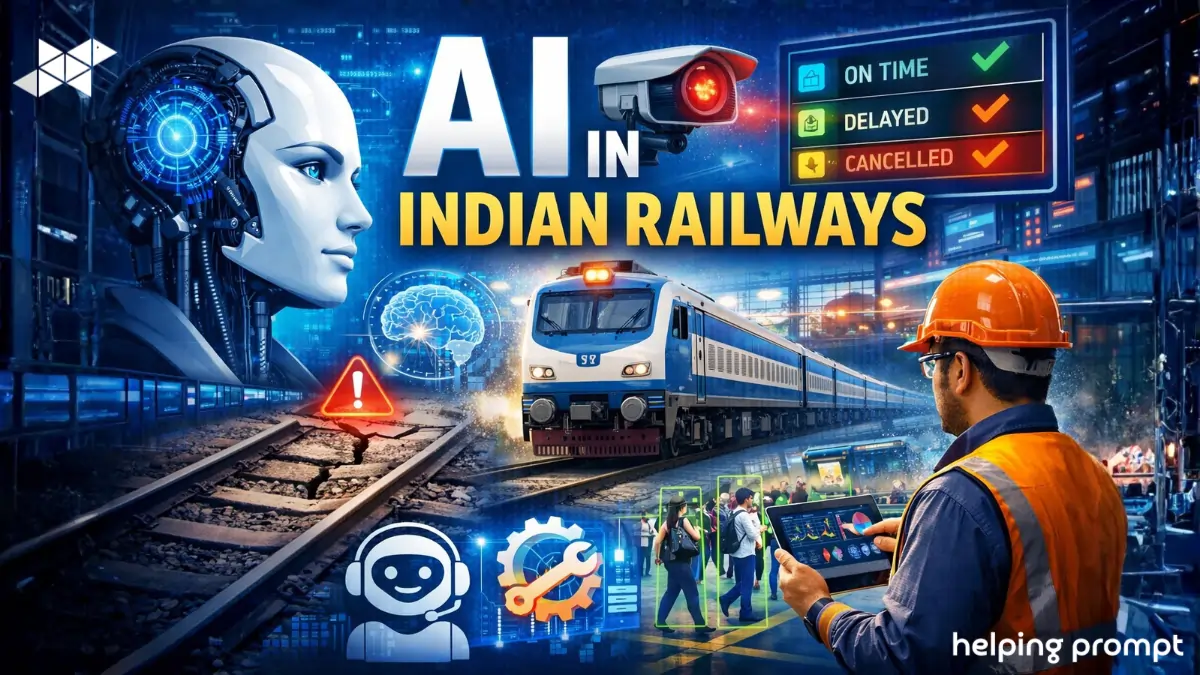
Artificial Intelligence is no longer a future idea for the rail sector. It is already at work on tracks, control rooms, and platforms across India. Indian Railways has begun using AI to solve real problems—late trains, safety risks, crowded stations, and passenger complaints.
During recent briefings and pilot reviews, officials highlighted how data and machine learning are quietly reshaping daily railway operations.
How AI Is Improving Train Safety
One of the biggest focus areas is accident prevention. AI-powered cameras and sensors now scan tracks for cracks, loose fittings, and obstacles.
An official involved in safety trials said, “Earlier, inspections were manual and slow. AI helps us detect faults before they turn dangerous.”
These systems alert control rooms instantly, allowing faster decisions and fewer human errors.

Smarter Timetables and Fewer Delays
AI tools analyze years of train movement data to predict congestion and delays. This helps planners adjust timetables more accurately.
Instead of reacting after a delay happens, AI flags potential trouble spots in advance. Railway staff say this has already helped reduce cascading delays on busy routes.
Better Passenger Experience at Stations
Crowd management is another area where AI is stepping in. Smart cameras study foot movement at platforms and entry gates.
A senior officer explained, “The system shows us where crowds may build up. We can deploy staff before it becomes a problem.”
Chatbots and AI-based help desks are also answering passenger queries faster, especially during peak travel hours.

Maintenance Gets a Data Upgrade
AI is changing how trains are maintained. Predictive maintenance tools study vibration, temperature, and usage data from coaches and engines.
This means parts are repaired before they fail, reducing breakdowns and last-minute cancellations. It also helps save costs without cutting corners on safety.
Conclusion
From safer tracks to smoother journeys, AI is quietly becoming part of everyday railway operations. Indian Railways is using technology not as a showpiece, but as a practical tool to improve reliability, safety, and service quality.








Leave a Reply