
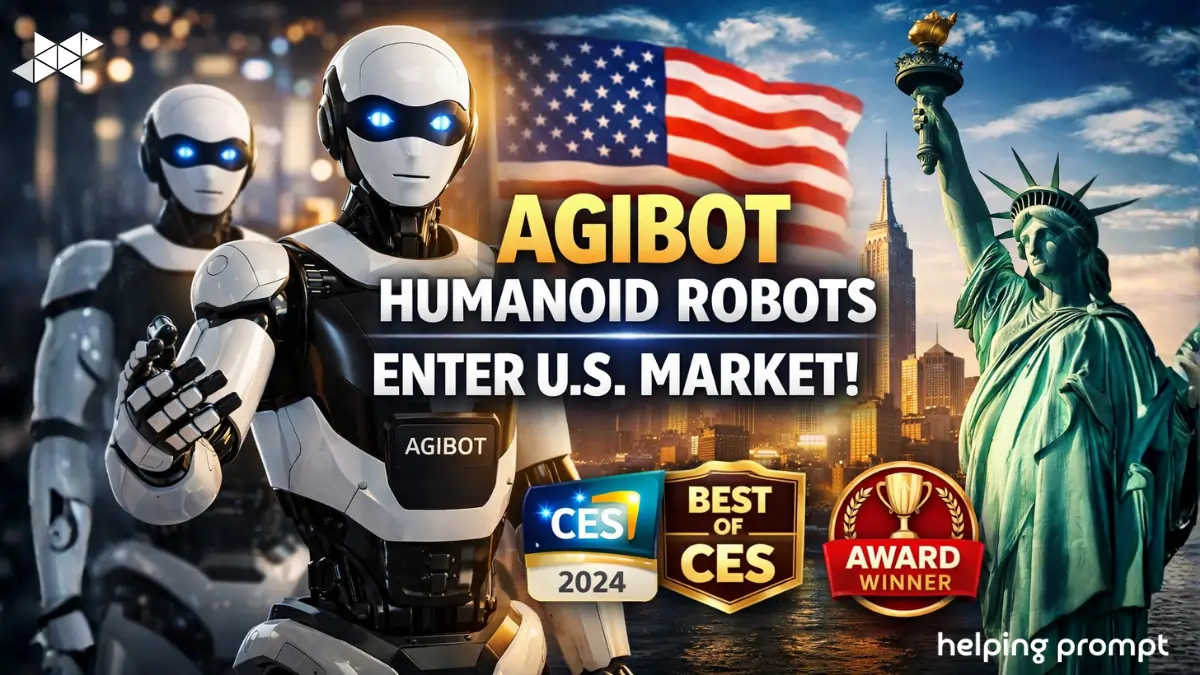
A CES moment that felt bigger than a trophy: At CES, you see a lot of “future tech” promises. But this time, the buzz around AGIBOT didn’t feel like marketing noise. It felt like a real turning point.
AGIBOT’s humanoid robots – built on what the company calls “embodied intelligence” – walked away with multiple “Best of CES” awards today. And on the same day, the company officially entered the U.S. market, making its ambitions very clear: this is not just a demo robot brand anymore.
The big question now is simple: Could India be next?
What makes AGIBOT’s robots different from regular robots
AGIBOT humanoid robots US market entry: Most people imagine robots as machines that follow fixed commands. But AGIBOT is pushing something bigger.
Their focus is embodied intelligence, which basically means:
- The robot doesn’t just “think” on a screen
- It learns and reacts in the real world
- It can move, adjust, and handle tasks like a human would
In simple words, it’s AI that isn’t stuck inside a laptop or phone – it’s AI inside a moving body.
That’s why people at CES weren’t just watching these robots. They were studying them.

Why “Best of CES” awards matter in the real world
CES awards are not just shiny headlines. They do two important things:
1) They create trust
When multiple panels and reviewers recognise a product, buyers take it seriously.
2) They unlock business doors
Awards attract:
- partnerships
- investors
- enterprise buyers
- large-scale pilots
One tech attendee near the demo area said it perfectly:
“At CES, everyone shows ideas. Winning awards means your idea actually worked.”
AGIBOT entering the US market: a serious global signal
AGIBOT’s official U.S. market entry is not a small step. It’s one of the toughest markets for any robotics company because customers there demand:
- safety standards
- strong customer support
- clear business use cases
- reliable performance
So when AGIBOT steps into the U.S., it sends a loud message:
they believe their robots are ready for real deployment, not just exhibitions.
A robotics analyst at the event summed it up in one line:
“Entering the U.S. is like taking the final exam for any global hardware brand.”

Where these humanoid robots could actually be used
Humanoid robots look exciting, but the real story is where they can be useful.
Based on the conversations around the showcase, these are the areas people are watching closely:
1) Warehouses and logistics
Robots that can move like humans can help in:
- sorting
- picking items
- moving loads
- repetitive handling tasks
2) Customer-facing environments
Think:
- malls
- airports
- hotels
- exhibitions
Humanoid robots can guide people, answer questions, and support staff.
3) Industrial support roles
In factories, humanoid robots may assist with:
- tool handling
- inspection work
- basic assembly support
One visitor at the booth casually said:
“If it can do boring tasks without complaining, it’s already valuable.”
Could AGIBOT come to India next? Here’s why it feels possible
India is no longer just watching global tech trends – it’s becoming a major market for them.
If AGIBOT considers India, the timing could make sense because India has:
- massive retail and warehouse growth
- a fast-expanding manufacturing push
- strong interest in automation
- a huge talent base in AI and engineering
Also, Indian businesses are actively looking for tools that improve productivity without slowing operations.
However, for India, success would depend on practical factors like:
- pricing
- local service support
- training and deployment
- reliability in real conditions
Still, the excitement is real. A startup founder attending CES told me:
“If these robots can scale in the U.S., India will want them fast.”

The bigger takeaway: humanoid robots are leaving the “future” category
The biggest change isn’t just AGIBOT winning awards.
It’s the feeling that humanoid robots are slowly moving from stage demos to working machines. The U.S. market entry makes that shift even more visible.
For many people watching, this isn’t about robots replacing humans. It’s about robots supporting human work, especially in environments where tasks are repetitive, risky, or exhausting.
Conclusion
When AGIBOT humanoid robots US market entry. AGIBOT’s humanoid robots winning multiple “Best of CES” awards and officially entering the U.S. market marks a major moment for embodied intelligence. With global attention rising, the possibility of AGIBOT expanding into markets like India is now a real conversation, not just speculation.







Leave a Reply