
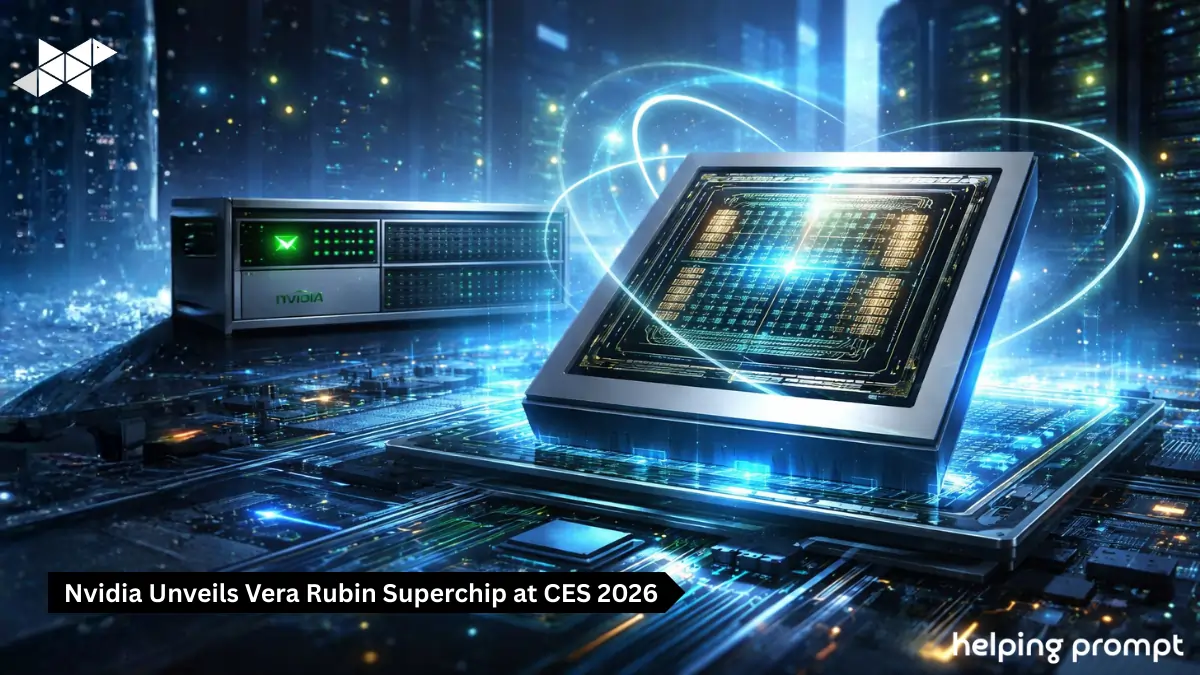
The hall was packed at CES 2026 when Nvidia finally lifted the curtain on its newest AI hardware. Journalists leaned forward. Cameras clicked. And then came the name that instantly set the tone – Vera Rubin.
Nvidia’s new superchip and updated AI platforms are designed to handle the growing hunger for faster, smarter, and more reliable artificial intelligence. From large language models to real-time analytics in data centers, this launch felt less like a product reveal and more like a statement of direction for the AI industry.
As one senior engineer at the event said quietly,
“This isn’t just another chip. This is infrastructure for the next decade of AI.”
What Nvidia Announced at CES 2026
Nvidia introduced a full stack of AI hardware upgrades, led by the Vera Rubin superchip. Alongside it came new server-grade platforms built to support massive workloads without slowing down.
The focus was clear:
- Faster training for AI models
- Smoother deployment in cloud and enterprise systems
- Lower power waste in data centers

During the briefing, Nvidia executives highlighted that modern AI needs more than raw speed. It needs balance – power, efficiency, and reliability in one package.
A product lead explained it simply:
“AI today is like a high-performance car. Without the right engine and cooling, it can’t run at full speed.”
Why the Vera Rubin Superchip Matters
The Vera Rubin chip is built for scale. That means it can handle large AI tasks without breaking under pressure.
Here’s what makes it important in simple terms:
- More computing power to train big models faster
- Better memory handling so systems don’t freeze under heavy data
- Improved energy use, which helps reduce huge electricity costs
For data centers running 24/7, this is not a small upgrade. It directly affects speed, cost, and stability.
One analyst attending the session summed it up well:
“This chip is aimed at the people behind the scenes – the ones keeping AI alive in servers and cloud rooms.”

New AI Platforms for Real-World Workloads
Along with chips, Nvidia rolled out upgraded AI platforms that connect hardware with software tools. These platforms help companies deploy AI faster, without spending months on setup.
At CES, several demos showed how the platforms can:
- Run chat systems with less delay
- Process video feeds in real time
- Support medical imaging tools that need instant results
A healthcare tech founder in the audience said,
“If this performs in hospitals the way it did on stage, it will save us both time and money.”
What This Means for Data Centers
Data centers are the backbone of modern AI. They store data, run models, and power digital services we use every day. But they also face big challenges – heat, energy use, and system overload.
Nvidia’s new hardware is designed to reduce those problems.
- Fewer machines needed for the same work
- Lower cooling costs
- More stable performance during peak hours
For companies running large AI operations, this could change how future facilities are planned.
A data-center manager attending the launch put it plainly:
“If these systems deliver what Nvidia promises, we’ll rethink our entire expansion strategy.”

Industry Reaction at CES
The response inside the venue was immediate. Tech leaders, startup founders, and cloud service providers crowded Nvidia’s booth after the announcement. Conversations shifted from features to timelines — when they could get their hands on the new platforms.
Some saw this as Nvidia tightening its grip on the AI hardware market. Others saw it as healthy pressure pushing the whole industry forward.
A venture investor nearby remarked,
“Every big leap in AI starts with better tools. Nvidia just added a powerful one to the table.”
Why This Launch Feels Different
Nvidia has announced many chips before. But this time, the mood was different. There was less hype language and more focus on practical results – real systems, real workloads, real limits being solved.
Instead of talking only about speed, Nvidia talked about sustainability, scalability, and long-term use. That shift reflects how AI itself has grown from an experiment into everyday infrastructure.
As one journalist whispered during the keynote,
“This isn’t about showing off anymore. It’s about keeping AI running for the world.”

Nvidia’s unveiling of the Vera Rubin superchip and new AI platforms at CES 2026 marked a clear step toward stronger, more reliable AI infrastructure. For data centers, developers, and enterprises, the message was simple – the future of AI will run on smarter hardware, built for real-world demands.







Leave a Reply