
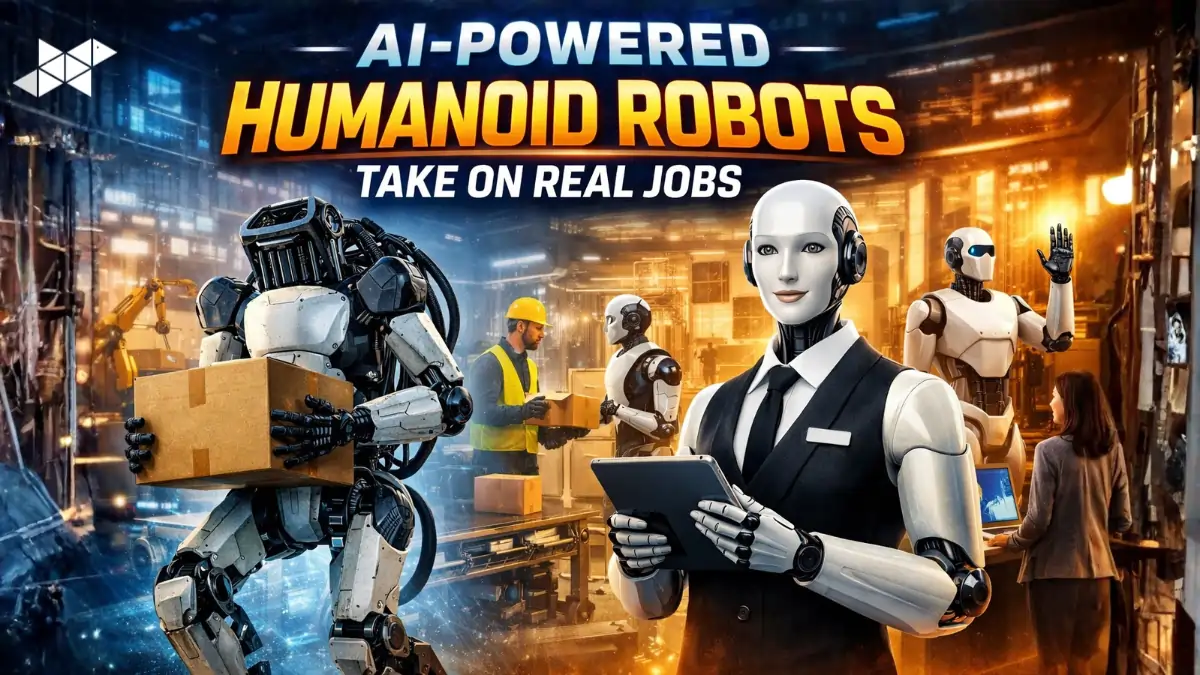
A Hearing That Felt Like the Future Arriving Early: The room went quiet when the video played. A humanoid robot lifted a crate, adjusted its balance, and moved with a confidence that felt almost human. During recent technology briefings and demonstrations, AI-powered humanoid robots have moved from research labs into serious public discussion. Companies, policymakers, and workers were all watching closely.
At the center of this attention were demonstrations by firms such as Boston Dynamics, whose humanoid machines no longer look experimental. They look ready.
“This is not science fiction anymore,” one robotics engineer said during the session. “These systems are being built for real jobs, not just demos.”
From Factory Floors to Front Desks
Humanoid robots are designed to work in spaces already made for people. That is their biggest advantage. Instead of redesigning entire buildings, companies can deploy robots that walk, lift, turn, and use tools much like humans do.

During the hearing, speakers highlighted use cases already under testing. Warehouses use humanoids for repetitive lifting. Manufacturing units test them for assembly assistance. Some service companies are even exploring customer-facing roles, such as guiding visitors or handling routine tasks.
A logistics executive shared a clear point: “If a robot can use stairs, open doors, and carry boxes, it fits into our world instantly.”
Why Media Attention Is Growing So Fast
Media focus has increased sharply because recent robots behave differently than earlier models. They do not rely only on fixed programming. They use AI systems that help them learn movements, adjust to mistakes, and respond to their surroundings.
These machines can now recover from slips, recognize objects, and adapt their grip. That shift, experts said, is what makes them headline-worthy.
One researcher explained it simply: “Earlier robots followed rules. These robots understand situations.”
That difference is why clips of humanoid robots performing complex tasks are spreading quickly across news platforms and social feeds.
AI Is the Real Brain Behind the Body
While the hardware looks impressive, speakers repeatedly stressed that the real progress is happening inside the software. Modern humanoid robots combine vision systems, language understanding, and decision-making AI.
This allows them to receive instructions in plain language, identify objects visually, and choose safe actions. For example, instead of being told every step, a robot can understand a task like “move these boxes carefully” and plan its own motions.
An AI researcher at the event noted, “The body gets attention, but intelligence is what makes these robots useful.”
Impact on Jobs: Assistance, Not Replacement
Job concerns came up quickly, as expected. Workers’ representatives asked direct questions about employment impact. The responses were careful but clear.
Most companies presenting said humanoid robots are being designed to support human workers, not replace them outright. Dangerous, tiring, or highly repetitive tasks were mentioned again and again.
One factory supervisor shared a practical view: “If a robot takes the heavy lifting, my team goes home less tired and less injured.”
That framing appeared repeatedly throughout the discussions.

Safety, Trust, and Human Comfort
Beyond jobs, safety and trust were major topics. A humanoid robot working near people must be predictable and safe. Demonstrators explained built-in systems that limit force, detect human proximity, and stop movement instantly if something goes wrong.
Equally important is how people feel around these machines. Designers spoke about making robots’ movements slower, clearer, and more readable to reduce fear or confusion.
“Trust is built through behavior, not appearance,” one designer said during the session.
Costs and Real-World Limits
Despite the excitement, speakers were open about limits. Humanoid robots remain expensive, and maintenance requires skilled teams. Battery life, speed, and long-term durability are still being tested.
One analyst summed it up: “This technology is impressive, but it is not cheap or simple yet.”
That honesty helped ground the discussion and avoided exaggerated claims.

A Visible Shift in Human-Machine Work: The hearing made one thing clear. AI-powered humanoid robots are no longer a distant idea. With near-human movement and growing intelligence, they are entering real conversations about work, safety, and productivity.
As demonstrations continue and trials expand, these machines are becoming part of everyday planning, not just future dreams.







Leave a Reply