
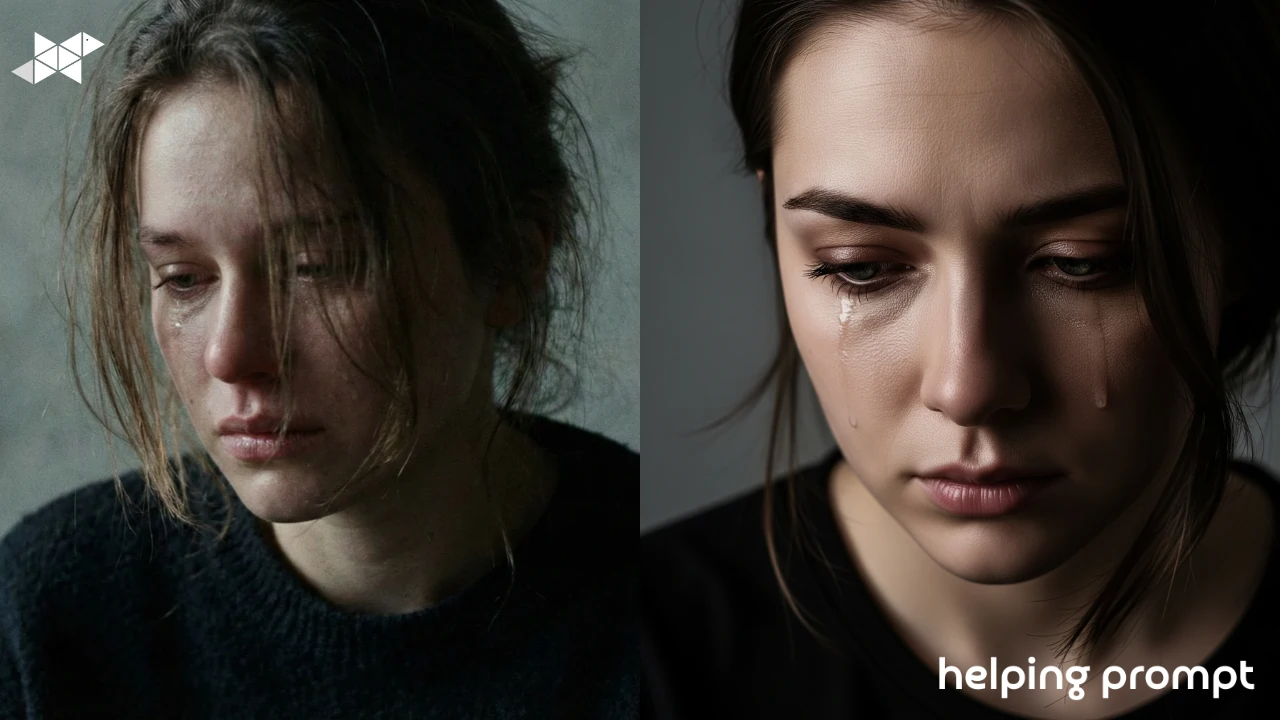
Moody human portraits are having a moment. Maybe it’s the rise of cinematic aesthetics, or maybe we’re all just craving something that feels… real. Either way, AI art tools now make it surprisingly easy to capture raw emotion without needing a full photography setup.
But here’s the thing: the prompt decides everything. Write something weak, and you get a generic face staring blankly. Write something intentional, and suddenly you have a portrait that looks like it belongs in a film poster.
This guide gives you 5 simple, beginner-friendly AI prompts that create emotional, moody, 4K portraits-no jargon, no complicated settings.
How to Use It
You don’t need fancy knowledge. Follow these steps:
- Pick your AI tool – Midjourney, Stable Diffusion, Leonardo, etc.
- Paste the prompt exactly – Don’t overthink it in the beginning.
- Adjust just one thing – Expression, age, or lighting. Small changes = big difference.
- Avoid overcrowding – One mood, one subject, one scene.
- Let the AI surprise you – The best portraits often come from small imperfections.
That’s it. Once you get comfortable, you can tweak camera angles, lighting types, or emotional intensity.
Prompt 1: “Silent Grief” – soft intensity
moody human portrait, young woman looking down, soft tears in her eyes, muted gray background, cinematic lighting, realistic skin texture, raw emotion, 4K detail, shallow depth of field, soft shadows
Prompt 2: “Edge of Anger” – high contrast drama
intense moody portrait of a man under harsh side lighting, strong jaw tension, gritty cinematic atmosphere, deep shadows, expressive eyes, realistic pores, dramatic contrast, 4K ultra-detailed close-up
Prompt 3: “Nostalgic Calm” -warm but emotional
emotional portrait of an elderly woman smiling faintly, warm golden-hour light, subtle wrinkles, storytelling expression, soft haze, film-style tones, 4K clarity, moody but comforting vibe
Takeaway
If you’re new to AI portrait creation, remember this: emotion beats perfection. Moody portraits work best when you focus on feelings instead of fancy terms. Start simple, tweak slowly, and let the light and expression carry the story.


Leave a Reply