
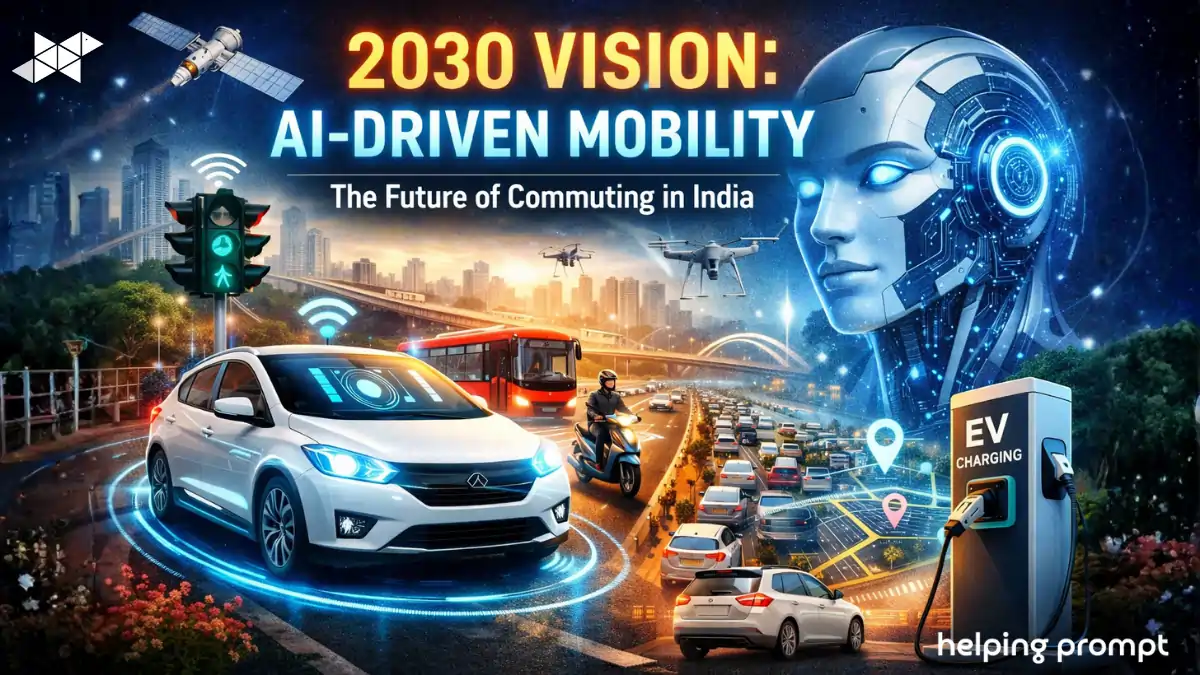
A Future That’s Already Knocking: The phrase “AI-driven mobility” sounds futuristic, but the truth is simple: it means vehicles and transport systems that can think, learn, and respond faster than humans in many situations.
In discussions around the 2030 vision, one message is becoming clear-mobility is no longer only about speed or fuel. It’s about safety, smarter roads, cleaner cities, and easier daily travel.
As one transport policy official put it during a recent industry roundtable,
“The next big upgrade won’t be the engine. It will be the intelligence behind every move on the road.”
What Exactly Is AI-Driven Mobility?
AI-driven mobility means using Artificial Intelligence (AI) to improve how people and goods move. It includes:
- Smarter cars and two-wheelers that can assist drivers
- Traffic systems that reduce jams using live data
- Public transport planning based on real-time demand
- Delivery and logistics that cut delays and fuel waste
AI works like a fast brain-it observes patterns, learns from them, and makes decisions quickly.
Why the “2030 Vision” Matters for India
India’s mobility challenges are unique. Our roads carry everything together-bikes, buses, autos, trucks, pedestrians, and sometimes even cattle. That’s why the 2030 vision is not just about fancy tech. It’s about solving daily problems such as:
- Road accidents and unsafe driving
- Long traffic delays in cities
- Rising fuel costs
- Pollution and poor air quality
- Weak last-mile connectivity
A senior mobility expert explained it in plain words:
“India doesn’t need mobility that looks good on paper. It needs mobility that works in real streets.”

The Big Promise: Safer Roads With Smarter Vehicles
One of the strongest reasons AI is being pushed into mobility is road safety.
AI can help vehicles detect danger early through features like:
- Automatic emergency braking
- Lane warning systems
- Blind spot alerts
- Driver fatigue detection
Even small AI features can reduce accidents by reacting faster than humans in critical moments.
A road safety advocate noted,
“Most crashes happen due to small mistakes. AI can catch those mistakes before they become fatal.”
Traffic Jams Could Become Less Painful
Anyone who drives in Indian cities knows that traffic is not just slow-it’s exhausting.
AI can improve traffic flow by:
- Adjusting signals based on live traffic volume
- Detecting bottlenecks and rerouting vehicles
- Predicting peak congestion before it happens
- Helping emergency vehicles get faster passage
This can save time, fuel, and daily stress-especially in metro cities.
Public Transport May Get More Reliable
AI isn’t only for private cars. It can make buses, metro systems, and shared mobility better too.
With AI, cities can:
- Predict passenger demand by time and area
- Improve bus frequency on busy routes
- Reduce overcrowding during peak hours
- Track breakdown risks through smart maintenance
A city planning official said,
“When transport becomes predictable, people stop depending only on personal vehicles.”

Cleaner Mobility: AI + Electric Vehicles Together
AI-driven mobility is often linked with electric vehicles (EVs) because both aim to modernise transport.
AI can support EV growth by:
- Finding the nearest charging station quickly
- Planning routes that save battery
- Managing charging loads to avoid power stress
- Improving fleet efficiency for EV taxis and deliveries
In simple terms, AI can help EVs feel less complicated for regular users.
The Real Backbone: Data, Sensors, and Smart Roads
AI can’t work in isolation. It needs information from the real world, such as:
- Cameras and sensors
- GPS and maps
- Weather data
- Traffic signal systems
- Road condition updates
This is why many experts say the future depends not just on smart vehicles, but also on smart infrastructure.
A technology leader summed it up well:
“A smart car on a dumb road will still struggle. Intelligence must be shared.”
Challenges That Can’t Be Ignored
AI-driven mobility also raises important concerns, especially in a country like India.
Key challenges include:
- Privacy: Who owns the travel data?
- Safety: AI must work reliably in unpredictable traffic
- Cost: Advanced tech must remain affordable
- Jobs: Automation may change driver-based work models
- Connectivity: AI needs stable networks and systems
The goal is not to rush, but to build trust step by step.

Conclusion
The 2030 vision for AI-driven mobility is not just about futuristic cars. It’s about safer roads, smoother traffic, cleaner transport, and smarter public systems. If done responsibly, it could reshape how India moves every day.






Leave a Reply