Web development never really sits still. One year you’re comfortable with your stack, the next year everyone’s talking about something new-and suddenly clients expect it yesterday.
In 2025, the shift is sharper. Faster frameworks, AI-assisted coding, and performance-first tools are no longer “nice to have.” They’re becoming baseline expectations, especially for Indian developers competing globally.
If you build websites, apps, or platforms-freelance or full-time-this list will help you understand what actually matters right now, without the hype.
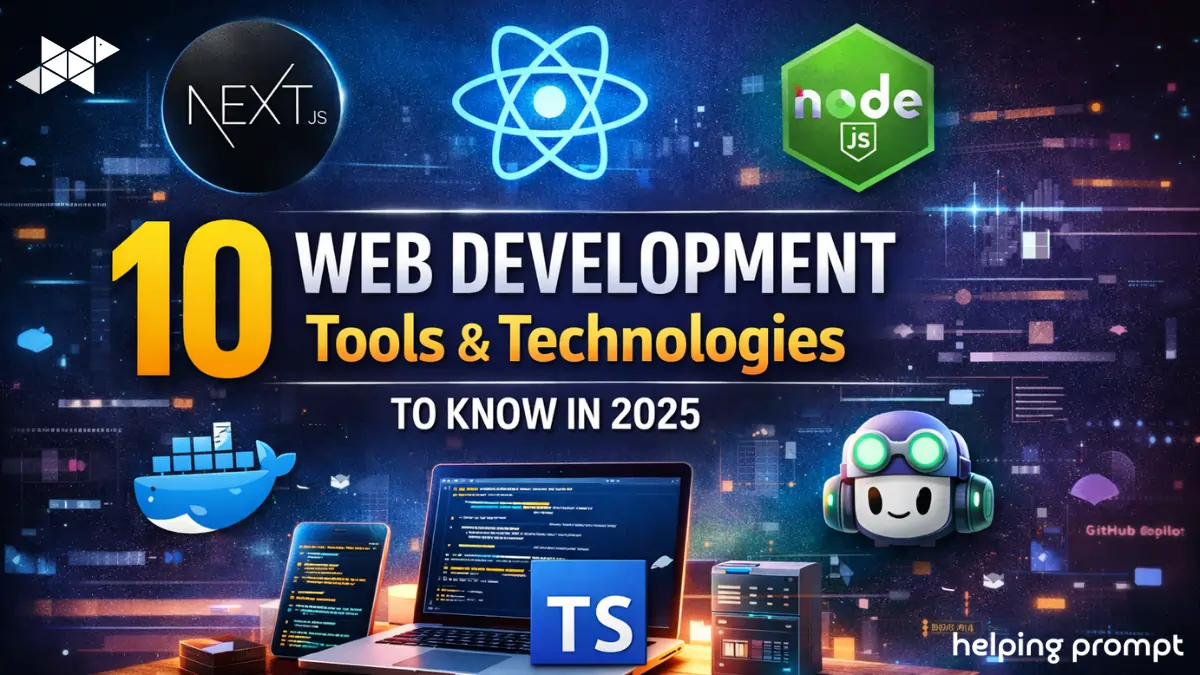
1. Next.js – Still the King of Production Frontends
Why it matters:
Next.js has quietly become the default choice for serious React projects. In 2025, it’s less about trends and more about reliability.
What makes it valuable:
- Server-side rendering for faster load times
- Built-in routing and SEO-friendly pages
- Works beautifully with APIs and headless CMSs
Real-world use:
Most Indian startups building SaaS dashboards or content-heavy sites are choosing Next.js over plain React.
2. React – Not New, But Still Non-Negotiable
Why it matters:
You may hear “React is old,” but the job market disagrees. React skills remain one of the safest bets in web development.
What to focus on now:
- Hooks and functional components
- Performance optimization
- Integration with modern frameworks
Reality check:
If you know React well, learning anything else becomes easier.
3. Tailwind CSS – Speed Over Fancy Syntax
Why it matters:
Tailwind CSS has changed how developers think about styling. It’s less romantic, more practical-and that’s why teams love it.
Benefits:
- Faster UI development
- Consistent design system
- Fewer CSS files to maintain
Example:
Perfect for agencies building multiple client sites with tight deadlines.
4. Node.js – The Backend Workhorse
Why it matters:
Node.js keeps frontend and backend in the same language. That alone saves time, cost, and mental energy.
Common use cases:
- APIs for mobile and web apps
- Real-time features like chat
- Scalable backend services
Indian context:
Many startups prefer Node.js because hiring JavaScript developers is easier and cheaper.
5. TypeScript – Less Bugs, Less Drama
Why it matters:
TypeScript is no longer optional for large projects. It catches errors before users do.
Why developers stick with it:
- Better code clarity
- Easier collaboration in teams
- Safer refactoring
Truth:
Once you get used to TypeScript, plain JavaScript feels risky.
6. GitHub & GitHub Copilot – Coding With a Safety Net
Why it matters:
GitHub is already essential, but Copilot has changed how developers write code daily.
What Copilot helps with:
- Boilerplate code
- Repetitive logic
- Faster prototyping
Important note:
It assists, not replaces. Good logic still comes from you.
7. Docker – “Works on My Machine” Is Not an Excuse Anymore
Why it matters:
Docker ensures consistency from development to deployment.
Benefits:
- Same environment everywhere
- Easier team collaboration
- Cleaner deployment pipelines
Use case:
Very useful when working with remote teams or international clients.
8. Headless CMS (Strapi, Sanity, Contentful)
Why it matters:
Content is everywhere, but managing it shouldn’t slow developers down. Headless CMS tools separate content from presentation.
Why teams prefer them:
- Content editors stay happy
- Developers stay focused
- Easy multi-platform publishing
Practical example:
A blog, mobile app, and website—all using the same content source.
9. Vite – Faster Builds, Less Waiting
Why it matters:
Vite makes traditional bundlers feel painfully slow.
Why developers love it:
- Instant server start
- Faster hot reloads
- Works smoothly with modern frameworks
Developer truth:
Once you use Vite, patience for slow builds disappears.
10. AI-Assisted Development Tools – The Quiet Revolution
Why it matters:
AI tools are no longer experimental. They’re becoming part of daily workflows.
Where they help most:
- Code suggestions
- Debugging hints
- Documentation generation
Reality check:
They boost productivity, but judgment still matters more than speed.
Actionable Tips & Key Takeaways
- Focus on one frontend framework deeply, not five superficially
- Pair TypeScript + Next.js for long-term project stability
- Use AI tools to save time, not skip learning fundamentals
- Learn Docker basics if you work with teams or deploy often
- Choose tools that reduce friction, not just sound impressive
Conclusion
Web development in 2025 rewards clarity over chaos. You don’t need to chase every shiny tool-but you do need to understand the ones shaping real-world projects.
Master a solid stack, stay curious, and keep shipping. That combination still beats everything else.







Leave a Reply